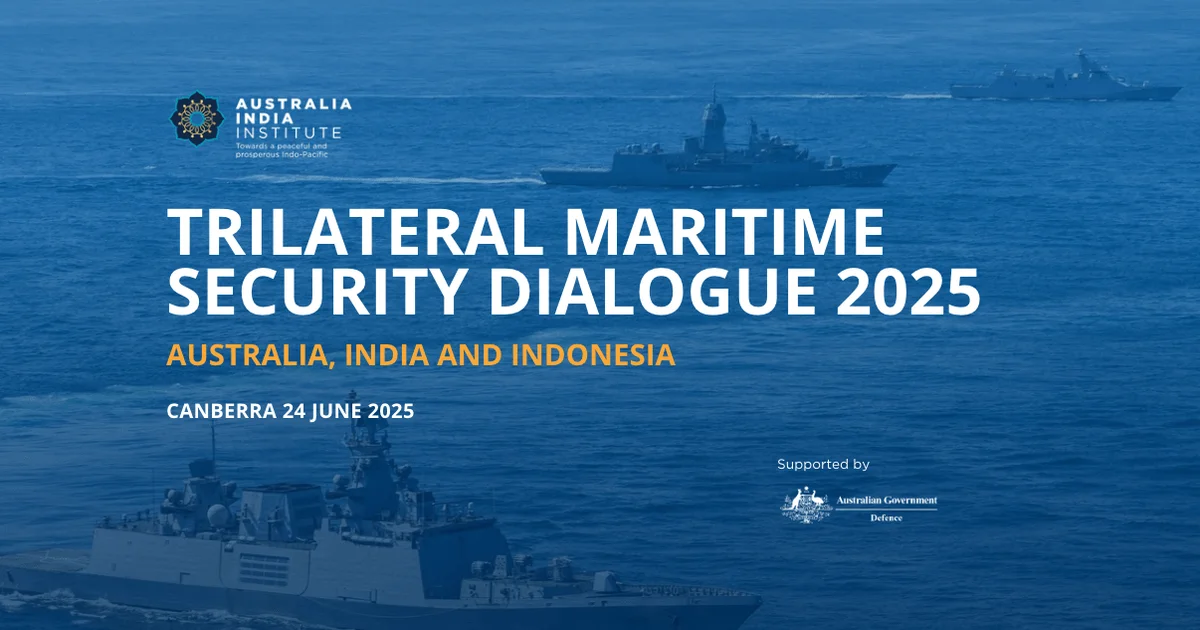
The **2025 Trilateral Maritime Security Dialogue** convened in Canberra on June 24, welcoming delegations from **Australia**, **India**, and **Indonesia**. The summit addressed the mutual maritime security challenges faced by these Indo-Pacific nations and outlined strategies to bolster regional stability. Central themes included enhancing **maritime domain awareness (MDA)**, strengthening operational coordination, and advancing environmental resilience across the **Indian Ocean**. Hosted by the **Australia India Institute** and backed by the **Australian Government Department of Defence**, the event emphasized both immediate collaborative actions and longer-term strategic goals.
A major focus was laid on operational measures, such as joint surveillance initiatives, bilateral and trilateral training exercises, and coordinated patrols. These activities are designed to improve technical interoperability between the three nations' naval and maritime agencies. Protection of critical undersea assets, including vital communication cables and energy networks, also emerged as a priority, reflecting the session’s concern over emerging non-traditional threats like **piracy**, **illegal fishing**, and **transnational crime**. In addition, combating climate-linked vulnerabilities—rising sea levels, coastal erosion, and biodiversity loss—was addressed as a critical area for cooperation.
The Dialogue proposed specific measures to achieve better maritime governance in accordance with international law. Commitments were reaffirmed to ensure compliance with frameworks such as the United Nations Convention on the Law of the Sea (UNCLOS), underscoring the importance of peaceful dispute resolution and the proactive maintenance of regional order. Multi-sector experts contributed actionable recommendations, setting the groundwork for senior official meetings and fortifying the trilateral security architecture.
Why this matters
The trilateral collaboration between **Australia**, **India**, and **Indonesia** holds strategic significance in one of the world's most vital shipping corridors. With more than **60% of global maritime trade** passing through the Indo-Pacific waters, the region’s security and stability are paramount to global supply chain reliability. Enhanced **maritime domain awareness** and intelligence-sharing capabilities will enable the detection of security breaches, such as illegal trafficking or unregulated fishing, that directly impact the economic interests of these nations and the broader shipping industry.
Furthermore, the Dialogue’s focus on undersea infrastructure protection highlights the growing importance of safeguarding cables critical for global communication and energy transmission, which remain vulnerable to both accidental damage and targeted attacks. As the Indo-Pacific faces higher risks from climate-induced vulnerabilities, cooperative efforts in environmental mitigation will also have long-term operational impacts on regional ports, coastal facilities, and shipping routes.
For shipowners and operators, increased trilateral patrols and joint exercises signal higher maritime enforcement frequency. These measures may deter illicit activities but could also heighten scrutiny on shipping operations in the region, emphasizing compliance with security regulations. Insurance underwriters and vessel flag states should pay close attention to these developments as they could alter **war-risk premiums** and regulatory enforcement dynamics.
The outcomes of the Dialogue will likely influence policymaking decisions for years to come, directly linking tactical measures such as joint sails and coordinated patrols with broader strategies aimed at securing the Indo-Pacific’s maritime future. Operators navigating the **Indian Ocean** corridor should track the resulting formal trilateral agreements and operational deployments, given the implications for port access security, regulatory compliance, and long-haul transit stability.