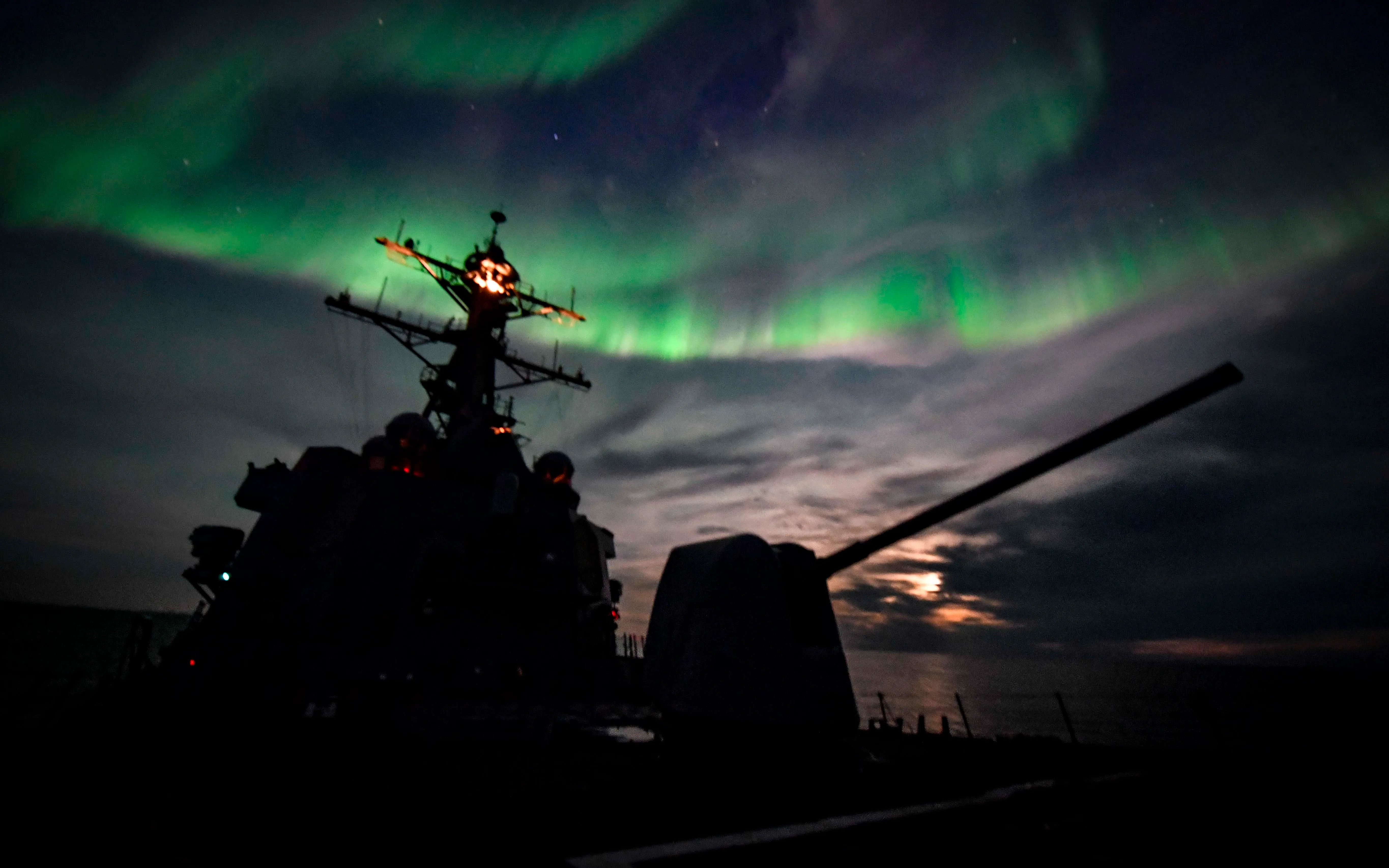
The United States Navy has unveiled its new Arctic strategy, outlining a comprehensive framework to safeguard American interests amid the region’s evolving geopolitical and environmental landscape. Titled A Strategic Blueprint for the Arctic, the report, released on January 5, 2020, emphasizes the vital role of maritime operations in navigating the challenges posed by melting ice and intensifying international competition. Recognizing the United States as a maritime and Arctic nation, the blueprint stresses the importance of maintaining a robust naval presence and advancing strategic partnerships to ensure peace and prosperity across the region.
The Arctic, spanning from Maine through the Arctic Ocean to Alaska, has emerged as a focal point for global maritime dynamics. Climate change is rapidly altering the region, transforming it into what the report calls a “Blue Arctic,” where receding ice is opening new trade routes and access to marine resources. However, these opportunities come with the risks of heightened geopolitical rivalry. The report specifically names Russia and China as aggressive competitors whose ambitions challenge U.S. security interests. Their military activities, efforts to shape Arctic governance, and revisionist approaches threaten to undermine international rules and norms.
Among the challenges identified in the strategy are disputes over navigation rights and natural resource exploitation, risks of military incidents, and broader environmental concerns tied to increased human activity. The document highlights the growing importance of Arctic waters in global trade, citing predictions that melting ice could lead to a surge in cargo transits, fishing, tourism, and military operations. Currently, 90% of global trade depends on maritime transportation, a figure poised to grow as Arctic routes become more navigable.
The connectivity of Arctic waters to nearly 75% of the world’s population underscores the region’s economic potential. However, this increase in activity raises concerns about ecological degradation, accidents at sea, and disruptions to native wildlife and communities. In response, the blueprint advocates for enhanced naval readiness and sustained collaboration with Arctic neighbors to navigate these complexities and establish clear frameworks for security and governance.
Regional dynamics are further complicated by the militarization of the Arctic. The report draws attention to Russia’s bolstering of its icebreaker fleet and military bases, alongside China’s assertion of a “near-Arctic” identity and its investments in Arctic infrastructure. These moves align with broader authoritarian trends that threaten cooperative security efforts. In light of these developments, the report argues that a proactive U.S. maritime presence is essential to counterbalance rival ambitions and uphold international rules.
Why this matters
The strategic blueprint’s emphasis on Arctic operations signals a critical shift in U.S. naval priorities. For shipping operators, the warming Arctic presents new opportunities in resource extraction and trade but also introduces operational risks tied to increased competition and potential conflicts. The outlined strategy aims to preserve maritime security while capitalizing on the region's economic promise, thus shaping the future of Arctic shipping corridors.
For the broader maritime industry, the report highlights the necessity of preparing for a rapidly changing operational environment, including compliance with emerging security policies and environmental preservation measures. The U.S. Navy’s call for partnerships could open avenues for allied nations and commercial operators to strengthen collaborative frameworks worldwide.
Ships navigating Arctic waters face uncertainties tied to geopolitical rivalries, navigational hazards, and environmental protection requirements. Enhanced naval presence, as advocated in the blueprint, could provide critical stability and safer operational conditions in this increasingly contested region.
As Arctic ice continues to recede, the maritime sector must brace for significant shifts in trade routes and operational logistics. Operators should monitor developments in U.S. naval policy and regional agreements closely, as these could redefine Arctic shipping opportunities and regulatory obligations in the years ahead.