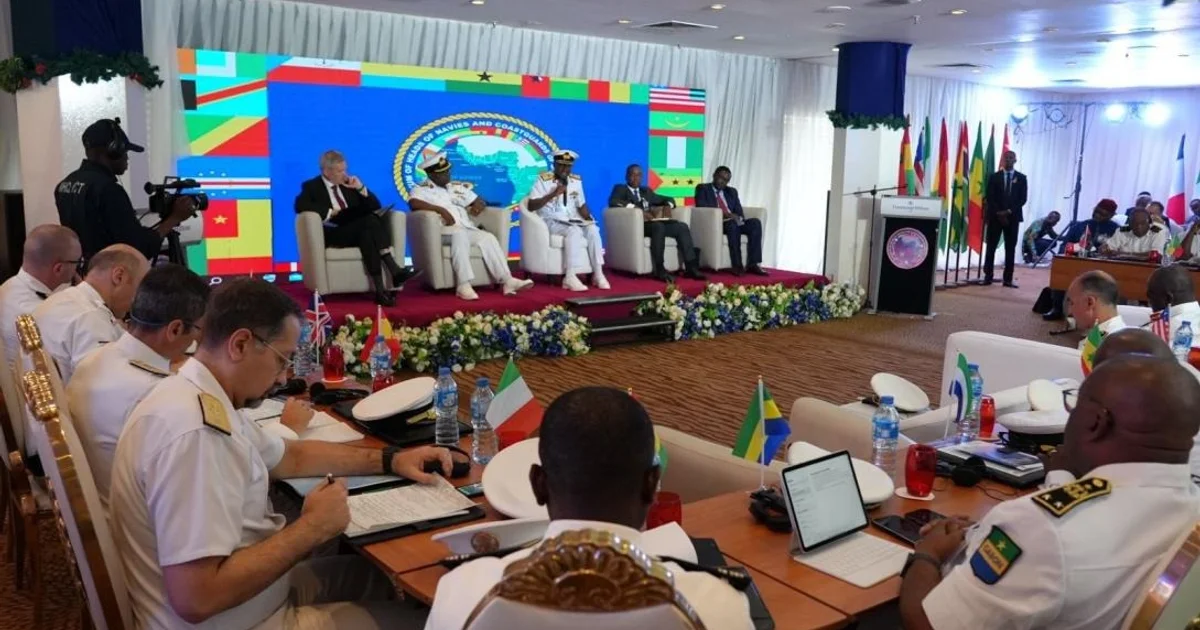
The 8th Symposium of the Heads of Navies and Coastguards in the Gulf of Guinea (GoG) concluded on November 28, 2024, in Abuja, Nigeria, marking a renewed commitment to tackling maritime insecurity and promoting sustainable development in the region. The event, hosted by the Nigerian Navy in collaboration with the European Union (EU) and the French Navy, attracted approximately 200 participants, including senior naval officials, regional organizations, and international partners, underscoring the global urgency of safeguarding the Gulf of Guinea’s maritime domain.
With its theme, “Maritime Security and Sustainable Development in the Gulf of Guinea,” the two-day symposium addressed critical threats including piracy, illicit trafficking, and unregulated resource exploitation. Key discussions revolved around three strategic areas: Regional and International Cooperation, Maritime Domain Awareness and Information Sharing, and Legal and Regulatory Frameworks. Central to the deliberations was the operationalization of the Yaoundé Code of Conduct, a framework designed to strengthen collaboration, governance, and security across the Gulf of Guinea's maritime domain.
The symposium benefitted from the EU-funded EnMAR project, which facilitated participation by heads of navies and coastguards from Gulf of Guinea nations, representatives from ECOWAS (Economic Community of West African States), the Gulf of Guinea Commission, and officials from European and U.S. navies. During the session on Regional and International Cooperation, EU Ambassador Gautier Mignot highlighted the EU’s dedication to combating maritime threats. He articulated that the Gulf of Guinea’s security challenges have global ramifications, requiring integrated solutions and active international collaboration.
The meeting culminated in the adoption of a final communiqué featuring 14 resolutions aimed at strengthening governance under the Yaoundé Code of Conduct, enhancing information sharing, and deepening regional cooperation. Notably, one resolution seeks to reinforce the governance structure of the Yaoundé Architecture to ensure more effective responses to maritime threats. Additionally, the need for comprehensive legal and regulatory frameworks to combat piracy and related maritime crimes emerged as a critical priority.
Building on the progress made in Abuja, the next Gulf of Guinea Symposium is scheduled for November 2025 in Dakar, Senegal, promising to sustain the momentum toward securing the region’s waterways and fostering a safer maritime environment.
Why this matters
The Gulf of Guinea, a vital trade corridor, faces severe maritime security challenges affecting regional and global shipping. Persistent threats such as piracy and illicit trafficking jeopardize the safety of transit vessels, raising insurance costs and discouraging cargo operators from utilizing these routes. Enhanced security governance under the Yaoundé Code of Conduct can mitigate these risks, ensuring smoother operations for shipping companies and fostering economic stability for coastal nations.
Improved information sharing among navies and coastguards as outlined in the symposium resolutions would address intelligence gaps critical to preventing armed robbery at sea. This could significantly reduce reaction times in countering security incidents, boosting confidence among commercial operators and lowering the risk of vessel disruptions. The adoption of robust legal frameworks to prosecute maritime crimes also provides greater deterrence mechanisms, ensuring lawbreakers face tangible consequences.
For international stakeholders, such as the EU and the U.S., sustained investment in collaboration and capacity-building across the Gulf strengthens long-term trade infrastructure while aligning with broader geopolitical interests. Facilitating security in the region supports the uninterrupted flow of goods and resources, underscoring how protecting the Gulf of Guinea resonates far beyond regional boundaries.
The implications of securing the Gulf of Guinea are profound for shipowners and operators worldwide. With the next symposium set for Dakar in 2025, maritime stakeholders should monitor developments closely as improved governance structures and cooperative measures take hold. This evolving framework could reshape risk assessments, insurance strategies, and operational planning for vessels transiting the region.