Marine Sealants Market Overview
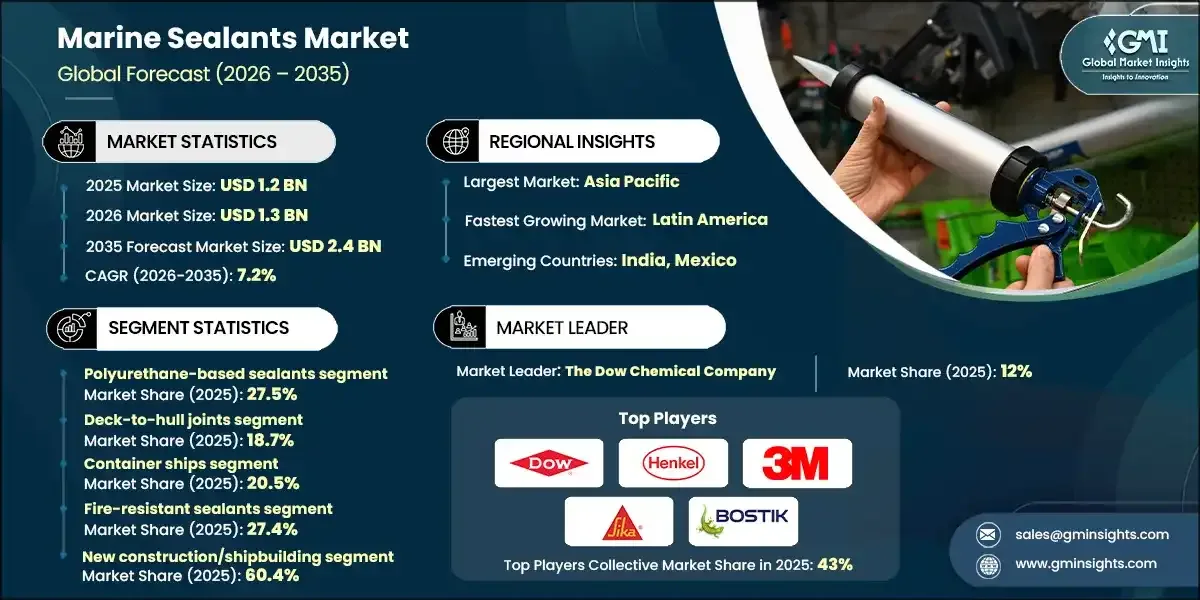
The global marine sealants market, valued at USD 1.2 billion in 2025, is projected to expand to USD 2.4 billion by 2035, growing at a compound annual growth rate (CAGR) of 7.2%. This expansion is attributed to the increasing necessity for advanced sealing solutions in maritime operations, where sealants have evolved into critical components for maintaining vessel integrity, corrosion resistance, and compliance with environmental regulations.
Trends and Drivers
Historically, marine sealants served simple functions, but their role has evolved significantly towards enabling modern maritime activities. With sustainability becoming a focal point in the industry, there is a shift towards eco-friendly formulations, such as hybrid polymers and low volatile organic compounds (VOCs) that meet stringent regulatory requirements. The demand for high-performance sealants is surging, particularly driven by sectors like offshore wind energy expansion and modernization of global fleets, which necessitate sealants that adhere to safety and environmental standards.
Regional Insights
The market dynamics vary across regions:
- Asia Pacific is the leading force in shipbuilding and is expected to experience the highest growth, largely due to its commercial maritime activities and the robust demand for advanced sealing solutions.
- Europe emphasizes sustainable products due to strict regulations aimed at lowering emissions, increasing the adoption of environment-friendly sealants.
- North America thrives on the recreational boating sector and technological innovations in marine sealants.
- Latin America presents significant growth opportunities, benefiting from shipbuilding activities and offshore energy projects.
Market Segmentation
The marine sealants market is categorized by chemistry type, application, vessel type, and performance characteristics:
- Chemistry Types: Polyurethane-based sealants hold the largest market share, favored for their superior adhesion and flexibility. Silicone and polysulfide sealants also remain essential for their UV and fuel resistance, respectively.
- Applications: The largest segment is for deck-to-hull joints, crucial for structural integrity under dynamic marine conditions. Other applications include sealing above and below waterlines and windows.
- Vessel Types: Container ships dominate the market, reflecting high demand for sealing solutions due to their operational environments.
- Performance Characteristics: Fire-resistant sealants are increasingly important due to stringent safety regulations, while anti-fouling sealants are gaining popularity for enhancing vessel efficiency.
Challenges and Opportunities
Challenges within the marine sealants market include the high costs of advanced sealants and skilled application requirements. However, opportunities are emerging through innovations, such as self-healing and smart sealant technologies, which enable predictive maintenance and are relevant to digital vessel management.
Competitive Landscape
Key market players such as The Dow Chemical Company, Henkel AG, and 3M command approximately 43% of the market share. These companies leverage sustainability-driven innovations and diverse product portfolios to maintain competitive edges. Noteworthy developments include advancements in environmentally compliant products, which underline the shift towards optimized raw material utilization and reduced lifecycle impacts.
Future Outlook
As the marine sealants market progresses, it is positioned to capitalize on the essential role of effective sealants in maintaining safety, reliability, and environmental sustainability in maritime operations. The ongoing technological advancements and regulatory pressures advocate for a vibrant, innovative landscape in this ever-evolving sector.