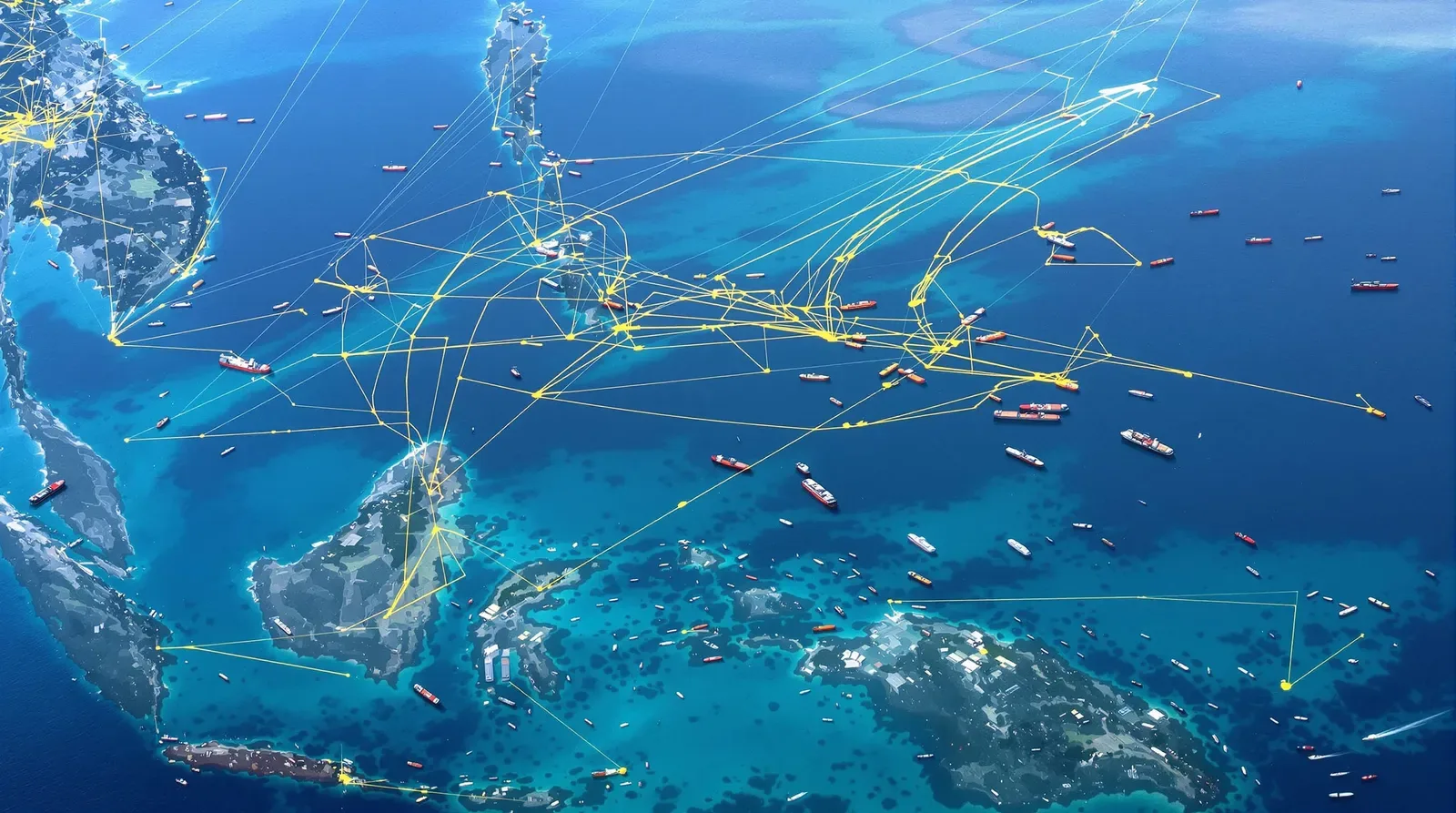
As geopolitical competition between major powers intensifies in Southeast Asia, the region's strategic maritime security dynamics are undergoing significant shifts. Positioned at the heart of the Indo-Pacific, Southeast Asia has become a focal point for confrontations between the United States and China, with critical waterways like the Malacca Strait serving as conduits for nearly a third of global trade. Rising challenges, including gray zone coercion and competing territorial claims, are reshaping the maritime order and amplifying the stakes for regional security and economic stability.
The complexity of maritime security in Southeast Asia spans political, economic, social, technological, legal, and environmental dimensions. Critical concerns include subsea cable protection, sustainable resource management, and the persistent disputes in the South China Sea, where competing claims create diplomatic hurdles and internal divisions among Association of Southeast Asian Nations (ASEAN) members. Meanwhile, cyber threats targeting shipping and port systems are escalating, adding a technological layer of vulnerability for regional governments already strained by limited maritime enforcement capacity.
Efforts to build a cohesive maritime order are complicated by coordination challenges, particularly in areas such as subsea cable maintenance, and the prioritization of geopolitical issues at the expense of non-traditional security concerns. Despite these obstacles, collaboration opportunities remain with key external powers such as the United States and its Indo-Pacific allies advocating for an open and rules-based maritime framework. Cooperation initiatives targeting underwater domain awareness, maritime infrastructure development, and enhanced economic security are central to addressing current vulnerabilities.
Historical patterns of maritime security in Southeast Asia underscore the need for regionally adaptive frameworks. Post-World War II decolonization, Cold War dynamics, and major events like the 2004 Indian Ocean tsunami contributed to evolving partnerships and security models. In the post-Cold War era, the definition of maritime security expanded to encompass environmental sustainability and technological advancements, reflecting the interconnected nature of contemporary threats.
Why this matters
For shipowners and operators navigating Southeast Asian waters, the heightened geopolitical and technological challenges introduce new operational risks. Cyberattacks targeting shipping infrastructure and port systems could disrupt logistics chains across key trade corridors such as the Malacca and Sunda Straits. The ongoing territorial disputes in the South China Sea impose compliance uncertainties, increasing exposure to potential restrictions or localized security incidents.
Coordination hurdles among ASEAN nations also present significant operational gaps for maritime stakeholders. Uneven implementation of surveillance and enforcement technologies creates vulnerabilities for vessels traversing the region, particularly those under flags of convenience. Moreover, unresolved subsea cable security issues could impact telecom connectivity vital for real-time vessel monitoring and operational efficiency.
For maritime insurers and classification societies, these dynamics necessitate recalibrated risk models and premiums, accounting for the compounded impact of cyber threats, piracy, and geopolitical tensions. Regional governments' limited enforcement capacities may also increase reliance on private maritime security contractors, shifting cost burdens onto vessel operators and charterers.
Looking ahead, navigating Southeast Asia's waters will likely require enhanced collaboration between regional stakeholders and external partners from the United States and its allies. Building resilient maritime infrastructure, harmonizing surveillance technologies, and fostering trust among claimant states are critical priorities to mitigate risks and improve operational predictability. The evolution of an open maritime order in the Indo-Pacific will be integral to shaping regional stability and ensuring continued trade flow through Southeast Asia’s pivotal waterways.