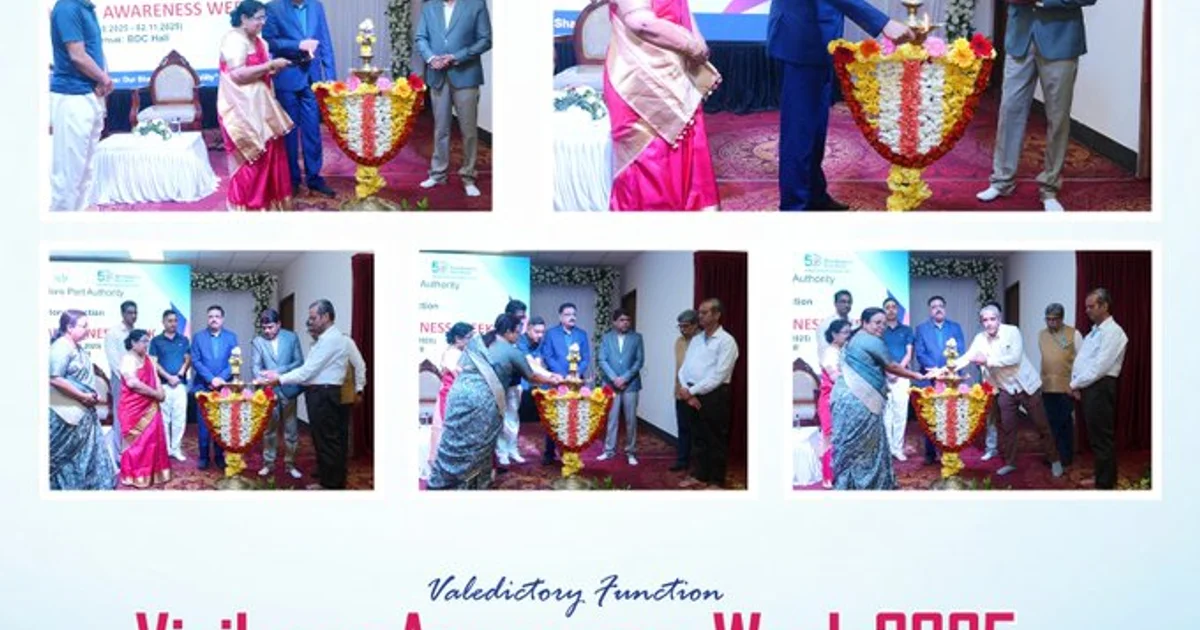
New Mangalore Port Authority (NMPA) concluded its Vigilance Awareness Week 2025 on November 20 with a ceremony held at the BDC Auditorium in Panambur. Led by Dr. A. V. Ramana, NMPA Chairman, alongside Smt. S. Shanthi, Deputy Chairperson, and Shri Padmanabhachar K., Chief Vigilance Officer, the week served as a culmination of a three-month campaign that began on August 18, focusing on preventive vigilance measures across the port community and its stakeholders.
The period of sustained activities included extensive training programs addressing critical subjects such as the Right to Information Act, Ethics, Governance principles, Conduct Rules, and Cyber Security. Among the notable talks was one by Shri Sanjay Krishna Navhale, which underscored the importance of ethics within both personal conduct and institutional governance, aiming to solidify a culture of transparency at NMPA. The ceremonial observance of the week began with an integrity pledge on October 27, reaffirming employees’ commitment to ethical practices in operations.
Beyond internal engagement, the Vigilance Department implemented a series of community-focused initiatives. Student-driven competitions, including essay and slogan-writing events, offered platforms for local youth to express their perspectives on vigilance. Meanwhile, a walkathon flagged off by Dr. Ramana on November 3 reflected broader efforts to engage the public in the fight against corruption. A sand sculpture at Panambur Beach, themed “Vigilance: Our Shared Responsibility,” visually captured the port’s message of collective action against unethical practices.
At the valedictory event, essential preventive vigilance manuals were unveiled by the Chairman as part of the port's broader effort to institutionalize ethical governance. Shri Padmanabhachar K. highlighted key measures, such as implementing biometric access systems and deploying an online complaint portal to enhance transparency. His address emphasized shared responsibility, noting the active involvement of 190 participants in competitive activities. Smt. S. Shanthi shared insights into refining standard operating procedures during the week, pointing out that many errors result inadvertently and require proactive educational measures to prevent.
Concluding the event, Dr. Ramana expressed pride in NMPA’s reputation as being among India’s least corrupt ports. He characterized corruption as a “leakage” of public resources while calling upon all personnel to uphold ethical conduct from leadership levels downward. Stressing transparency as foundational to governance, he linked vigilance practices at the port to national development goals. The closing proceedings included prize distributions to celebrate participant achievements, followed by cultural performances by local students and staff, further reinforcing the week’s community-driven ethos.
Why this matters
NMPA’s Vigilance Awareness Week underscores the operational importance of transparency in port governance. By institutionalizing measures such as biometric systems and complaint portals, the port aims to safeguard its integrity against potential risks, which is critical for maintaining international trade credibility. Port operators and suppliers benefit from streamlined grievance redressal systems, fostering confidence among stakeholders and enhancing accountability in service delivery.
The campaign’s external initiatives, such as local competitions and community walks, demonstrate NMPA’s role as a socially engaged port authority. For shipowners and vendors, these programs signify the port’s long-term commitment to ethical and efficient operations, crucial in reducing risks associated with trading delays or disputes caused by governance lapses. Furthermore, efforts to align vigilance policies with national development objectives reflect the pivotal role of ports in sustaining economic growth through transparency.
Operationally, NMPA’s recognition as one of India’s least corrupt ports provides competitive advantages in reputation management, potentially attracting higher cargo volumes and long-term partnerships. The ongoing vigilance initiatives set an example for other ports in prioritizing ethical governance. For industry stakeholders, watching NMPA’s success could shape tender and partnership considerations moving forward.