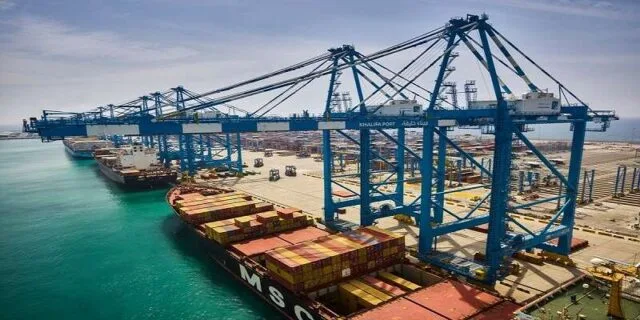
On March 25, 2026, in Karachi, Pakistan, authorities unveiled a strategy aimed at enhancing the country’s role as a regional transshipment hub amidst evolving trade dynamics influenced by regional tensions. Federal Minister for Maritime Affairs, Muhammad Junaid Anwar Chaudhry, emphasized the government’s commitment to improving port competitiveness to attract foreign cargo. He chaired a high-level meeting that included senior officials from various maritime and logistics sectors to address operational challenges faced by importers and exporters.
One of the primary strategies discussed was the introduction of fiscal incentives to attract foreign-flagged vessels. Under the new policy, vessels carrying dry bulk export cargo can receive up to a 60% concession on port dues, significantly lowering operational costs and enhancing port throughput. The government aims to streamline procedures and rationalize charges to ease trade flow and minimize bottlenecks, urging customs officials and terminal operators to work collaboratively toward these goals.
The meeting brought together representatives from the Ministry of Commerce, Karachi Port Trust, Pakistan Customs, National Logistics Corporation, and terminal operators. Key issues tackled included regional competition in port fees, delays in customs clearance, and the handling of auctionable containers. Chaudhry stressed the need for improved coordination and expedited decision-making among stakeholders to tackle these longstanding operational hurdles.
The performance of the Karachi Port Trust was highlighted positively, particularly for maintaining uninterrupted operations during the Eid holidays, managing 15,000 containers and 22 vessels over a three-day span. However, challenges remain, with approximately 3,700 containers waiting for clearance, which exacerbates storage constraints. To mitigate this issue, the Karachi Port Trust has designated 10 acres of land for the auctioning of containers.
Concerns also emerged regarding long-pending containers, some of which have sat at terminals for up to 15 years due to legal and procedural complications. A representative from Karachi International Container Terminal suggested the implementation of a maximum storage time limit to prevent congestion and enhance efficiency.
The government reiterated its commitment to address stakeholder concerns, improve port efficiency, and solidify Pakistan’s position as a regional transshipment hub. With the right policy support and operational reforms, officials are optimistic that Pakistani ports can significantly boost trade connectivity and contribute to economic growth.