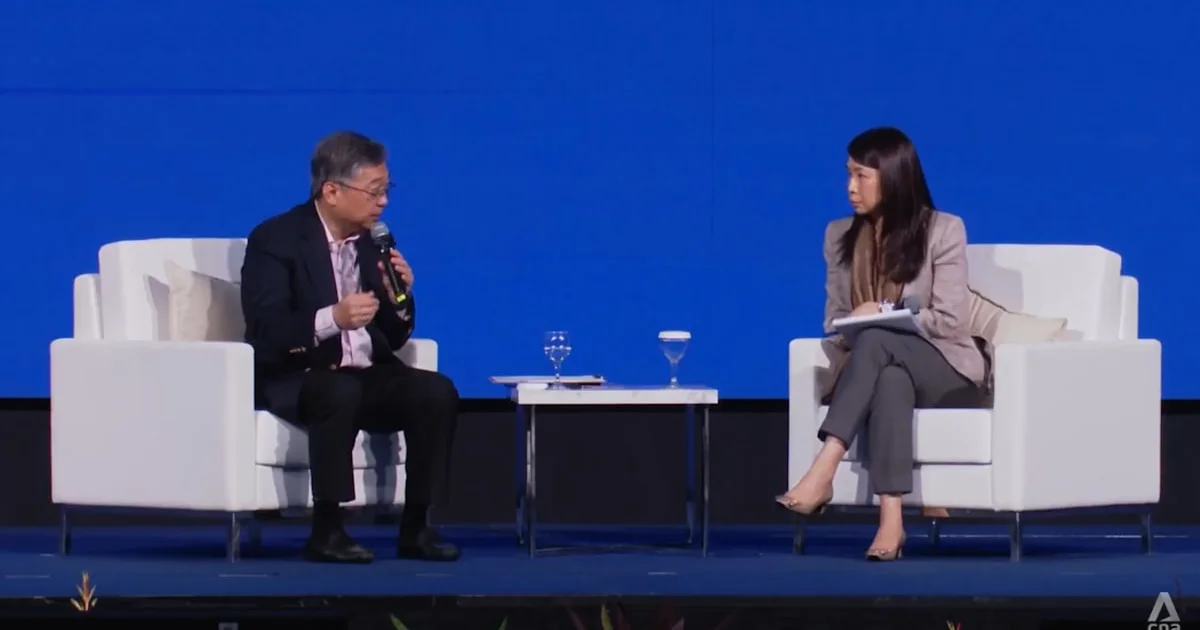
As the Philippines prepares to assume the chairmanship of the Association of Southeast Asian Nations (Asean) in 2026, President Ferdinand Marcos Jr. has reiterated the nation's commitment to securing a legally binding Code of Conduct (COC) for the South China Sea. Speaking in a recent podcast interview, Marcos underscored the urgency of concluding an actionable framework to address maritime disputes, particularly those involving China's expansive territorial claims. He described the waters surrounding the Philippines as "the most volatile parts" of the contested sea and emphasized the necessity of a robust COC to manage interactions and reduce tensions among claimant states.
The significance of the proposed COC lies in its aim to establish clear behavioral guidelines to prevent confrontational actions such as ship collisions and the creation of artificial islands. This comes within the context of a 2016 international tribunal ruling that upheld the Philippines' territorial assertions against China's nine-dash line claims, which Beijing continues to reject based on historical narratives. The absence of adherence to this ruling has further magnified regional instability, heightening the need for enforceable agreements to foster maritime cooperation.
President Marcos highlighted his administration's determination to prioritize COC negotiations ahead of the Philippines taking Asean’s top leadership role. The framework, he stated, should not only define acceptable conduct in these contested waters but also enhance predictability and stability to minimize conflict risks. For Manila, the effort aligns with broader strategic imperatives to safeguard its territorial waters amid ongoing efforts to assert sovereignty and ensure maritime security.
The Philippines' push for a binding COC represents both diplomatic maneuvering and strategic positioning. The agreement could bolster its leadership role within Asean, strengthening regional cooperation while addressing shared security concerns encountered by member states. Marcos emphasized that Manila would leverage its chairmanship in 2026 as a platform to advance these critical negotiations, aiming to unify regional adherence to maritime norms.
Why this matters
The operational implications of an enforceable South China Sea Code of Conduct are profound for maritime stakeholders. Shipowners, cargo operators, and regional fisheries stand to benefit from reduced risks associated with provocative actions such as ramming incidents and militarized enforcement zones in contested waters. Clear parameters established under a binding COC could also mitigate exposure to insurance claims stemming from vessel damage or delays caused by political tension.
For nations engaged in trade through key corridors like the South China Sea, stabilizing the region is critical to ensuring uninterrupted maritime logistics. A legally binding agreement would provide operators with greater predictability in navigating these waters, potentially lowering premiums associated with war-risk zones while enhancing the enforceability of maritime boundary agreements.
Moreover, the Philippines' leadership of Asean presents an opportunity for renewed collective action to address challenges posed by China's continued rejection of international rulings. A successful COC could serve as a model for resolving other complex territorial conflicts across Asia, reinforcing international maritime norms and the role of multilateral frameworks in dispute resolution.
The Philippines' chairmanship in 2026 and its proactive approach to concluding a binding COC will set the stage for sustained negotiations. Stakeholders across Asean and the maritime industry should watch for developments in these discussions and assess the eventual agreement's impact on operational certainty and regional stability.