Cruise Ship Anchoring Explained: A Detailed Look at the Mechanics
Cruise ships employ advanced anchoring systems to ensure stability in the open seas, a process far more complex than merely dropping a massive anchor. According to John, an experienced cruise ship pilot, anchoring incorporates multiple factors such as anchor weight, chain length, seabed conditions, and navigational precision to secure these floating giants.
Anchor Configuration and Deployment
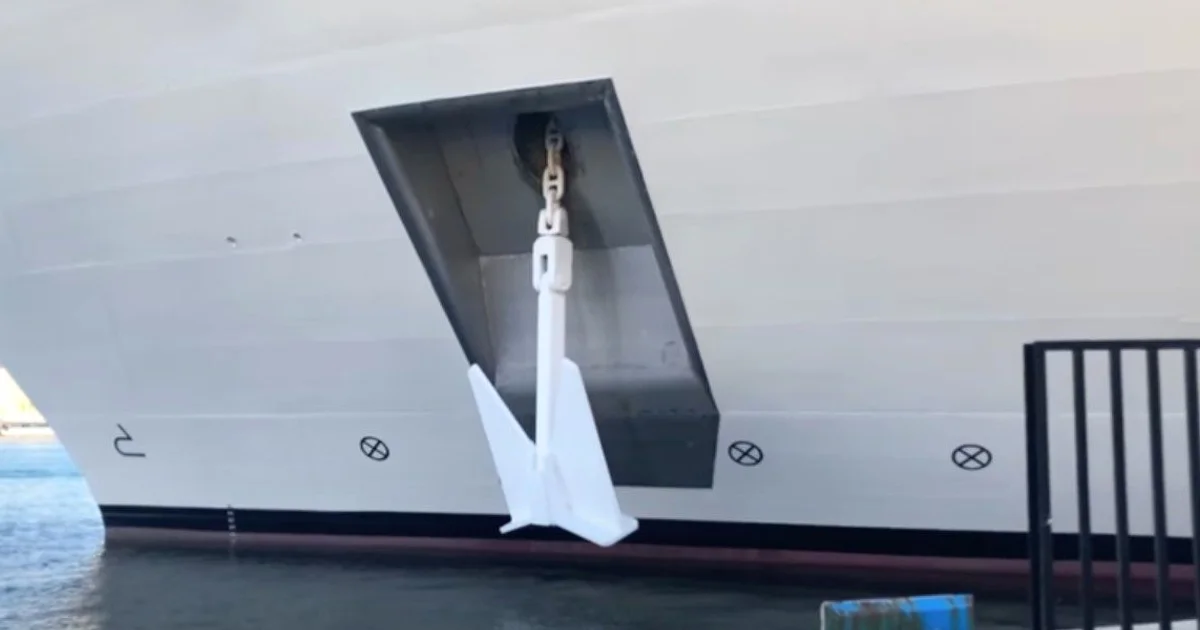
Typically, cruise ships are equipped with two anchors positioned on either side of the vessel—port and starboard. Maritime conventions often suggest utilizing the port anchor in the northern hemisphere and the starboard anchor in the southern hemisphere, aligning with the Coriolis force that influences storm rotations. However, practical usage alternates between anchors to ensure balanced wear. The side facing the ocean current is generally preferred for anchor deployment to enhance grip and minimize drag.
Technical Specifications: Anchor & Chain Systems
Anchor dimensions and chain lengths play a pivotal role in the anchoring process. On average, a large cruise ship’s anchor weighs approximately 8 tons—the equivalent of an adult African elephant. Anchors are linked to chains measured in shackles, with one shackle equating to 15 fathoms or roughly 90 feet. For most cruise ships, anchor chains typically span 900 to 990 feet, with individual chain links often weighing around 50 kilograms—resulting in a total chain weight of nearly 50 tons.
As a general anchoring guideline, the ship will deploy four to five times the water depth in chain length. For instance, when anchoring in waters 25 meters deep, between 100 and 125 meters of chain are laid across the seabed. The chain locker, located beneath the windlass, stores this heavy cable, which can be reversed during dry dock for uniform wear.
Mechanics of Anchor Deployment
When preparing to anchor, the vessel reduces speed while the engines reverse. The windlass, usually electric, carefully deploys the anchor to avoid tangling. Upon reaching the seabed, the flukes of the anchor dig in, but contrary to popular belief, it is the catenary curve of the chain across the seabed—not the anchor itself—that stabilizes the ship, allowing for controlled swinging without drifting.
Seabed Conditions and Maneuverability
The efficacy of anchoring depends significantly on the nature of the seabed. Mud, known as good holding ground, offers secure anchoring conditions, whereas sand or rocky terrain poses challenges, often resulting in dragging where the anchor fails to grip. In such cases, additional cable length or repositioning is necessary to reestablish stability.
Anchors also function as maneuvering aids. When navigating tight spaces, slightly lowering the anchor above the seabed allows the vessel to pivot around the anchor point, a technique often employed in congested or narrow waters.
Anchor Recovery Process
Retrieving an anchor follows a reverse sequence from deployment. The shift supervisor communicates with the captain to ensure obstacles are cleared, after which the windlass pulls the cable back on board. Signals such as “anchor sighted” and “anchor home” confirm successful recovery, enabling the cruise ship to continue its voyage uninterrupted.
Why this matters
The complexity of cruise ship anchoring underscores the critical importance of precision in maritime navigation. From anchor weight to seabed conditions, every aspect must align to ensure safety and operational standards are met. For vessel operators, balancing wear between port and starboard anchors not only optimizes maintenance schedules but also minimizes long-term repair costs.
Maritime infrastructure like windlasses and chain lockers must be regularly inspected to ensure performance reliability, particularly in challenging anchoring conditions. Anchoring near ports with poor holding ground may drive operational decisions regarding berth selection or necessitate extended chain deployment, impacting voyage schedules and fuel efficiency.
As operators emphasize maneuverability in narrow and crowded waterways, anchoring systems frequently double as navigation aids, adding critical utility beyond their conventional use. Decisions regarding chain length and deployment techniques directly influence positional accuracy, reducing potential accidents in sensitive areas.
Looking ahead, cruise ship operators must continually ensure anchor chain integrity through timely dry dock reversals and inspections while adapting anchoring strategies to diverse seabed conditions. Engineering advancements in anchor designs may also present opportunities for enhanced grip and stability, improving operational resilience in varying maritime environments.