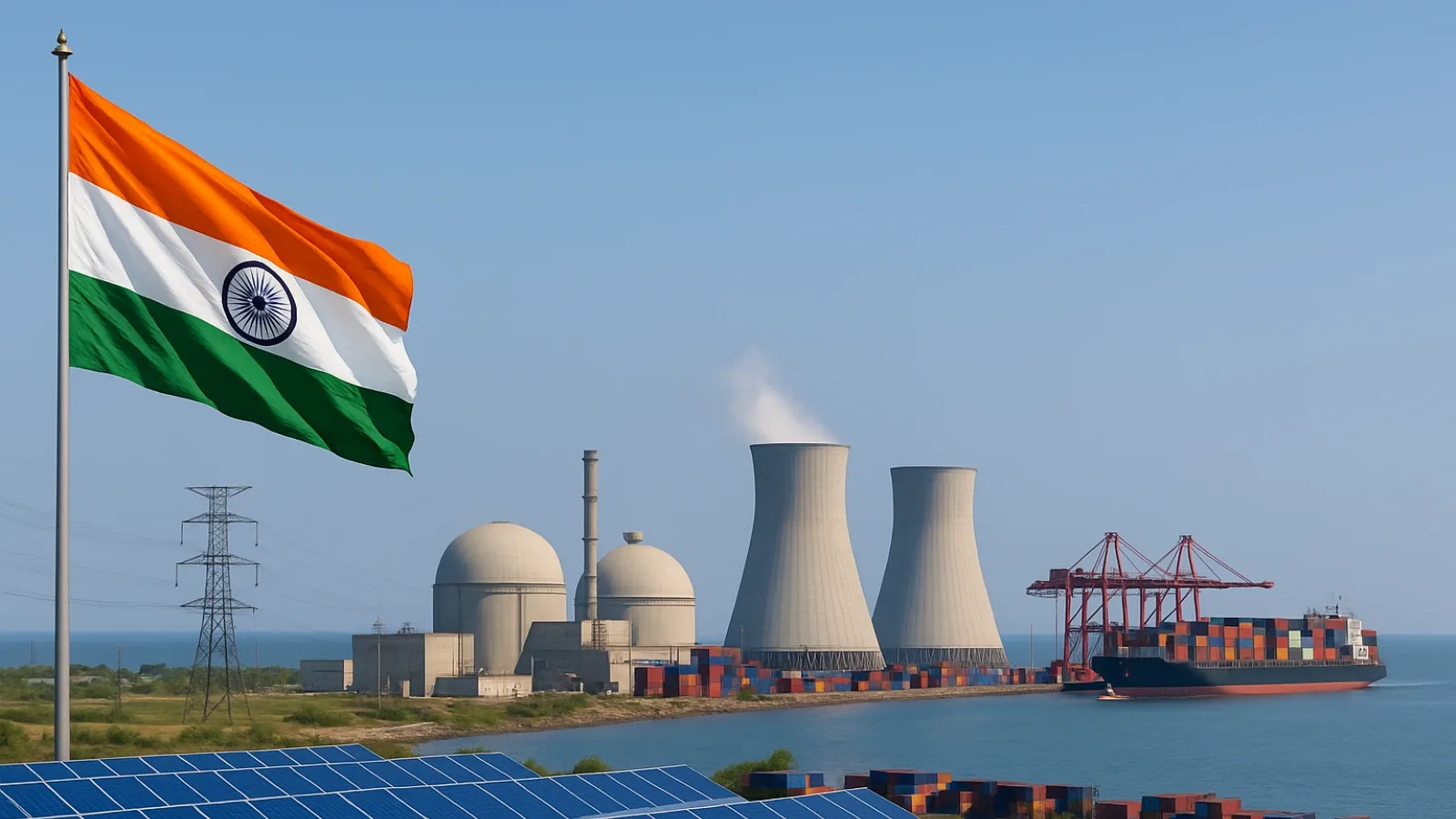
India is positioning itself as a key innovator in nuclear energy by pursuing Small Modular Reactor (SMR) technology through the Bharat Small Modular Reactors (BSMR) initiative led by the Nuclear Power Corporation of India Ltd. (NPCIL). The venture has attracted interest from six major private sector companies, including Reliance Industries, Tata Power, Adani Power, Hindalco Industries, JSW Energy, and Jindal Steel & Power, aiming to support energy-intensive industrial operations with compact, low-carbon electricity solutions.
India’s project plans revolve around SMRs capable of producing between 30 and 300 MWe per module, with a focus on strategic installations across 16 identified sites in states such as Gujarat and Madhya Pradesh. These sites include locations of decommissioned thermal power plants, allowing infrastructure reuse while enabling clean energy production. The SMRs are particularly suited for sectors such as steel, aluminum, and cement manufacturing that require consistent and reliable energy. Under the initiative’s structure, NPCIL retains public ownership of the reactors, while private partners finance lifecycle costs in exchange for long-term electricity supply agreements critical for their industrial operations.
Globally, SMRs are gaining traction as alternatives to conventional nuclear power plants due to their scalability and ability to bypass some logistical challenges associated with larger facilities. Operational projects such as Russia’s Akademik Lomonosov and China’s HTR-PM exemplify the feasibility of SMRs, while international developers, including Holtec International and Rolls-Royce, continue advancing related technologies. The applicability of these reactors extends beyond industrial supply, with technology companies like Google and Microsoft exploring nuclear options to meet energy demands for data centers challenged by the intermittency of traditional renewable sources.
However, SMRs face significant challenges, including high development costs, stringent regulatory barriers, and public concerns regarding nuclear safety. These factors contribute to ongoing debates about the commercial viability of these reactors and the ability to attract consistent private investment. Despite this, India’s landmark decision to permit private sector collaboration under national supervision marks progress in addressing these hurdles, safeguarding the initiative’s growth and aligning with evolving energy demands.
Why this matters
The advancement of SMRs under India’s BSMR initiative bears operational and strategic implications for the maritime and industrial sectors. SMRs offer compact and high-output solutions ideal for meeting high-energy demands in energy-intensive industries such as steel production and port operations, where reliable electricity supply is critical. Locations near port areas could benefit directly from SMR installations, contributing to decarbonization and fuel diversification. Additionally, the inclusion of decommissioned thermal sites in the project scope introduces cost-saving gains for stakeholders through infrastructure reuse.
On a broader scale, the initiative underscores India’s ambition to modernize nuclear reactor designs to meet international standards, providing export opportunities for SMR technologies. As the maritime sector confronts increased emission reduction pressures, SMRs represent a potential avenue for green port operations and reducing reliance on fossil fuels. With India allocating ₹20,000 crore under its Nuclear Energy Mission, the maritime supply chain may witness substantial shifts through energy-efficient, nuclear-driven port and industrial logistics systems.
India’s SMR development not only marks its commitment to accelerated energy transition but also positions the nation as a contender in the competitive global SMR market. Operators across shipping, port management, and industrial corridors will need to monitor the progress closely, particularly the commissioning timelines for indigenously designed SMRs slated by 2033.