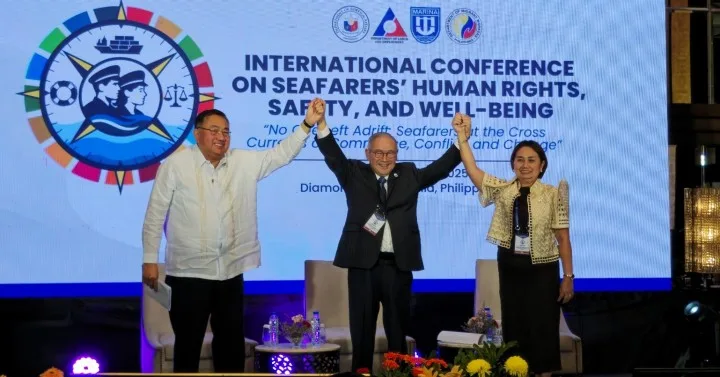
An international conference held in Manila from September 1-3, 2025, introduced the landmark Manila Declaration on Seafarers’ Human Rights, Safety, and Well-being. Philippine officials, including Ambassador to the UN Carlos Sorreta, Ambassador to the UK Teodoro Locsin Jr., and Maritime Industry Authority (MARINA) Administrator Sonia Malaluan, spearheaded the proposal, which has so far drawn official endorsements from 14 nations. Among those supporting the declaration are Bangladesh, Germany, Malaysia, the Netherlands, and the United Kingdom. Aimed at safeguarding the rights of seafarers worldwide, the document outlines comprehensive measures to address their welfare, human rights, and working conditions while advancing inclusivity and gender equality in the maritime industry.
The declaration asserts that human rights must remain inviolable whether on land or at sea, aligning closely with the principles articulated in the Universal Declaration of Human Rights and numerous international treaties. Stakeholders are encouraged to prioritize social dialogue, robust enforcement mechanisms, and intergovernmental collaboration to achieve these objectives. A key focus remains on adhering to the Maritime Labor Convention 2006 and improving emergency preparedness for seafarers, ensuring they can operate under conditions that are equitable, safe, and free from exploitation.
Administrator Sonia Malaluan described the declaration as a “guiding compass for collective action.” She emphasized the need for governments, industry stakeholders, and international organizations to unite around principles of human rights, inclusivity, and strategies for a just transition amidst technological advancements in the maritime sphere. The declaration highlights technical cooperation and capacity-building efforts in maritime education to support workers in adapting to new realities, transforming the industry into a fairer and more resilient sector for future generations.
With special attention to seafarers’ safety and well-being, the Manila Declaration aims to incorporate human rights into operational frameworks across the global shipping industry. Beyond existing protections, the declaration advocates for systemic change that promotes gender equality and tackles inclusivity gaps as technological evolution reshapes conditions onboard vessels. By addressing these multifaceted challenges, the declaration seeks to empower seafarers and establish a sustainable path forward for maritime employment.
Why this matters
The Manila Declaration marks a pivotal moment in championing the rights of seafarers, who play an indispensable role in facilitating global trade. According to the International Chamber of Shipping, approximately 90% of world trade relies on maritime transport, underscoring the critical need to ensure fair treatment and support for the workforce that underpins this vital sector.
Operationally, the declaration strengthens the enforcement of existing frameworks like the Maritime Labor Convention 2006, which serves as a baseline for seafarer protections. The inclusion of enhanced emergency preparedness further addresses long-standing risks associated with life at sea. For shipowners and operators, aligning with such initiatives could mitigate reputational risks while fostering compliance in jurisdictions that increasingly prioritize human rights obligations within port state control regimes.
Financially, the collective push for inclusivity, safety, and fair treatment aligns with broader industry trends toward sustainability and employee well-being, which can positively influence recruitment pipelines for seafaring roles. The emphasis on education and technical cooperation ensures crew members are prepared to handle emerging technologies, benefiting owners deploying innovations like automated systems or digital route planning.
With 14 nations already endorsing the declaration, its reach could lead to harmonized standards across critical trade lanes, reducing inconsistencies in seafarer treatment and operational protocols. It may also encourage tighter collaborations between flag states, enforcement bodies, and maritime unions.
As more nations rally behind the Manila Declaration, the initiative offers a blueprint for developing a maritime industry that places human rights at its core while supporting a just transition into new technologies and operational frameworks. Stakeholders in shipping are advised to integrate these principles proactively, recognizing them as both a moral imperative and a strategic advantage in maintaining global trade continuity.