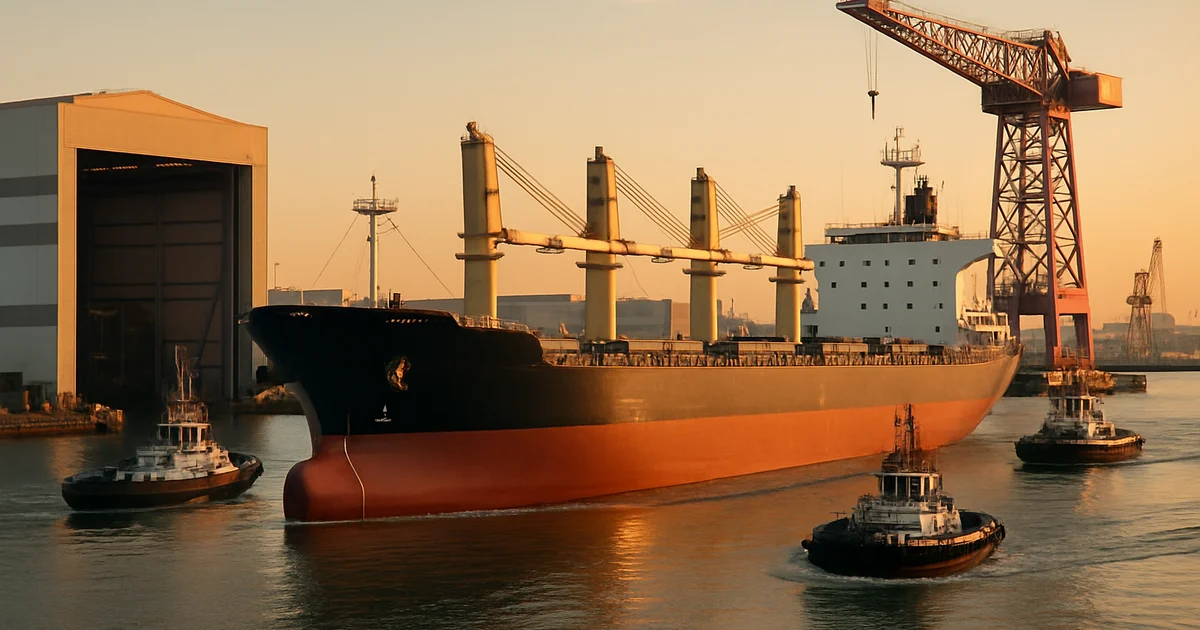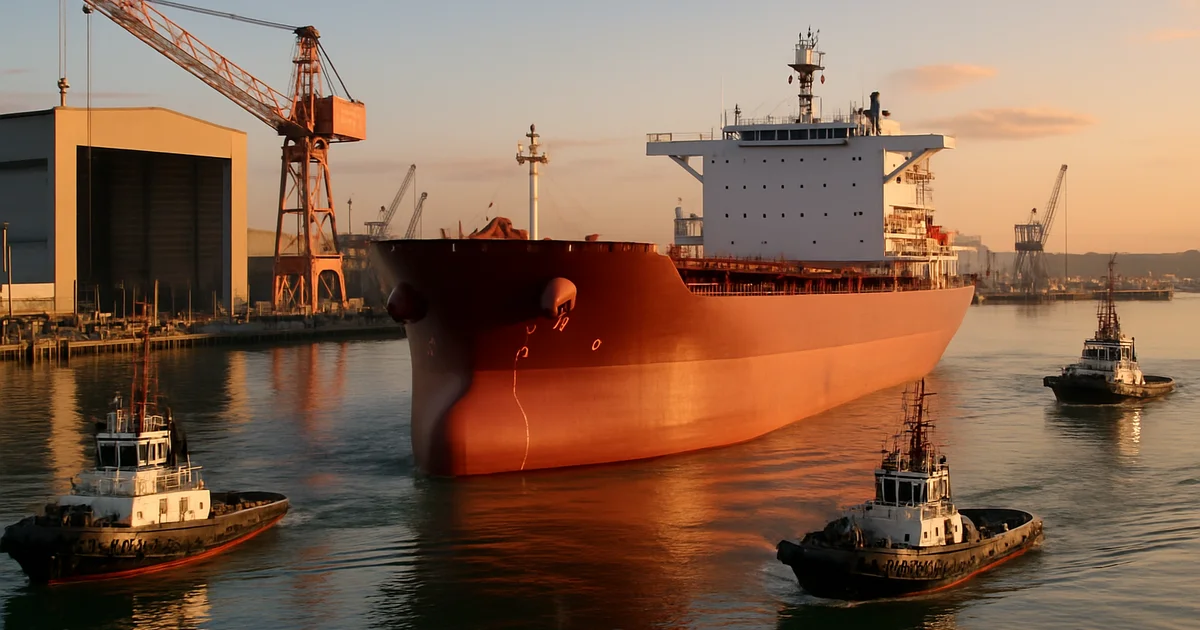
AET, a leader in global energy logistics, has recently taken delivery of a new Suezmax second-generation dynamic positioning (DP2) shuttle tanker, marking an expansion in its fleet capabilities. This vessel, named Eagle Campos, was delivered on October 1, 2023, from the Hyundai Heavy Industries shipyard in Ulsan, South Korea.
The Eagle Campos represents a significant advancement in tanker technology. It features 153,000 deadweight tonnage (DWT), state-of-the-art thrusters for enhanced maneuverability, and environmentally friendly designs compliant with stricter emission regulations. The vessel is equipped with systems to meet EEDI phase 3 requirements, with reduced fuel consumption aimed at minimizing carbon footprint. This includes installing energy-efficient devices like rudder bulbs and advanced waste heat recovery systems to improve the overall carbon efficiency.
The vessel, owned by AET, will primarily operate in the Brazilian Basin for Petrobras under a long-term charter agreement. Capt. Ahmad Bin Jamaluddin, Deputy President and Chief Operating Officer of AET, emphasized the strategic importance of this delivery. He noted that the addition of the Eagle Campos to their fleet aligns with AET’s commitment to embracing greener shipping solutions and supporting its key clients like Petrobras with responsible and efficient maritime operations.
Industry observers have noted that the delivery of the Eagle Campos is part of a broader fleet expansion strategy by AET as global demand for energy-efficient and versatile shipping solutions increases. This strategic alignment with environmental compliance and the growing demand for greener shipping routes keeps AET competitive in a market under pressure to reduce emissions and lower environmental impact.
Why this matters
The introduction of the Eagle Campos into AET’s fleet meets industry demands for cleaner and more efficient shipping solutions. This reinforces AET’s position to effectively serve critical routes like the Brazilian Basin, where Petrobras operates. The deployment of advanced shuttle tankers is crucial in supporting offshore oil producers in reducing carbon emissions while maintaining high operational standards.
Furthermore, the vessel's capabilities, such as the dynamic positioning system and energy-efficient technologies, are well suited to meet the complex operational demands of the oil and gas sector, enhancing safety and reliability in energy logistics. This positions AET advantageous for future contracts requiring higher environmental ratings and operational flexibility.
Lastly, the operational deployment of vessels like Eagle Campos addresses market trends indicating a shift towards decarbonization. Charterers increasingly demand vessels that offer better environmental performance, aligning with the IMO's goals for reducing maritime greenhouse gases.
By integrating advanced technology and adhering to stringent environmental standards, the Eagle Campos is expected to influence the market's trajectory toward sustainable shipping solutions. The strategic emphasis on such vessel acquisitions may drive competitors to similarly adapt to evolving regulations and client expectations.