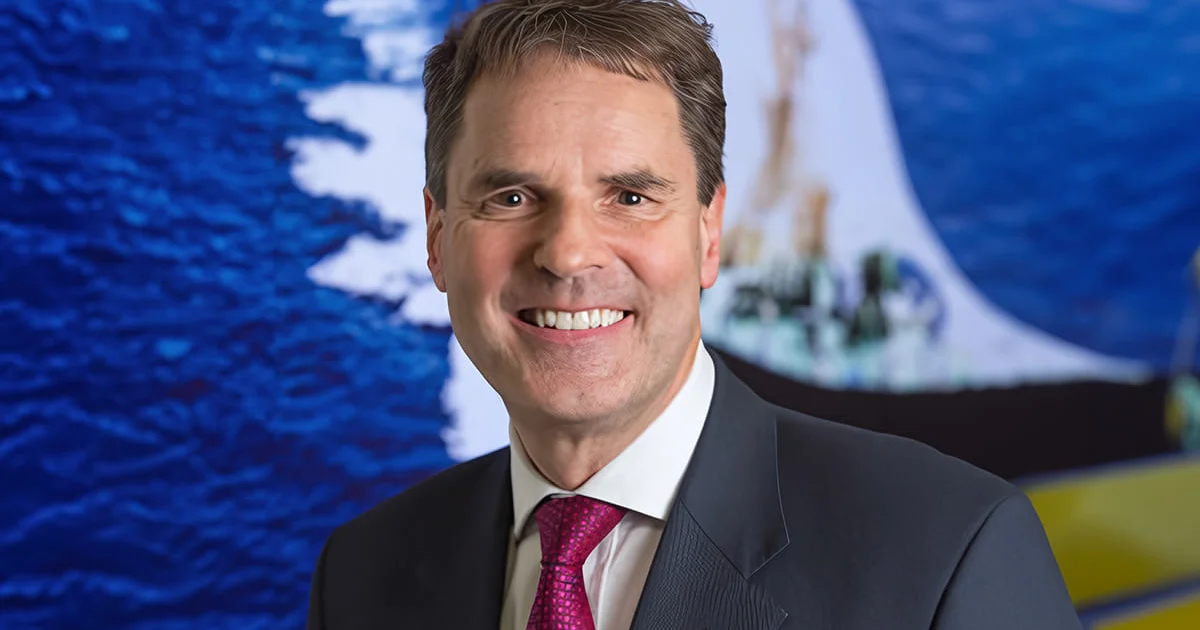
Global maritime safety standards took centre stage at the 7th edition of the **Tristar Safety at Sea** event, drawing leaders and stakeholders from across the shipping sector. Among the prominent figures was **Chris Henderson**, whose 40-year career in maritime operations has been characterised by his extensive contributions to improving safety practices, particularly during his tenure with **Shell**. Henderson’s influence extends globally through his role as the founder and chair of **Together in Safety**, an industry consortium dedicated to enhancing safety performance by uniting flag states, classification societies, shipping companies, insurers, and other critical stakeholders in collaborative efforts to address safety challenges.
Henderson’s commitment to safety has earned him recognition at the highest levels. In 2020, he was awarded an **Order of the British Empire (OBE)** by **Her Majesty The Queen** for his contributions to international shipping safety. Further cementing his credibility, he was designated as a **Fellow of the Royal Academy of Engineers (FREng)** in 2022—a title conferred upon individuals with significant achievements in engineering. Under his leadership at Together in Safety, global maritime operators have seen unified efforts towards implementing improved protocols and cultivating cross-sector cooperation in safety standards.
Addressing attendees at the event, Henderson emphasised the importance of fostering partnerships to advance industry-wide safety initiatives. Under his stewardship, Together in Safety has emerged as a pivotal forum, acting as a bridge to bring varied segments of the sector—many traditionally siloed—into dialogue with one another. Collaboration remains the consortium’s linchpin, enabling systemic safety challenges to be tackled with input from all domains.
Why this matters
Safety remains a critical operational priority for the maritime industry, amid increasing scrutiny from global regulators and higher expectations from consumers who depend on reliable shipping networks. The work of **Together in Safety**, under Henderson’s leadership, seeks to address systemic vulnerabilities in the sector, including fragmented enforcement processes and insufficient onboard safety training. By engaging stakeholders across insurance, classification societies, flag states, and shipowners, Henderson’s consortium takes targeted measures to eliminate gaps in safety performance.
For ship operators, reduced accidents and safer working environments translate into lower insurance premiums and a more stable regulatory compliance framework—key financial incentives in an era of narrow margins. Additionally, enhanced safety measures bolster employee retention for operators struggling to attract skilled crews amid labor shortages. These efforts collectively improve industry resilience while fostering accountability and cooperation across the sector.
The sustained emphasis on safety as a collaborative, industry-wide effort ensures that advancements are institutionalised rather than remaining isolated developments by individual companies. Such initiatives further reduce risk exposure not just for operators but also for the broader supply chain and major trading economies reliant on uninterrupted maritime freight.
The next phase for the global shipping industry will likely see greater adoption of safety-forward innovations, driven by forums like **Together in Safety**. Henderson’s leadership exemplifies how industry pioneers can transform fragmented safety practices into cohesive frameworks, providing ship operators with actionable guidance and measurable improvements. Stakeholders should monitor evolving safety initiatives closely, as regulatory bodies and flag states continue to integrate these standards into future compliance requirements globally.