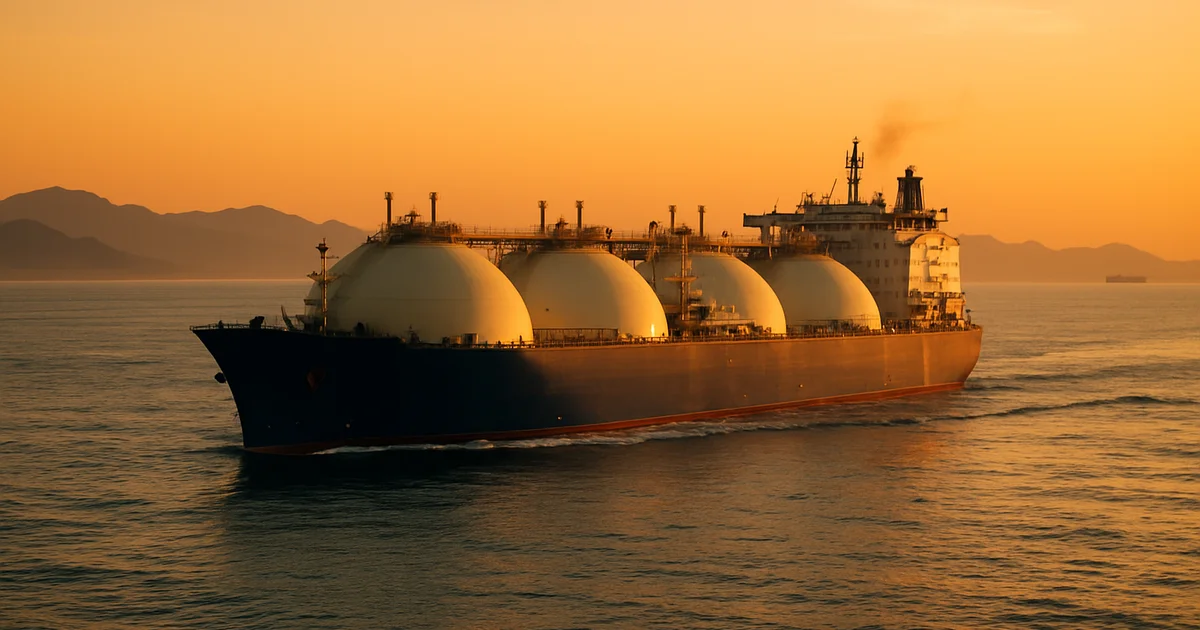
Hudong-Zhonghua Shipbuilding, a subsidiary of China State Shipbuilding Corporation (CSSC), has initiated construction on what is set to become the world's largest LNG carrier. The milestone was announced by the Shanghai-based shipyard, highlighting the significance of this newbuild in the context of global LNG trade.
The first steel cutting for the 270,000 cubic meter capacity LNG carrier took place at the Hudong-Zhonghua facility. This vessel, when completed, will surpass the current largest LNG carriers and will cater to the increasing demand for LNG transport, driven by heightened global energy requirements.
According to Hudong-Zhonghua Shipbuilding, the LNG carrier will incorporate state-of-the-art technology, including advanced re-liquefaction systems and dual-fuel propulsion engines, ensuring efficiency and reduced emissions in line with current environmental standards. The shipbuilder is renowned for its decades of experience in constructing LNG carriers and continues to secure its position in a competitive market with this ambitious project.
Moreover, the shipyard's spokesperson, Li Zheng, emphasized the importance of this project, citing China's strategic aim to enhance its maritime capabilities and to support its Belt and Road Initiative by expanding its fleet with more technologically advanced vessels.
Why this matters
The construction of the world's largest LNG carrier by Hudong-Zhonghua underscores China's commitment to bolstering its maritime infrastructure and capabilities in line with global environmental standards. As global LNG demand rises, this project places Chinese shipbuilding at the forefront of this industry sector, potentially reshaping competitive dynamics worldwide.
For shipowners and operators, the introduction of larger and more efficient LNG carriers could lead to economies of scale, potentially reducing operating costs and improving profitability margins, which are critical for the LNG shipping sector. The inclusion of advanced propulsion and environmental systems aligns with the industry's ongoing shift towards greener shipping solutions.
This initiative also reflects China's strategic focus on achieving greater energy security through increased LNG imports, thus impacting global LNG trade patterns. Industry players will need to adapt to the evolving landscape, where transformative projects by major shipyards influence market trends.
The upcoming completion of the 270,000 cubic meter LNG carrier will represent a key development in the LNG sector, offering enhanced capacity and efficiency for global trade routes. This aligns with China's wider maritime strategy, marking a significant leap in its efforts to dominate the high-capacity LNG vessel arena.