China’s recent naval maneuvers in the western Pacific, following U.S. military exercises in the Philippines involving advanced ship-sinking missiles, underscore rising tensions in the region. This development unfolds against the backdrop of longstanding territorial disputes between China and the Philippines, particularly regarding maritime rights in the South China Sea, where both countries have experienced confrontations at sea.
The U.S. has initiated joint military exercises in the Philippines that feature the deployment of NMESIS anti-ship missiles. This strategic positioning is intended to enhance U.S. naval capabilities in the Luzon Strait, a crucial maritime corridor for Chinese naval operations. The historical context is vital here: the U.S. entered a mutual defense treaty with the Philippines in 1951, committing to its security amidst rising Chinese assertiveness.
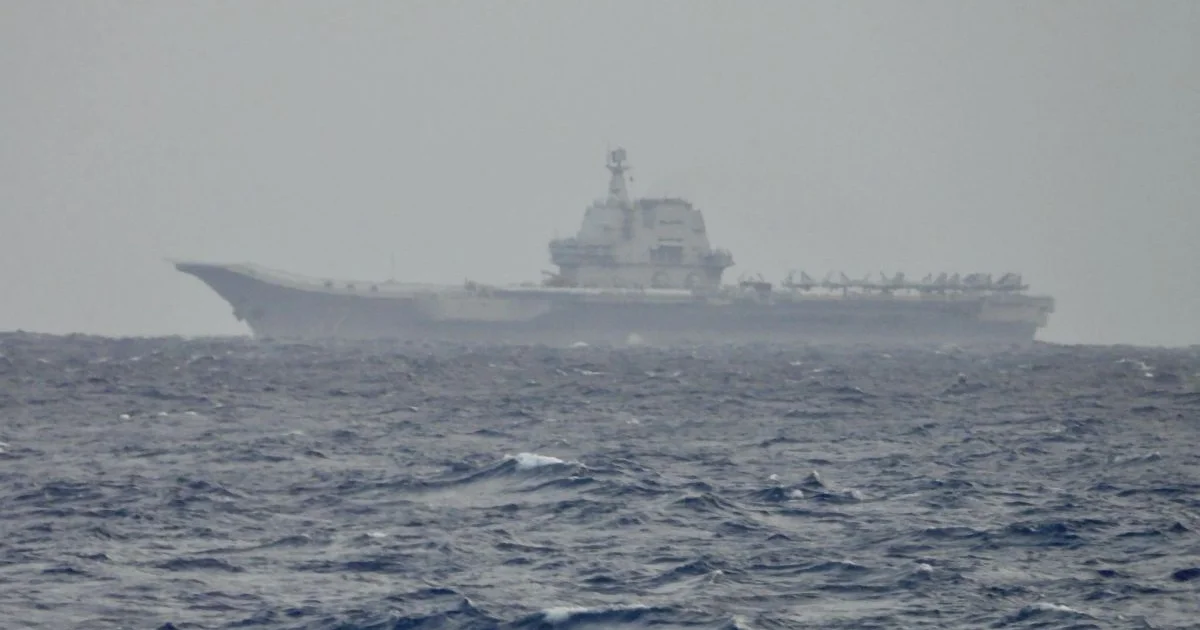
In response, China dispatched a naval group led by its second aircraft carrier, the CNS Shandong, to the waters east of Luzon. Japanese Defense Ministry reports indicate that this deployment included additional naval vessels, such as the Type 055 destroyer CNS Yan’an and the Type 815A electronic surveillance ship CNS Tianguanxing. The Shandong was reported to be conducting flight operations for its fighter jets, demonstrating its readiness for potential conflict.
Significantly, the Shandong’s operation marked a breakthrough as it moved beyond the U.S. containment strategy, which encompasses the first island chain formed by Japan, Taiwan, and the Philippines. Despite being observed within the Philippines’ 200-nautical-mile exclusive economic zone (EEZ), the carrier did not breach territorial waters, which extend only 12 nautical miles from the coast.
This incident reflects China’s growing naval capabilities and willingness to operate further from its shores. The Shandong had previously participated in expansive marine drills around Taiwan, echoing Beijing’s ongoing threats against the self-governing island. The recent deployment also breaks past records for aircraft sorties during its earlier missions in 2023, signaling an evolving military strategy.
Meanwhile, the U.S. Navy, with the USS Nimitz deployed in the Philippine Sea, continues to reinforce its commitment to maintaining a “free and open Indo-Pacific.” This operation is part of a scheduled deployment, highlighting the U.S.’s resolve in counterbalancing Chinese influence in the region amidst increasing military activities from both powers.
As both countries maintain a visible military presence in the western Pacific, the likelihood of further maritime encounters increases. Analysts and military observers are concerned that these growing tensions could lead to miscalculations or unintended confrontations between the two nations, heightening instability in an already volatile region. The current situation emphasizes the delicate balance of power and the complexities of geopolitical relationships in the Asia-Pacific theater.