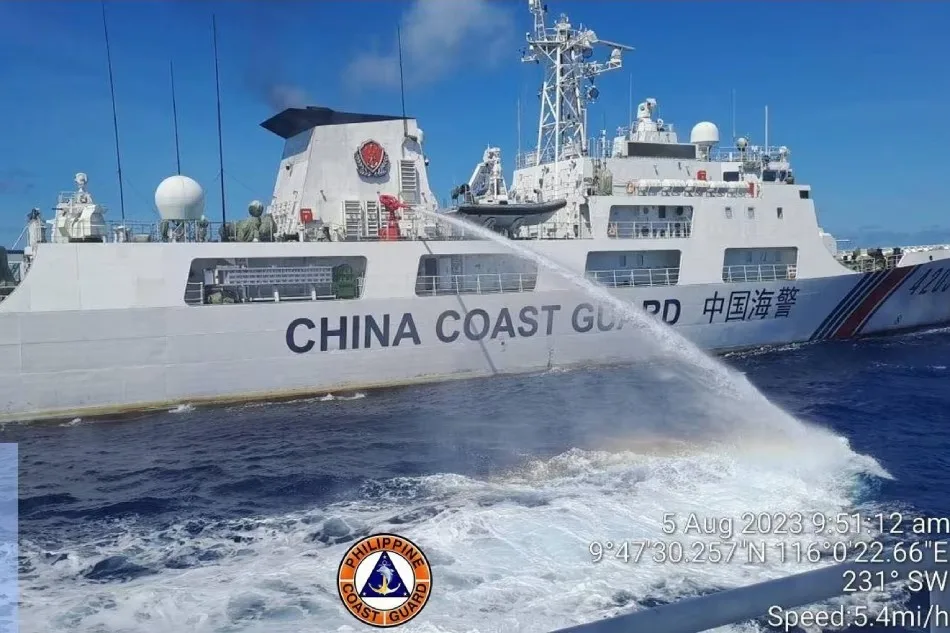
A collision between a Chinese naval vessel and a Philippine Coast Guard ship near the disputed Scarborough Shoal has raised tensions in the South China Sea, a region where territorial stakes remain highly contentious. The incident occurred as the Philippine Coast Guard was escorting boats delivering aid to local fishermen, when the Chinese vessel, CCG 3104, reportedly engaged the Filipino ship, BRP Suluan, in an aggressive high-speed maneuver. According to Commodore Jay Tarriela, spokesman for the Philippine Coast Guard, the risky actions of the Chinese vessel resulted in a collision that inflicted significant damage on CCG 3104, leaving it unseaworthy. The event forms part of a broader series of confrontations in the South China Sea, a waterway through which approximately 60% of global maritime trade passes.
While the Philippine vessel managed to avoid a reported water cannon attack deployed by the Chinese ship, the incident highlights the persistent flashpoints in the Scarborough Shoal area. This location has been a source of contention since China expelled Philippine forces from it in 2012 and declared near-full ownership over the region, despite international rulings invalidating these claims. Commodore Tarriela disclosed that an offer of assistance to the Chinese crew following the collision was ignored. At the geopolitical level, this latest conflict underscores the complex and increasingly fraught relations between Manila and Beijing.
Adding to the regional instability, Philippine President Ferdinand Marcos Jr. has expressed concern about the implications of a potential conflict in Taiwan, just across the Luzon Strait, cautioning that such a scenario would inevitably pull the Philippines into the fray due to geographical proximity. Marcos cited the welfare of Filipinos working in Taiwan and the country's broader economic interests as factors necessitating contingency planning. Beijing has publicly protested these remarks, accusing the Philippine leader of provocation. Since his inauguration in 2022, President Marcos has strengthened defense ties with the United States, leveraging a mutual defense treaty to counter China's expanded influence in the South China Sea. His administration's pivot toward Washington signals heightened preparedness against further regional escalations.
Why this matters
The collision involving CCG 3104 and BRP Suluan has operational, legal, and geopolitical implications for stakeholders navigating the South China Sea. For maritime operators, the heightened risk of vessel confrontations adds security challenges and potential insurance liabilities to operations in this high-traffic region, which is critical to global trade routes. Territorial disputes complicate enforcement of freedom of navigation and put commercial shipping at the periphery of military altercations, as demonstrated in recent incidents such as this and the deployment of water cannons.
On the diplomatic front, China's rejection of international rulings concerning its claims over the South China Sea impacts governments and shipowners alike, exposing vessels operating near contested areas to risks of direct intervention or harassment. As Manila deepens its ties with Washington under President Marcos, maritime operators must weigh how shifting military alliances and broader security policies impact freedom of transit and regional stability.
Looking ahead, operational risks in strategic maritime passages like the Scarborough Shoal remain elevated as the Philippines and China continue their confrontational encounters. Shipowners navigating the South China Sea must adopt heightened vigilance, factoring geopolitical instability into risk assessments and insurance coverage decisions. Meanwhile, the alignment between the Philippines and the U.S. bears watching for its impact on maritime security and regional naval operations in contested waters.