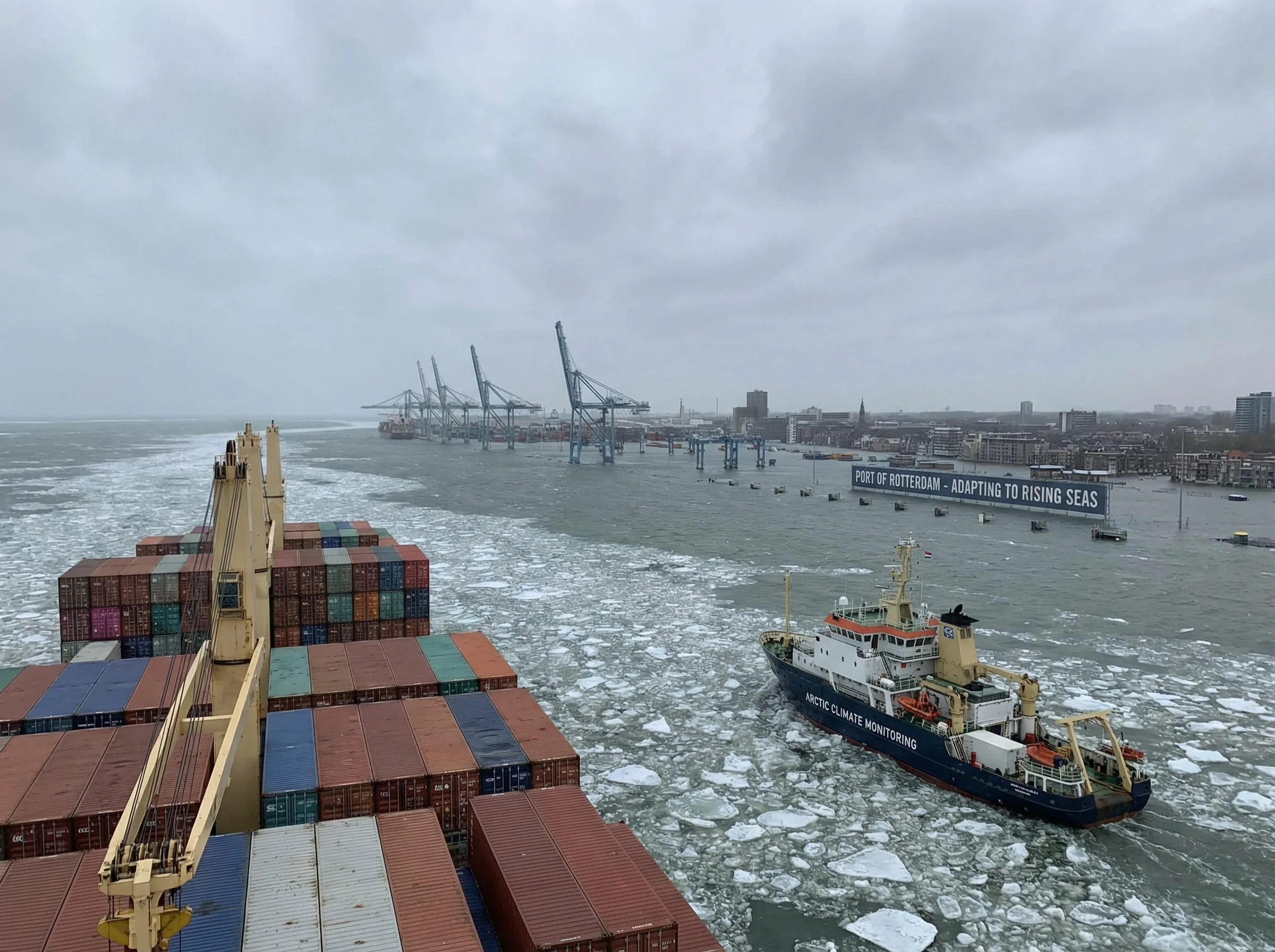
Climate change is exerting a growing influence on the global maritime sector, with rising sea levels and more frequent extreme weather events elevating risks to infrastructure, vessel operations, and supply chains. Industry stakeholders are increasingly compelled to adopt proactive measures to ensure resilience amid these evolving environmental conditions.
Rising sea levels are among the most pressing challenges, threatening ports and coastal shipping routes with flooding, erosion, and necessitating expensive protective upgrades. Low-lying ports across Asia, Europe, and the Americas are particularly vulnerable, with several already investing in elevated docks, advanced drainage systems, and sea walls to safeguard against encroaching waters. Operational impacts include increased port closure risks, higher insurance premiums, disruptions to trade routes, and compounded operational costs.
Extreme weather events, including heightened storm activity, hurricanes, and typhoons, are adding layers of complexity to operational schedules and safety protocols. Regions such as the North Atlantic and Western Pacific are increasingly subject to severe storms, prompting vessel operators to reassess routing strategies and implement advanced scheduling techniques. Maritime personnel and cargo face heightened dangers, with risks of vessel damage, cargo losses, and crew injuries rising in tandem with unpredictable weather patterns.
To mitigate these risks, the industry is prioritizing adaptation strategies. Infrastructure upgrades such as elevated port structures, reinforced barriers, and improved flood management systems are among the primary initiatives underway. Technological advancements—particularly in weather forecasting and route optimization tools—are enabling operators to minimize delays and enhance safety. Beyond physical measures, stakeholders are also participating in policy-driven initiatives like the International Maritime Organization’s (IMO) decarbonization goals and collaborating with governments and environmental organizations to address climate impacts.
Leading maritime organizations are embedding resilience into their operational planning. Comprehensive strategies now emphasize regular risk assessments, staff training in emergency preparedness, and investments in climate-resilient vessel designs. Advocacy for robust regulatory frameworks is growing to ensure that climate adaptation measures align with international standards and industry objectives. Cross-sector partnerships further enrich these efforts, creating opportunities for shared solutions that span industry boundaries.
Why this matters
Climate change poses direct operational disruptions for shipowners, ports, and other key stakeholders within the maritime sector. Rising sea levels threaten the infrastructure integrity of numerous ports, resulting in elevated costs for maintenance and retrofitting. Seasonal volatility from extreme weather events intensifies cargo risks and leads to delayed schedules, challenging operators’ ability to maintain reliability across global shipping routes.
The financial implications of these challenges are substantial. Higher insurance premiums, escalating construction costs for climate-proof upgrades, and increased operational expenses for weather-related rerouting are compressing margins across the sector. Companies that fail to adapt could become financially exposed in an increasingly uncertain operating environment.
Regulatory developments, particularly in frameworks addressing sustainability and decarbonization, are shaping industry approaches to climate adaptation. IMO initiatives, port authority regulations, and collaborative international efforts will play a decisive role in the pace and efficacy of industry-wide resilience upgrades.
Operators face rising incentives to incorporate advanced technological solutions, such as real-time weather analytics and climate-resilient vessel designs, to address these evolving risks. Those that invest in adaptation early may capture competitive advantages while mitigating exposure to regulatory penalties and operational disruptions.
Future industry strategies will hinge on expanding capacity to integrate climate-focused innovation into day-to-day operations, as the global maritime sector continues to grapple with the far-reaching implications of climate change.