The Maritime Security Threat Advisory for the week highlights the increasing complexity of maritime security threats impacting major global regions in 2024. This advisory emphasizes significant developments and emerging concerns that necessitate heightened vigilance among maritime stakeholders.
1. West Africa: Gulf of Guinea and Niger Delta
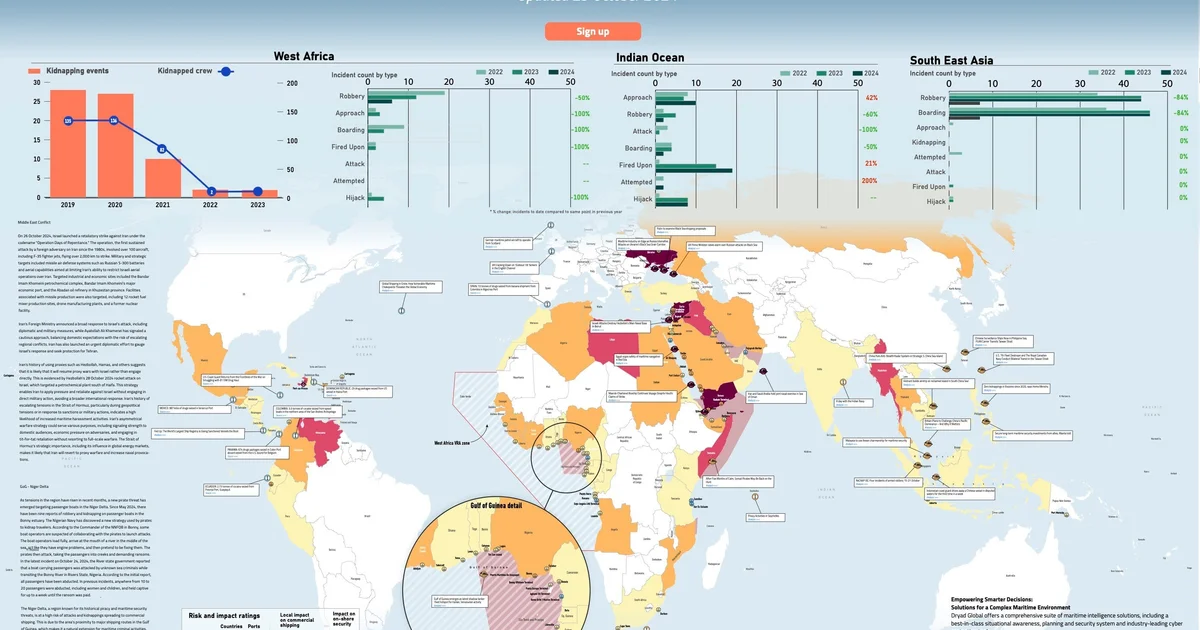
The Gulf of Guinea has seen a disturbing rise in piracy and kidnappings, particularly in the Niger Delta. Notably, there are reports of conspiracies between boat operators and pirates, whereby operators simulate mechanical failures to facilitate attacks. Victims are often held for ransom, emphasizing the urgency of increased security measures in this region. The importance of the Gulf of Guinea in global shipping, especially for tankers and bulk carriers, underlines the necessity for vessels to remain cautious while navigating these waters.
2. Indian Ocean and Southeast Asia
Although piracy incidents in the Indian Ocean have decreased, there remain concerns over armed robberies, particularly reported in Southeast Asia. The ReCAAP Information Sharing Centre documented multiple incidents in October 2024, indicating persistent risks, especially around the Singapore Strait. In response, regional navies, including those from Indonesia and the Philippines, have amplified patrol efforts, particularly in light of tensions surrounding activities involving Chinese vessels in disputed areas.
3. Middle East Tensions and Black Sea Conflict
Tensions between Iran and Israel escalated following Israel’s “Operation Days of Repentance,” which targeted Iranian military facilities. This retaliation is likely to provoke increased proxy activities by Iran through groups like Hezbollah, raising concerns for the safety of maritime routes in the region. Concurrently, the ongoing conflict in the Black Sea, exacerbated by Russian attacks on Ukraine’s grain exports, has raised safety alarms for vessels operating in this maritime corridor. Leaders from the UK and EU are advocating for enhanced protective measures for commercial shipping in these waters.
4. Southeast Asia and South China Sea
China’s military expansion, characterized by the deployment of anti-stealth radar and surveillance ships in the South China Sea, continues to heighten regional tensions. The ongoing naval drills by both the U.S. and allied forces contribute to the volatility affecting shipping routes in these contested waters. Despite a decrease in kidnappings since 2020 in the Sulu-Celebes Sea, concerns regarding organized crime and piracy targeting vessels in Southeast Asia, particularly near the Philippines and Indonesia, persist.
Security Outlook and Recommendations
Given the resurgence of maritime crime and geopolitical tensions, the advisory underscores the importance of enhanced monitoring and security measures. Industry stakeholders are urged to improve situational awareness and adopt robust security protocols. Increased regional cooperation, especially in joint naval exercises among countries in the Gulf of Guinea, South China Sea, and Indian Ocean, is vital for safeguarding critical shipping lanes. Additionally, operators are encouraged to leverage intelligence solutions for navigating high-risk areas, strategically planning routes, and implementing best practices to ensure crew safety and cargo security.
Overall, the advisory reflects the pressing need for vigilance and proactive security strategies for vessels operating in these high-risk maritime zones.