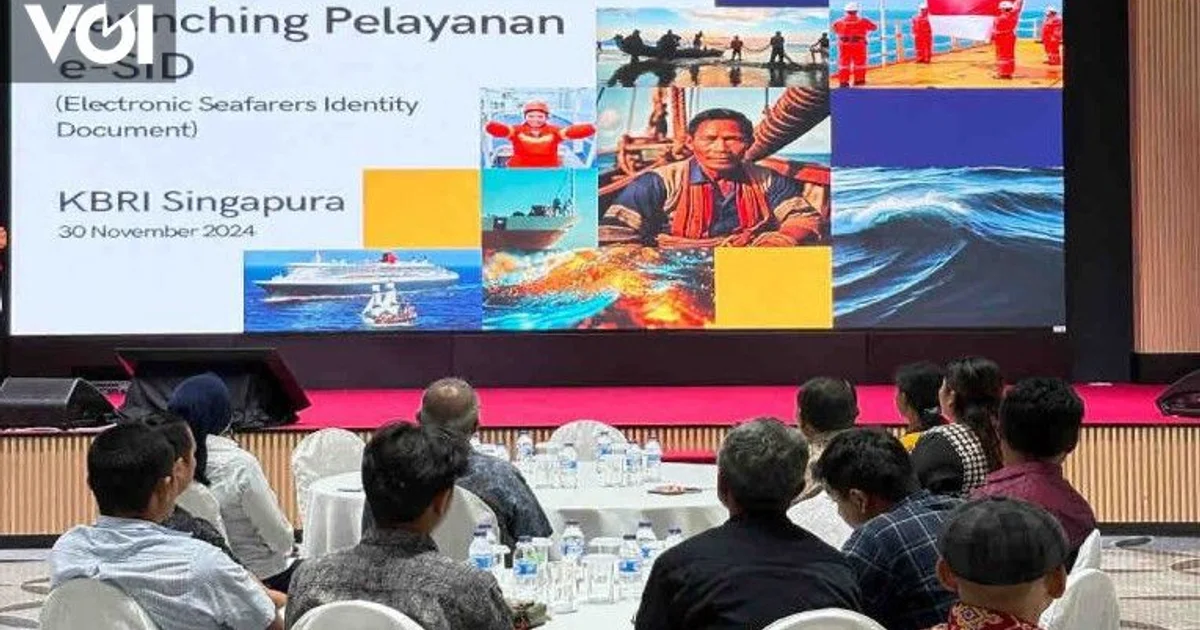
The Directorate General of Sea Transportation under Indonesia's **Ministry of Transportation** has unveiled the **Electronic Seafarers Identity Document (e-SID)** service at the Indonesian Embassy in Singapore. This innovative rollout is designed to strengthen the legal protection and operational facilitation of Indonesian sailors abroad, with an emphasis on compliance with international regulations as outlined in **ILO Convention Number 185**. **Hendri Ginting**, **Director of Shipships and Maritime Affairs**, stated that the e-SID enhances seafarers' mobility across international waters, providing streamlined access to ports, and reinforcing their status as legitimate maritime workers.
Indonesia, a critical participant in the global maritime workforce, currently accounts for **36,167 registered Indonesian sailors** in Singapore alone. The e-SID system offers distinct advantages, including visa-free port entry, simplified repatriation procedures, and robust biometric security measures for identity validation. These features collectively aim to safeguard the rights of sailors while ensuring higher standards of data protection. The initiative aligns with **Indonesian Law Number 1 of 2008**, which ratified the **ILO Convention on Seafarers’ Identity Documents**, and places Indonesia among the **39 nations globally** committed to fostering seafarer welfare under international protocols.
The Ministry has emphasized its commitment to professional service and equitable treatment for sailors. Initial e-SID distribution was conducted symbolically at the Singapore embassy, with designated representatives of Indonesian sailors receiving the documents. With meticulous attention to accurate data verification, targeted allocation, transparent documentation processes, and timely issue resolution, the Ministry aims to operationalize e-SID functionalities effectively across domestic and foreign ports. Seafarers have been encouraged to promptly report any difficulties experienced during the handover process to ensure rapid corrective measures.
Why this matters
The introduction of the e-SID system addresses longstanding operational and legal challenges faced by Indonesian seafarers on international assignments. Visa-free port access dramatically reduces bureaucratic hurdles, enabling quicker transitions between assignments and lower operational costs for employers relying on Indonesian sailors. As Indonesia remains a significant contributor to the global maritime labor pool, such measures enhance the nation's competitive edge in supplying crew to the international market.
In addition, the biometric security features embedded in the e-SID reinforce seafarer identity verification while maintaining compliance with stringent international standards. This reduces risks of fraud or identity theft, which are critical concerns in a globally interconnected maritime workforce. Furthermore, simplified repatriation provisions will significantly aid shipowners and operators in managing workforce turnover with reduced administrative complexities.
For port authorities, transparent identity documentation and data recording help streamline activities such as port clearance processes, enabling smoother maritime operations across regions where Indonesian seafarers are deployed. Improved response mechanisms and government oversight ensure that operational setbacks faced by Indonesian crew members abroad are addressed promptly, reinforcing their legal protections.
In the broader maritime context, Indonesia's commitment to ratifying and implementing **ILO Convention 185** underscores its dedication to aligning domestic maritime labor standards with those of other leading shipping nations. As the e-SID rollout progresses, shipowners and fleet operators should anticipate further efficiencies and compliance benefits from an increasingly protected and mobile workforce of Indonesian seafarers.
Looking ahead, the e-SID system is set to become a cornerstone in Indonesia's maritime workforce management. Shipowners, port operators, and crewing agencies should monitor the full implementation of this program, as its success has implications for improving crew mobility, enhancing legal security, and ensuring smoother global logistics operations involving Indonesian sailors.