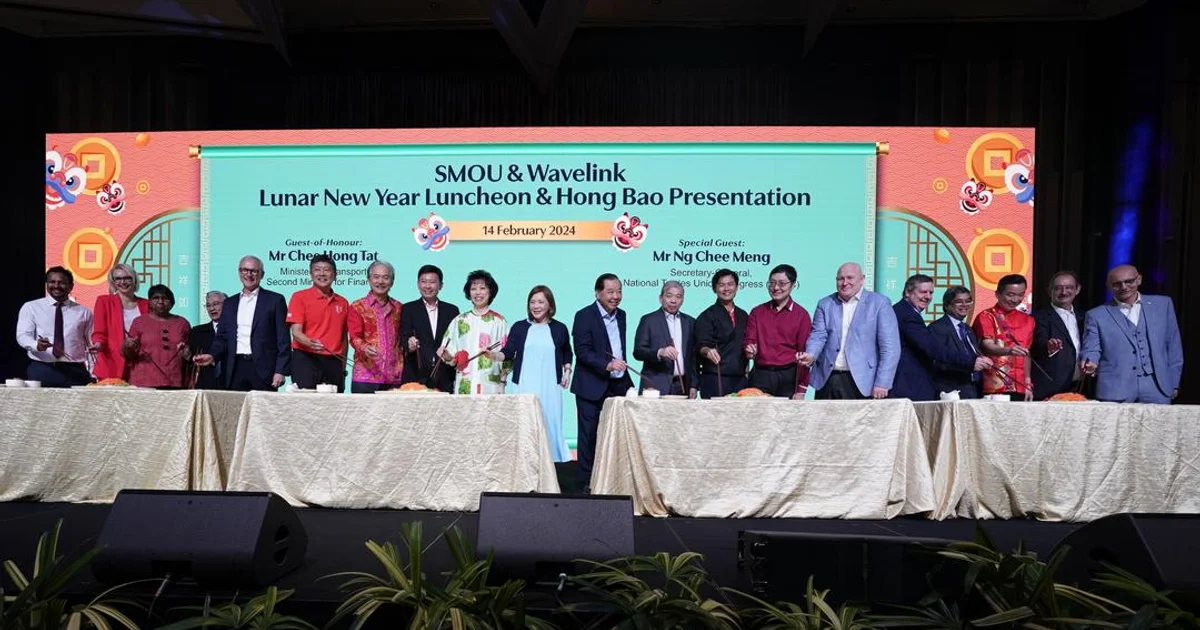
The Tripartite Maritime Training Awards (TMTA) programme, a cornerstone initiative to bolster Singapore’s maritime workforce, has been reintroduced with renewed ambitions and updated parameters. The relaunch event, held on February 14, 2024, at the Singapore Maritime Officers’ Union’s (SMOU) Lunar New Year celebration, featured Transport Minister Chee Hong Tat alongside NTUC Secretary-General Ng Chee Meng. With this refreshed strategy, the programme targets the development of 120 deck and engine officers within five years, reinforcing Singapore’s maritime talent pool under the “Singapore Core” framework.
The TMTA programme is a partnership between SMOU, the Maritime and Port Authority of Singapore (MPA), and NTUC’s Employment and Employability Institute (e2i). Originally established in 2009, the programme—formerly known as the Tripartite Nautical Training Award and Tripartite Engineering Training Award—has trained over 400 cadets to date, with more than 130 achieving their Certificate of Competency (COC). Its goal remains consistent: to create entry points for both career changers looking to transition into maritime roles and fresh graduates aiming for a foothold in the sector. Successful participants gain access to seafaring positions as well as shoreside roles, solidifying Singapore’s status as a premier global maritime hub.
Training under the programme will be conducted by the Wavelink Maritime Institute, the training affiliate of SMOU, which has been tasked with ensuring that course content aligns closely with prevailing industry standards. Investments exceeding $10 million have been committed to the initiative, enabling quality education and financial support mechanisms. This resource pool will be further expanded through partnerships that integrate practical training modules and extended curriculum evolution based on emerging operational needs. The next cohort intake is set for September 2024.
The programme’s tripartite structure serves as a model of aligned stakeholder interests. It facilitates wage growth and professional development for seafarers while delivering a cadre of skilled workers to employers. Simultaneously, governmental agencies benefit from collaborative industry insights to shape maritime policy. SMOU noted that improved financial support and enhanced training infrastructure are pivotal to sustaining long-term workforce development outcomes.
Why this matters
The relaunch of the TMTA programme signifies Singapore's proactive stance in addressing the global shortage of skilled maritime professionals. With the maritime industry grappling with workforce renewal challenges, training initiatives such as this serve as critical mechanisms to attract new talent and ensure operational continuity. For shipowners and operators, the availability of well-trained deck and engine officers directly mitigates risks associated with crew shortages, while bolstering vessel safety and efficiency.
Moreover, the strategic investment underscores Singapore's commitment to retaining its edge as a maritime hub in Asia. The TMTA-trained workforce not only bolsters fleet operational competence but also strengthens Singapore's standing as a regional leader in maritime education and policy formulation. Enhanced training capacity at Wavelink Maritime Institute signals increasing readiness to meet growing demand for technically adept professionals across international shipping corridors.
As the first intake under the revamped programme gears up for September 2024, industry stakeholders will be closely monitoring its success in delivering the targeted workforce numbers and ensuring smooth integration into existing operational frameworks. Its alignment with Singapore’s broader maritime strategy positions it as a model initiative that other nations may look to replicate.