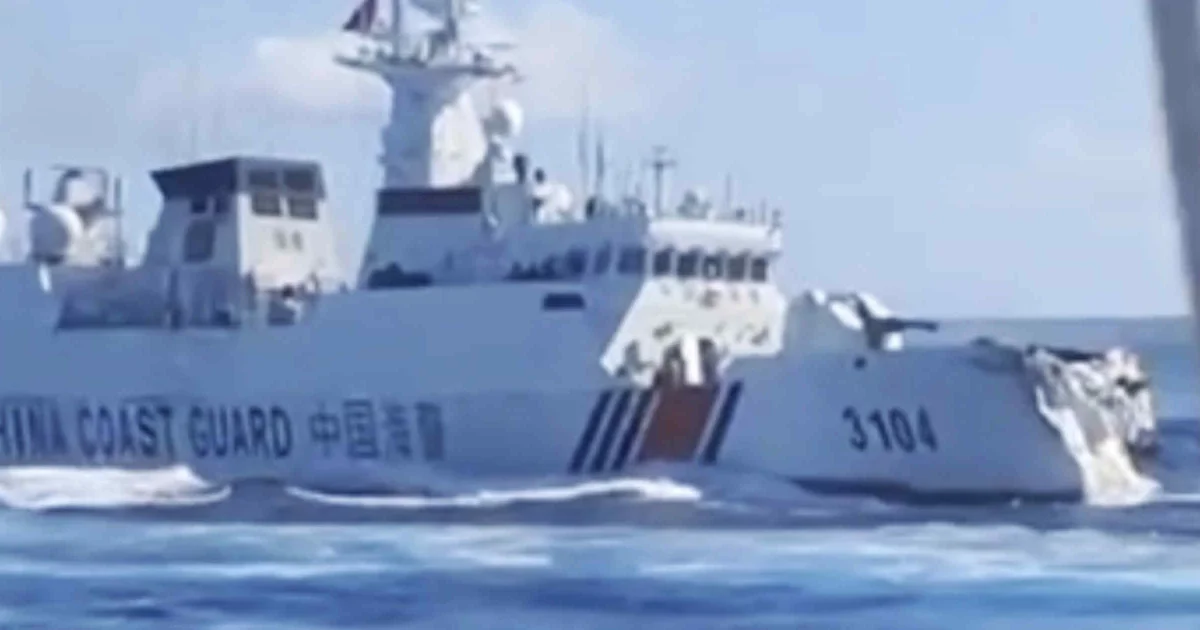
On August 11, 2025, a collision occurred between a vessel from the Chinese Coast Guard and another from the People’s Liberation Army (PLA) Navy in the contested waters of the South China Sea. This event was captured on video by the Philippine Coast Guard, showing damage to the Chinese Coast Guard ship.
The Philippines’ Department of Foreign Affairs expressed grave concerns regarding the “dangerous maneuvers” exhibited by the two Chinese vessels. The incident reflects ongoing tensions in the South China Sea, where overlapping territorial claims by several nations, including the Philippines and China, often lead to confrontations at sea.
The South China Sea is a strategically important region, rich in natural resources and vital for global trade routes. It has been the focal point of disputes not only between China and the Philippines but also with Vietnam, Malaysia, and Brunei, each asserting their rights over parts of this maritime territory. China’s expansive claims, often marked by the “nine-dash line,” further complicate these disputes and have drawn international scrutiny.
Tensions in the area have escalated in recent years, with reports of increased military activity and aggressive maneuvers from various parties involved. Instances like the recent collision serve to highlight the risks associated with naval encounters in these crowded waters, where miscommunication or reckless actions can quickly lead to serious diplomatic incidents or military confrontations.
The incident occurred amidst ongoing dialogues in the region about maintaining peace and stability in the South China Sea. Various countries, including the United States, have reiterated their support for a rules-based international order and encourage all parties to engage in dialogues to resolve disputes peacefully.
The aftermath of the collision remains uncertain, but it underscores the fragile nature of maritime security in the area. As nations navigate complex geopolitical landscapes, incidents like these are likely to provoke robust discussions around military engagement rules and the need for clearer communication protocols among naval forces operating in contested regions.
This event not only exemplifies the challenges faced by regional actors but also raises broader questions about international maritime law and the enforcement of navigational rights in the face of assertive territorial claims.