Philippines rejects China's Scarborough Shoal nature reserve plan
The Philippines has lodged a formal diplomatic protest against China's decision to establish a "nature reserve" at Scarborough Shoal, a disputed maritime territory in the South China Sea. Known as Huangyan Island in China, the shoal covers approximately 3,523.67 hectares (8,707 acres) and lies about 240 kilometers (150 miles) west of Luzon, the Philippines’ main island. This area has long been a flashpoint in the countries’ territorial disputes, with both sides asserting sovereignty over the region.
China’s State Council recently approved the nature reserve initiative aimed at preserving “diversity, stability, and sustainability” in the local ecosystem, focusing primarily on coral reef conservation. However, the Philippine Department of Foreign Affairs has denounced the move as "illegitimate and unlawful," emphasizing the ruling of a 2016 international tribunal that rejected China’s expansive claims in the South China Sea. The international decision reaffirmed the Philippines' rights within the area and dismissed China's basis of territorial control rooted in its "nine-dash line" map.
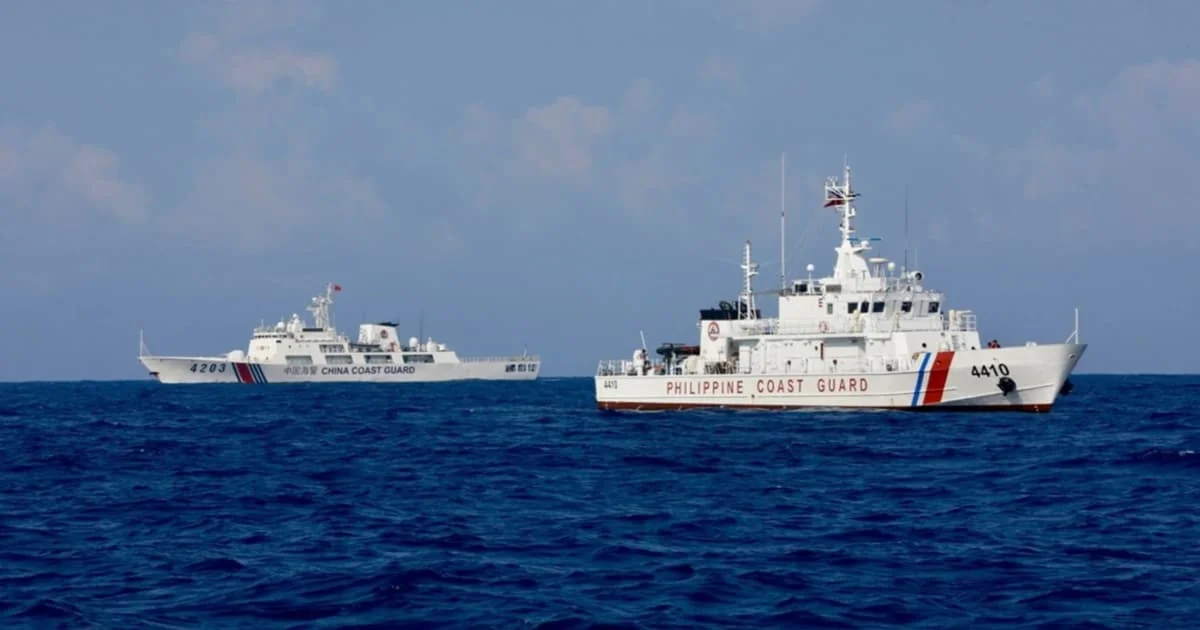
Tensions have been further aggravated by recent maritime incidents near Scarborough Shoal. Last month, a Chinese navy vessel collided with a Chinese coast guard ship during a pursuit of a Philippine patrol boat in the area. The altercation, captured on video and released by Filipino authorities, has sparked additional criticism. Earlier this year, in May, the Philippines condemned what it described as a “high-risk maneuver” by a Chinese vessel near the shoal, while Beijing accused the Philippines of encroaching on Chinese waters. Despite the tribunal’s ruling and ongoing diplomatic outreach, Beijing continues to enforce its claims through strategic installations and naval patrols.
Scarborough Shoal is strategically significant for both nations. Located nearly 900 kilometers from Hainan, China’s nearest landmass, it lies along critical maritime trade routes. Although China has so far refrained from publicly commenting on Manila’s diplomatic protest, the establishment of the reserve risks further complicating the delicate geopolitical balance in the South China Sea.
Why this matters
For maritime operators and stakeholders, the intensifying dispute over Scarborough Shoal raises concerns about navigational security in one of the world’s most vital trade corridors. The shoal sits in areas critical to international shipping lanes that handle approximately 30% of the global maritime cargo flow, presenting risks of potential disruption due to escalating regional hostilities.
The Philippines’ rejection of China's nature reserve plan signals Manila's commitment to asserting its sovereignty, despite China's growing influence in the region through naval presence and artificially constructed islands. Any further escalation could provoke broader maritime security measures, increase insurance premiums for transiting vessels within contested waters, or impact compliance obligations under international law.
Shipowners should monitor developments for implications of enforced military activity or restricted access. The growing tension directly affects vessels operating under South China Sea routes, with possible rerouting costs and delays to maritime schedules should disputes escalate further.
With territorial claims unresolved, commercial operators and industry decision-makers may face additional costs stemming from geopolitical instability in a region critical for energy shipping and cargo passage. The standoff underscores the importance of preparing contingencies for heightened security risks and regulatory changes in disputed waters.
Maritime stakeholders must brace for prolonged regional uncertainty, which will demand continued vigilance and adaptative measures for vessel routing and trade operations in the South China Sea.