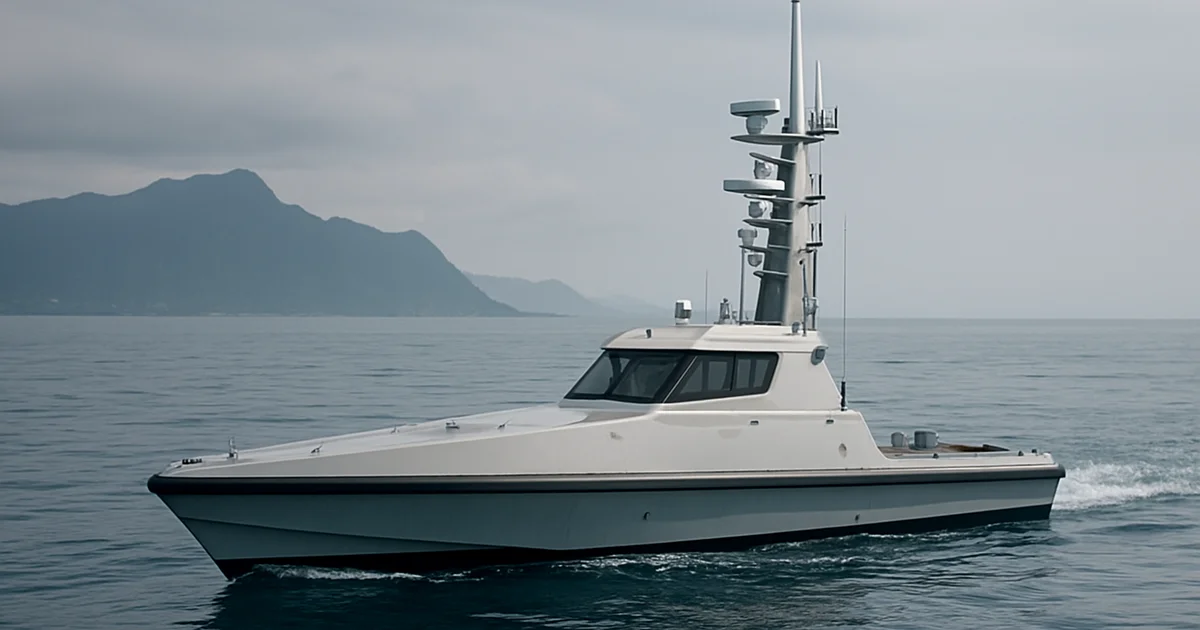
The Taiwan Coast Guard, aiming to bolster its maritime surveillance and patrol capabilities, has entered into a procurement agreement with a U.S. firm for the acquisition of unmanned surface vessels (USVs). These acquisitions are part of Taiwan's ongoing efforts to enhance its maritime security apparatus, particularly around its surrounding waters. While the specific U.S. company involved has not been disclosed, the initiative signifies a significant step in integrating advanced technology into Taiwan's maritime operations.
The USVs are expected to provide a substantial boost to the Coast Guard's operational efficiency. Equipped with advanced sensors and communication systems, these unmanned vessels can autonomously perform a range of tasks, including intelligence gathering, surveillance, and reconnaissance (ISR), as well as supporting search and rescue operations. They are also capable of operating in challenging sea conditions, thereby extending the reach and endurance of Taiwan's maritime forces.
According to the Taiwan Coast Guard, the USVs are slated to be deployed by 2025, aligning with Taiwan's strategic plans to enhance its maritime domain awareness. The move comes amid increasing tensions in the Taiwan Strait, with the growing presence of military and civilian vessels in the region. The integration of USVs is seen as a force multiplier that enables the Coast Guard to conduct more efficient and effective monitoring and response activities.
Officials have highlighted that the deployment of USVs will supplement the existing fleet of patrol vessels and enhance the capability of detecting and responding to potential maritime threats. The unmanned vessels will work in coordination with manned assets, providing comprehensive coverage of Taiwan's maritime territories.
Why this matters
The introduction of unmanned surface vessels into Taiwan's coast guard operations underscores a significant technological shift toward automated systems in maritime security. This move reflects a global trend where countries are investing in unmanned technologies to augment their conventional maritime forces. The benefit for Taiwan is a potential increase in surveillance capabilities without the added risk to human personnel.
The use of USVs could redefine how Taiwan manages its maritime borders. They offer the capability to keep vigil over extensive areas while freeing up manned vessels for more targeted operations. This has implications for resource allocation and operational strategy, allowing for a more flexible and responsive maritime security posture.
The deployment plan signifies adherence to international best practices in maritime security operations and highlights the strategic importance of technological innovation in maintaining national security. Moreover, it underscores Taiwan's determination to safeguard its sovereignty in increasingly disputed waters.
The integration of USVs into Taiwan's Coast Guard fleet is expected to enhance maritime situational awareness, providing a sharper tool for responding to security challenges in the Taiwan Strait. As these unmanned systems come online, Taiwan will need to ensure robust operational protocols and coordination frameworks to maximize the technology's potential benefits. Decision-makers will likely focus on refining these aspects to adapt to this next-generation maritime operational environment.