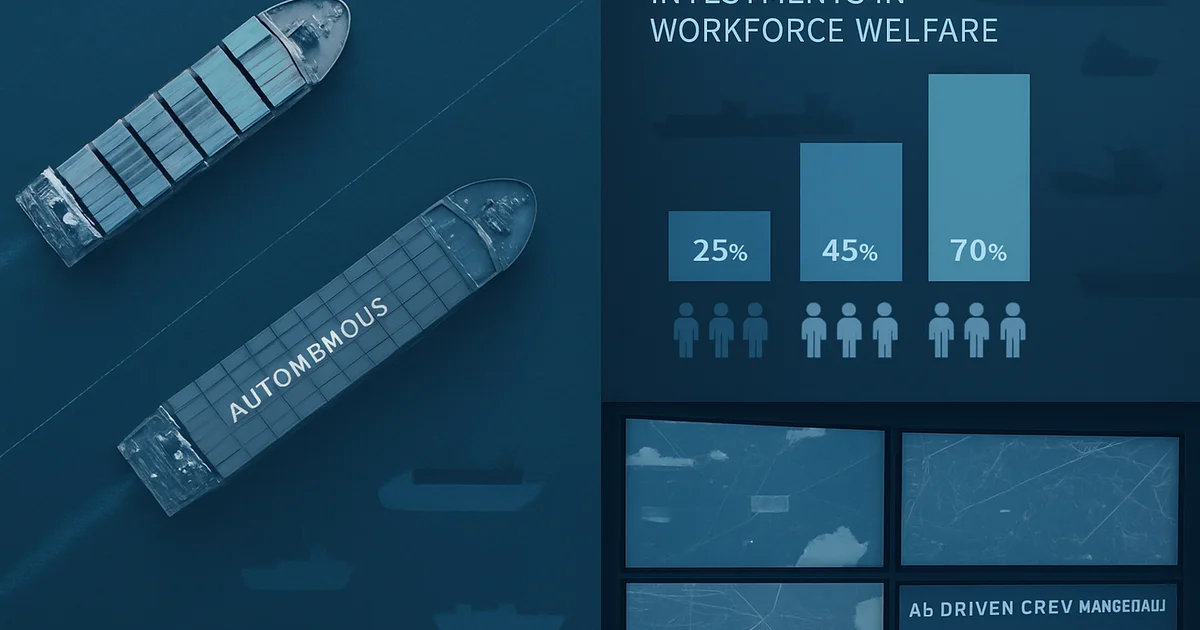
Asian shipping faces a dual imperative: adapting to decarbonisation mandates and addressing workforce challenges, both of which are reshaping operational and financial strategies. LNG carriers anticipate fleet bifurcation as EU carbon costs rise, while automation and upskilling redefine maritime employment. Concurrently, freight rates surge with an early container peak season, signaling potential volatility in trade flows and cost structures.
Top Strategic Developments
-
Wood Mackenzie: LNG Carriers Anticipate Fleet Bifurcation as EU Carbon Costs Hit US$1256/t by 2030
Why this matters for shipping: Decarbonisation costs will drive fleet segmentation, impacting vessel valuations and chartering strategies.
Wood Mackenzie forecasts EU maritime carbon costs reaching US$1256/t by 2030, prompting LNG carriers to split fleets into compliant and non-compliant segments.
-
Early Container Peak Season Drives Surge in Freight Rates, Reports Seatrade Maritime News
Why this matters for shipping: Rising freight rates signal potential cost pressures for shippers and volatility in trade flows.
An early container peak season has driven freight rates higher across Asia-Pacific trade lanes, with implications for supply chain planning.
-
The Future of Maritime Jobs in Asia: Automation, Upskilling, and the Roles That Won't Disappear
Why this matters for shipping: Automation will reshape workforce dynamics, requiring strategic investment in training and human capital.
Autonomous vessel technology and AI-assisted ship management are altering maritime employment, with a focus on upskilling and retaining critical roles.
-
Teledyne Gas and Flame Detection Supports Maritime Operators in Complying with New IMO Safety Guidelines
Why this matters for shipping: Compliance with IMO safety guidelines will drive demand for advanced detection technologies and operational adjustments.
Teledyne is assisting maritime operators in meeting new IMO safety recommendations, underscoring the industry's focus on regulatory adherence.
-
Vietnam's International Financial Center Unveils Maritime Financial Ecosystem to Attract Offshore Billions
Why this matters for shipping: Vietnam positions itself as a regional maritime finance hub, potentially redirecting capital flows within Asia.
Vietnam's International Financial Center launched a maritime financial ecosystem aimed at capturing offshore investments and enhancing regional competitiveness.
Theme of the Week
Decarbonisation and workforce transformation reshape Asian shipping strategies
Asian shipping is navigating a transformative phase, driven by decarbonisation mandates and workforce evolution. Rising EU carbon costs are prompting fleet bifurcation, while automation and AI are redefining maritime employment. These shifts are forcing operators to reassess both asset and human capital strategies.
- Wood Mackenzie: LNG Carriers Anticipate Fleet Bifurcation as EU Carbon Costs Hit US$1256/t by 2030
- The Future of Maritime Jobs in Asia: Automation, Upskilling, and the Roles That Won't Disappear
Forward outlook: Expect intensified focus on compliance-driven fleet upgrades and strategic workforce investments over the next 4–8 weeks. Regulatory developments, particularly around carbon pricing and automation standards, will further influence operational priorities.
Environmental & Decarbonisation
Decarbonisation pressures are driving fleet bifurcation and reshaping compliance strategies across the region.
Seafarers & Workforce
Automation and upskilling are redefining workforce dynamics, with implications for recruitment and training.
Regional Watch
Singapore & Southeast Asia
Mermaid Maritime's joint venture in Singapore signals renewed investment in vessel reactivation.
Operational impact: This move could increase offshore operational capacity and influence regional asset utilisation rates.
Greater China
Freight rates surge as early container peak season disrupts trade flows.
Operational impact: Shippers face higher costs, while carriers benefit from improved margins on key trade lanes.
Vietnam
Vietnam launches a maritime financial ecosystem to attract offshore investments.
Operational impact: This initiative could shift regional capital flows and enhance Vietnam's maritime competitiveness.
AI Adoption & Digital Transformation Watch
Automation and AI continue to redefine workforce strategies, as highlighted by the focus on upskilling in 'The Future of Maritime Jobs in Asia.' However, no major new deployments or AI-driven operational announcements were reported this week.
ESG & Sustainability Watch
Decarbonisation remains a priority, with LNG carriers preparing for fleet bifurcation due to rising EU carbon costs. ClassNK's leadership insights further underscore the industry's focus on compliance and sustainable fleet management.
Executive Watch List
Five items maritime leaders should track over the coming week.
- IMO MEPC80 discussions on carbon intensity measures scheduled for 12 November.
- Vietnam's maritime financial ecosystem rollout to attract initial offshore investments by Q1 2024.
- EU carbon pricing impacts on LNG carrier fleet segmentation to be monitored through Q4 2023.
- Potential freight rate adjustments as early container peak season progresses in Asia-Pacific.
- Mermaid Maritime's joint venture vessel reactivation timeline and operational impact updates.
Maritime Fairtrade Weekly Edition #202606-1 — executive intelligence briefing synthesising 13 compliant stories this week.
Past Editions