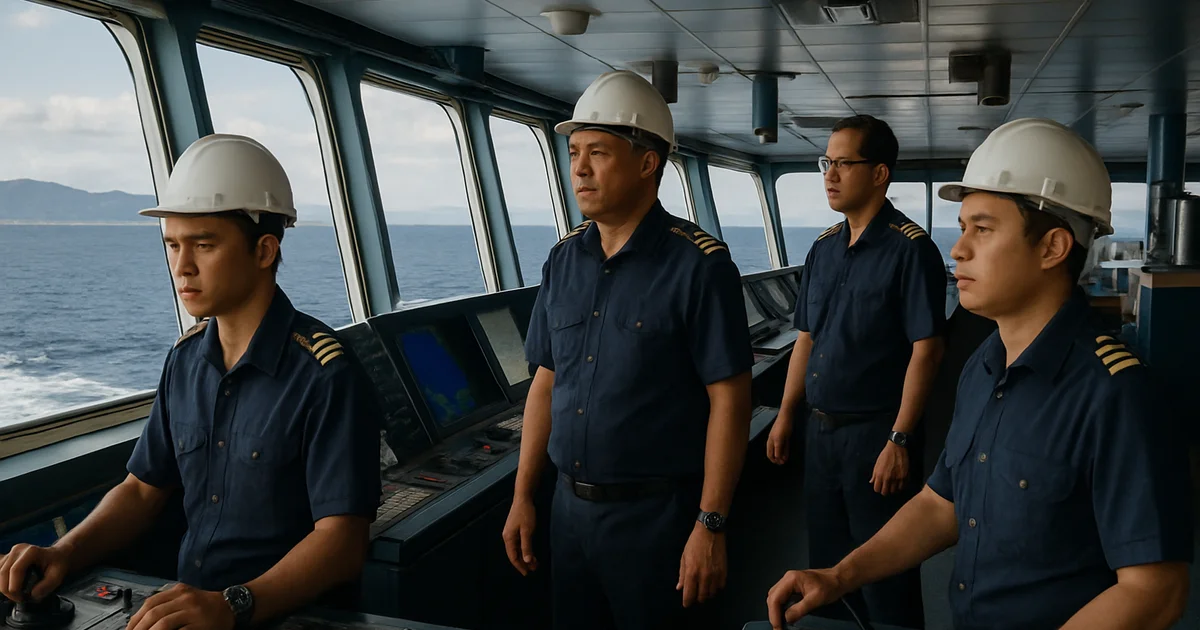
Southeast Asia supplies more than 40 percent of the world's commercial seafarers. The Philippines alone accounts for roughly 25 percent of the global supply pool, a concentration that makes the region's crewing industry structurally indispensable to international shipping. That dominance is no longer guaranteed.
A combination of training quality pressures, domestic economic competition for skilled labour, demographic shifts, and the emergence of alternative crewing markets is testing whether Southeast Asia can sustain its position as the default global crewing hub through the next decade of fleet expansion.
The challenge is not primarily one of population. The Philippines, Indonesia, Vietnam, and Myanmar collectively have demographic profiles that support sustained maritime labour supply. The challenge is one of pipeline quality and competitive positioning — whether the region's maritime training systems can produce the officer calibre that modern vessel types and regulatory complexity require.
Filipino seafarers earn significantly more aboard international vessels than in comparable domestic employment. That wage premium has historically been the primary driver of the maritime career decision. As the Philippines' service export economy and domestic manufacturing sector expand, the relative premium of maritime employment narrows — particularly for officers with transferable technical skills that onshore industries can absorb.
Indonesia presents a different dynamic. The domestic shipping sector, expanded under cabotage requirements, competes for Indonesian officers with international shipping. For Indonesian maritime graduates, the calculation between international and domestic employment has become more complex.
Vietnam has emerged as the region's most significant new crewing growth market. Vietnamese officer numbers in international shipping have roughly doubled over the past decade, and the country's maritime universities have expanded output and improved international accreditation coverage. Several Japanese and South Korean shipping companies have developed structured cadet sponsorship programmes with Vietnamese maritime institutions.
East Africa — Kenya, Tanzania, and to a lesser extent Ethiopia — is being positioned by some international crewing agencies as a long-term alternative supply market, given favourable demographics, English language proficiency, and relatively lower crew cost structures.
Why this matters
Southeast Asia's crewing dominance generates significant economic value for the region. Philippine seafarer remittances exceeded USD 6.5 billion in 2024, representing a material contribution to national income. The economic incentive to defend market position is substantial for governments in the region.
For international shipowners and fleet managers, the competitive dynamics of the crewing market have direct implications for crew cost trajectory and recruitment lead times. The assumption that Southeast Asian supply will remain elastic and competitively priced as fleet demand expands is becoming less reliable.
For maritime training institutions across Southeast Asia, the coming decade represents both a threat and an opportunity. Institutions that invest in specialised training programmes — dual-fuel operations, LNG cargo handling, digital navigation systems, cybersecurity awareness — will be positioned to supply premium crew segments at premium rates.
The region's crewing dominance is defensible — but defending it requires deliberate policy investment, institutional quality improvement, and a realistic reassessment of the competitive landscape that is emerging around it.