Bangladesh’s Rise as a Maritime Nation: Key Highlights from the IMO General Assembly
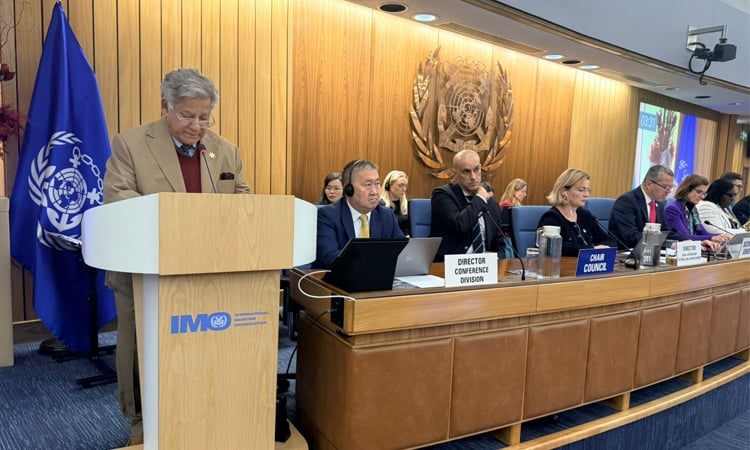
At the 34th General Assembly of the International Maritime Organization (IMO) in London, Shipping Adviser Brigadier General (retd) Dr. M Sakhawat Hossain delivered a compelling address outlining Bangladesh’s transformation from a coastal economy to an emerging maritime nation. Emphasizing modernization, innovation, and sustainable development, he articulated the nation’s growing maritime identity and its future relationship with the seas.
Dr. Hossain noted that the past decade has seen significant advancements in infrastructure and digitalization across Bangladesh’s three major seaports: Chattogram, Mongla, and Payra. A pivotal project highlighted was the construction of the Matarbari deep-sea port, which will establish a vital link between South Asia and global trade networks.
Showcasing the expertise of Bangladeshi seafarers, he stated that over 21,000 skilled individuals contribute to the reputation of the nation’s maritime fleet, acting as ambassadors on the waters. He reinforced Bangladesh’s constructive partnership with the IMO, emphasizing its active role in various committees to advocate for fair maritime regulations.
One critical theme of his address was the adherence to the philosophy of “three zeros” proposed by Nobel laureate Muhammad Yunus: zero poverty, zero unemployment, and zero carbon emissions. This philosophy is central to Bangladesh’s development plans, particularly evident in initiatives like the Bangladesh Delta Plan 2100 and the Blue Economy Roadmap. These frameworks aim to steer the country towards sustainable maritime practices.
During the assembly, where representatives from 176 member countries convened, one key agenda was the election of 40 council members for the following two years, with Bangladesh seeking a seat in “Category C.” Dr. Hossain called for support in this endeavor, outlining Bangladesh’s achievements in ship recycling, shipbuilding, and maritime training.
Additionally, he announced the establishment of ten annual scholarships for seafarers from island nations and least developed countries, aimed at fostering skill enhancement and cooperation. If re-elected to the IMO Council, Bangladesh would prioritize equitable access to maritime technology, professional training, and climate-resilient shipping solutions.
Throughout the session, Bangladesh engaged in substantial bilateral discussions, particularly with Pakistan and Belize, focusing on enhancing maritime trade and cooperation. Meetings emphasized the importance of expanding trade routes, such as between the ports of Chattogram and Karachi, and discussed opportunities for marine education for cadets from the Caribbean.
In conclusion, Dr. Hossain’s address at the IMO General Assembly illustrated Bangladesh’s ambitious trajectory as a maritime nation. His call for collaboration and support sought to bolster the country’s maritime capacity while aligning with sustainable practices, showcasing a commitment to a global maritime future that is inclusive and equitable.