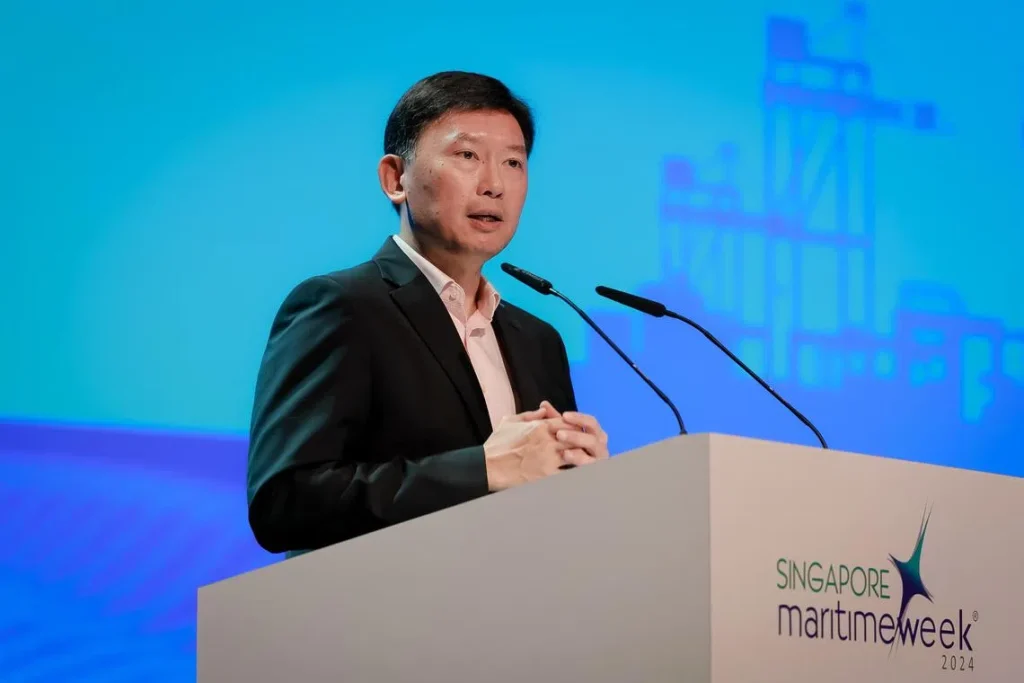
A new maritime energy training facility is being established in Singapore, expected to be completed by 2026. This initiative, a collaboration between the Maritime and Port Authority of Singapore (MPA) and 22 partners—which include major marine engine manufacturers, trade associations, unions, and higher education institutes—aims to equip about 10,000 seafarers and maritime personnel with the skills necessary for handling clean marine fuels. The announcement was made during the opening ceremony of Singapore Maritime Week on April 15.
Transport Minister Chee Hong Tat noted that this facility will bring Singapore closer to becoming the region’s maritime training hub. It will incorporate advanced training technologies, including a dual-fuel marine engine simulator to teach safe handling and bunkering of alternative fuels. Additional features will comprise an integrated engine room and bridge simulator, gas and fire safety training facilities, and augmented reality scenario-based training. Some of these training opportunities have already commenced, such as courses on handling methanol fuel for ships, one of the first in the Asia-Pacific region.
This development aligns with the recommendations from the Tripartite Advisory Panel, formed in early 2023, which focuses on identifying emerging skills for the maritime workforce. The International Maritime Organisation (IMO), represented by Secretary-General Arsenio Dominguez, emphasized the importance of training seafarers in new technologies as part of long-term solutions for the industry, welcoming Singapore’s collaboration efforts.
The facility is also expected to address training gaps experienced by new seafarers. One example is third officer Gwen Neo, who highlighted the challenges she faced familiarizing herself with the operations of a liquefied natural gas (LNG) vessel. Neo believes that simulator training will provide safer opportunities for learning and better preparation for real-world scenarios.
During Singapore Maritime Week, which hosts over 10,000 maritime professionals from nearly 80 countries, various pressing topics such as decarbonisation, digitalisation, and talent development were discussed. Minister Chee pointed out that geopolitical challenges, including tensions in the Middle East, impact global trade and logistics. Therefore, Singapore’s maritime industry is adapting to changing business models and technological advancements.
To enhance its position as a global maritime hub, Singapore is also developing a maritime AI and machine-learning digital hub in collaboration with Amazon Web Services, focusing on route and fuel optimization. In addition, MPA is participating in a maritime cyber-security roundtable to create tools for improving fleet operations’ cybersecurity.
New partnerships, like the collaboration with Hapag-Lloyd in the Singapore-Rotterdam green and digital shipping corridor, are set to expedite decarbonisation and digitalization efforts.
Looking forward, Minister Chee articulated a confident outlook for the global maritime industry despite potential challenges but cautioned that Singapore must remain proactive. He outlined three key areas for growth: fostering innovation, ensuring reliable operations, and investing in talent development. By creating a conducive environment for testing innovative solutions and ensuring continuous skill upgrades, Singapore aims to solidify its role as a leading maritime hub.
Source link