The recent US-Philippines Balikatan 2025 joint military drills marked a significant moment in military collaboration, showcasing advanced weaponry amid heightened tensions with China. This year’s exercises, which commenced on April 21 and conclude on May 9, are labeled as the largest of their kind involving thousands of US troops and various military assets.
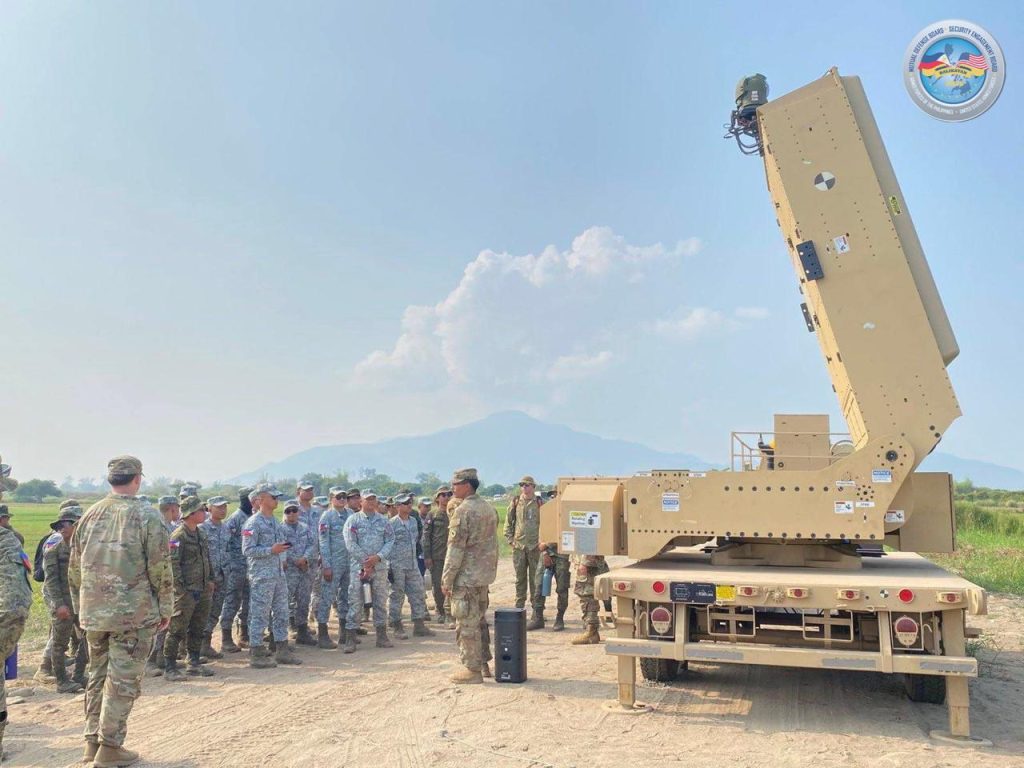
One of the highlights of these drills was the deployment of the Integrated Fires Protection Capability High-Powered Microwave (IFPC-HPM), a Directed Energy (DE) weapon designed to counter unmanned aerial systems (UAS). Its introduction in the Indo-Pacific region underscores the increasing threat posed by drone swarms, a growing concern in modern warfare. The IFPC-HPM employs microwave energy to disable aerial threats, including drones, while working in conjunction with the Marine Air Defense Integrated System (MADIS) used to track and neutralize these hazards.
On April 28, 2025, the 1st Multi-Domain Task Force (1MDTF) conducted a live-fire exercise that not only included the IFPC-HPM but also the Fixed Site-Low, Slow, Small UAS Integrated Defeat System (FS-LIDS), highlighting a multi-layered approach to air defense. Together, these systems form a robust counter-drone strategy, particularly against the low-cost and swarm-capable UAS used by adversaries, notably China.
US Army Capt. Bray McCollum described the drills as an opportunity for crucial joint training, emphasizing the strategic importance of enhanced military cooperation between the United States and the Philippines in ensuring regional stability. The tests align with the broader objective of deterring Chinese advancements in drone and missile technologies, particularly in the contested South China Sea. Over the past few years, Manila has faced multiple confrontations with Beijing, prompting a focus on military modernization and closer partnership with the US.
The development and testing of the IFPC-HPM reflect the US military’s focus on cost-effective solutions to counter threats. Unlike traditional kinetic systems, directed energy weapons like the IFPC-HPM can neutralize threats at a fraction of the cost, addressing the economic and operational challenges posed by drone warfare. Emphasizing the potential of microwave technology, the US Army aims to provide short-range protection against the challenges posed by swarm tactics, underscoring the necessity of evolving military capabilities.
As China increasingly showcases its drone capabilities, including advanced swarm technologies, the deployment of high-tech systems in the Indo-Pacific serves as a strategic countermeasure. The 1MDTF’s role in testing these systems during Balikatan 2025 signifies a commitment to multi-domain operations that integrate air defense with cyber and electronic warfare, crucial for countering China’s anti-access/area denial (A2/AD) strategies.
In conclusion, the Balikatan 2025 exercises not only showcase the US’s commitment to its allies but also underline the imperative for the Philippines to integrate advanced military technology into its defense strategy amid escalating regional tensions. The outcomes of these drills could shape future military dynamics in a region grappling with territorial disputes and the risk of conflict.
Source link