In November 2023, Oman enhanced its international maritime and transportation profile by signing two significant Memoranda of Understanding (MoUs) during meetings at the International Maritime Organisation (IMO) in London. These agreements are expected to bolster Oman’s logistics competitiveness and support its goals for decarbonization.
The first MoU was established with the Republic of Türkiye on November 24, focusing on collaboration in transport, international transport corridors, communications, and information technology. This agreement was negotiated at a ministerial level between Oman’s Minister of Transport, Eng Said bin Hamoud al Maawali, and Türkiye’s Abdulkadir Uraloğlu. It signifies a strengthening of bilateral relations, which have already seen developments this year, including the formation of an Omani-Turkish coordinating council and reciprocal visa facilitation measures. These steps are set to enhance the flow of people and goods between the two nations, while also enabling Omani ports to potentially improve their transit volumes to Mediterranean and European markets via new transport corridors.
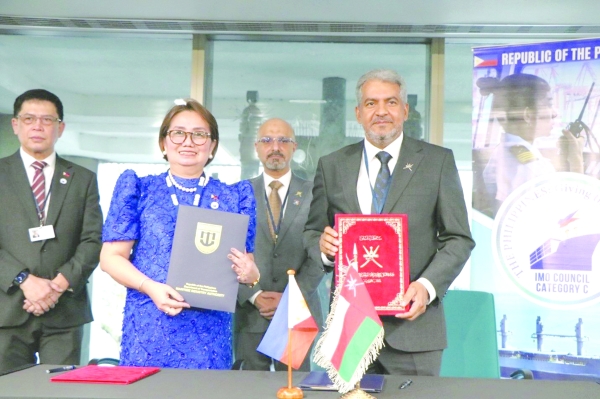
In a complementary move, Oman also signed an MoU with the Republic of the Philippines to mutually recognize seafarers’ certificates. This essential agreement, signed by Eng Khamis bin Mohammed al Shammakhi of Oman and Sonia B Malaluan from the Philippines’ Maritime Industry Authority, is aimed at simplifying crew certification processes, promoting labor mobility, and reducing administrative challenges for ship operators employing diverse crews. The initiative is particularly impactful for Oman’s shipping and offshore sectors, as it expands access to a recognized pool of seafarers, helping to lower crewing costs and alleviate manpower shortages for regional shipping lines.
Oman’s delegation at the IMO also pursued broader partnerships, including discussions in London with Austria’s embassy focused on sustainable maritime development and green energy initiatives. These talks reflect a dual approach: enhancing Oman’s logistics assets while adhering to international environmental and safety standards, which are critical in today’s chartering and financing contexts.
Oman’s proactive engagement at the IMO sessions and participation in the Marine Environment Protection Committee (MEPC) indicates a strategy aimed at aligning economic growth with sustainability. By adopting measures such as the Net-Zero Framework set by the IMO, Oman is positioning its ports and logistics groups, like Asyad and SOHAR Port and Freezone, to become competitive in green shipping and related financing sectors.
The short-term implications for Oman’s economy are promising, with potential increases in transhipment volumes and smoother operational processes in collaboration with Türkiye and the Philippines. In the medium term, adherence to IMO decarbonization regulations could lead to investment opportunities in low-carbon fuels, shore power, and sustainable port infrastructure—themes ripe for public-private partnerships and targeted financing that could stimulate job creation and capital influx into these essential areas.