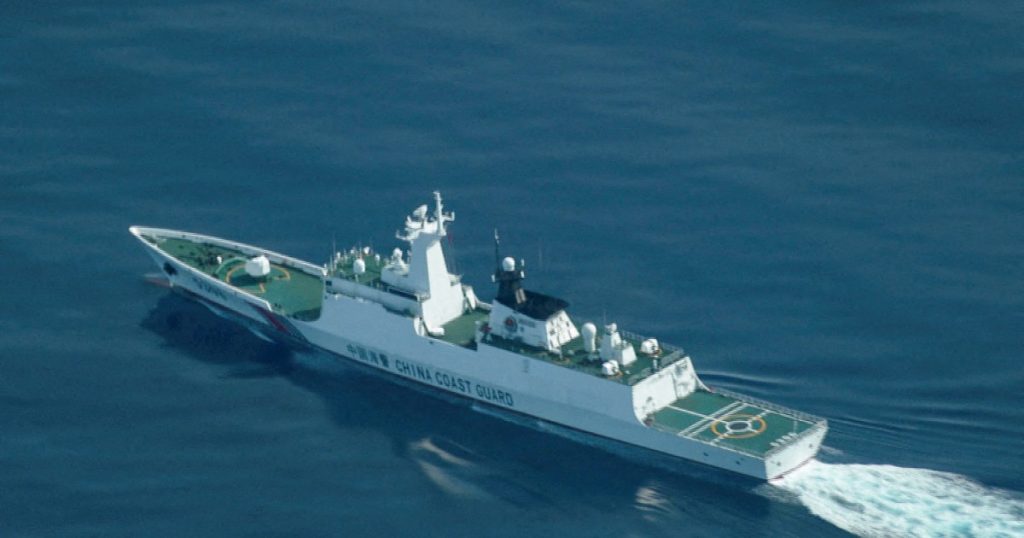
On October 13, China strongly urged the Philippines to refrain from challenging its territorial claims and efforts to protect maritime rights in the South China Sea. This request comes in the wake of a confrontation between vessels from both nations near Sandy Cay, a coral reef in the contested Spratly Islands. Lin Jian, a spokesperson for China’s foreign ministry, emphasized the need for the Philippines to immediately cease what China describes as “violations and provocations.”
Tensions between China and the Philippines have been escalating, particularly concerning territorial disputes in the South China Sea. The latest incident was marked by a series of accusations exchanged between the two countries, highlighting the fragile situation in the region. The conflict centers on the Spratly Islands, an area rich in resources and strategically significant, exacerbating the existing issues over sovereignty and maritime rights.
China’s stance reflects its ongoing effort to assert control in the South China Sea, where it has built artificial islands and expanded military presence. The Philippines, meanwhile, has sought to bolster its own maritime security through international partnerships and by asserting its claims under international law, particularly after a ruling by the Permanent Court of Arbitration in 2016, which favored the Philippines.
This incident underscores the complexities of regional geopolitics, where both nations face pressure not only from each other but also from broader international interests. As diplomatic tensions flare, both Beijing and Manila are maneuvering to protect their respective interests, making the South China Sea a potential flashpoint for further disputes.
China’s request for the Philippines to cease its challenges is indicative of its broader strategy to solidify its claims in these contested waters. The Philippine government, on the other hand, continues to advocate for its rights and has called for a peaceful resolution to the disputes. The situation remains delicate, with both nations wary of escalating confrontations but keen on maintaining their territorial claims.
Overall, the clash near Sandy Cay serves as a reminder of the ongoing tensions in the South China Sea and the challenges both nations face in navigating their complex relationship amidst competing interests and regional dynamics.