
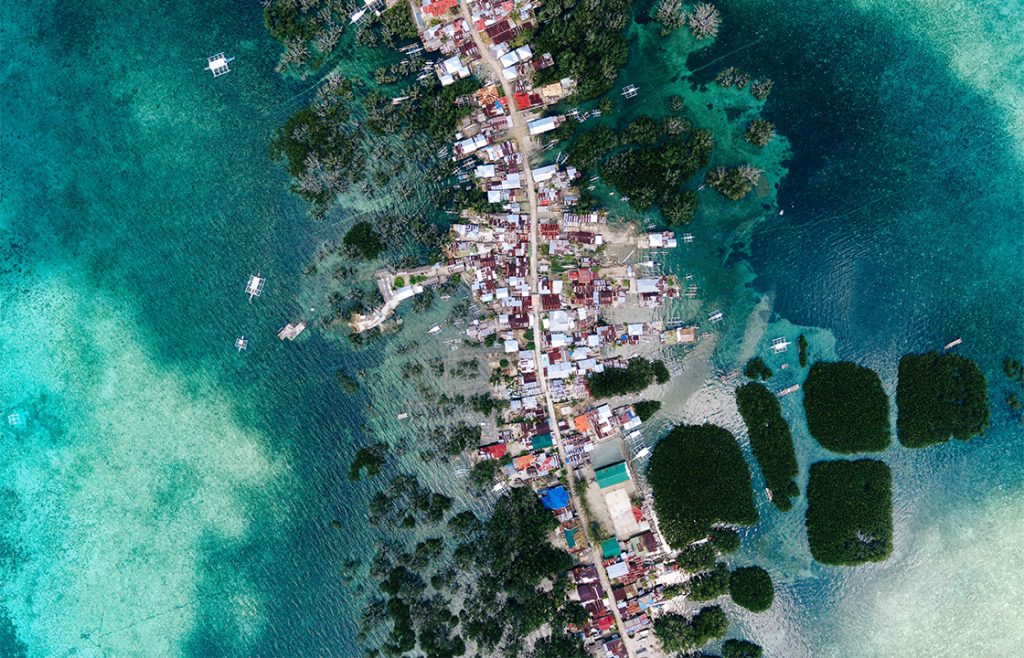
The Philippines faces a pressing crisis as rising sea levels and land subsidence significantly reshape life in its coastal and island communities. With around 40% of the global population residing in coastal areas, including over 150 million people living less than five meters above sea level, the U.N. has highlighted the urgency of this situation. From 2000 to 2019, an estimated 1.6 billion people experienced various forms of flooding, which not only threatened infrastructure but also disrupted vital services.
In the central Philippines, communities like Tubigon town’s barangays are at imminent risk of submergence due to land subsidence instigated by a major earthquake in 2013. Hagonoy, situated north of Manila, grapples with persistent floodwaters primarily caused by excessive groundwater extraction. Local teacher Keanu Reyes emphasizes how daily life has become dependent on tides, complicating transportation and livelihoods.
The threat of rising seas stems from increased ice loss and thermal expansion, which disproportionately affects regions like Southeast Asia. Geologist Decibel Faustino-Eslava explains that while rising sea levels are a global phenomenon, the impact is markedly pronounced in Southeast Asian countries. In Batasan Island, for example, land has subsided by up to 0.7 meters since the 2013 earthquake, resulting in extensive flooding during high tides. Relocation to the mainland has been suggested, yet families resist due to deep-rooted community ties and livelihood concerns.
Adaptation strategies vary across communities. In Hagonoy, residents have resorted to boats for transportation and have innovated elevated vehicles for mobility. Elevated homes have also become a common sight in Batasan Island, where mangroves are planted to offer protection against storm surges.
Recent allegations of corruption in public-funded flood control projects have sparked widespread public outcry. President Ferdinand Marcos Jr.’s call for an investigation into these corrupt practices has ignited an anti-corruption movement. The outpouring of protests signifies a demand for accountability, as hundreds of thousands across the Philippines push for transparency in governance. Activists argue that fixing corruption is critical for effective disaster management.
Experts point out that corruption exacerbates vulnerabilities during disasters, emphasizing the need for transparent and accountable governance to tackle the intertwined issues of climate change and socio-economic disparity. Faustino-Eslava argues for science-based planning solutions that take ecosystem dynamics into account, rather than solely focusing on engineering fixes. The UN-Habitat also advocates for a shift from reactive measures to proactive adaptation strategies for flood resilience.
This multifaceted crisis in the Philippines illustrates the broader implications of climate change, underscoring the need for holistic responses that integrate community insights, sound governance, and sustainable practices to secure the livelihoods of those most at risk.