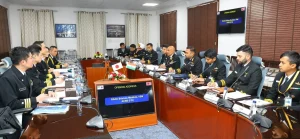

The Directorate General of Shipping (DGS) in India has issued a prohibitive order regarding maritime training offered by foreign entities. This directive specifically bans foreign governments, maritime agencies, and other institutions from conducting maritime training within India, whether in-person, online, or through distance learning, unless prior written approval is acquired. This regulation primarily affects courses that lead to the issuance of seafarers’ certificates under the Standards of Training, Certification, and Watchkeeping (STCW) Convention.
The DGS has warned that non-compliance with this rule could result in serious repercussions, including legal actions against involved Indian institutions and individuals. Penalties may include blacklisting of institutions and seafarers, and involved cases may be escalated to authorities under the Merchant Shipping Act and the Information Technology Act. Certificates obtained through unauthorized foreign programs will also be deemed invalid.
Training for seafarers is governed by rigorous standards laid out in the STCW Convention, which was originally adopted by the International Maritime Organization (IMO) in 1978. These standards are crucial for ensuring safety at sea and protecting the marine environment. Compliance entails a stringent review of service experience, age, professional training, examinations, and health standards.
In light of the new order, Indian institutions currently conducting STCW courses on behalf of foreign entities are required to cease their activities immediately and report their programs to the DGS. Ship owners, maritime training institutions, and Recruitment and Placement Service License (RPSL) companies have also been instructed to avoid collaborations with unauthorized foreign training entities and to report any such attempts.
For foreign entities wishing to offer maritime training in India, the established protocol mandates the submission of formal proposals to the DGS for prior approval. The rationale behind these stringent measures is to safeguard the integrity of India’s maritime training system and ensure that Indian seafarers receive high-quality, regulated training that meets international standards.
On July 18, 2025, the DGS issued another circular prohibiting Indian seafarers from working on foreign-flagged ships if their certificates were issued by non-recognized foreign maritime authorities. This decision drew significant backlash, particularly from the Forward Seamen’s Union of India (FSUI), as many seafarers feared job loss as a result. In response, seafarers organized protests in front of the DGS office, calling for the withdrawal of the circular. FSUI representatives argue that this order jeopardizes thousands of seafarers’ careers and financial security.
In summary, these regulations reflect India’s commitment to uphold high standards in maritime training and ensure that its seafarers are adequately qualified, while also addressing concerns about potential job losses in the sector.