JUThe report from the CO2 Efficient Transport via Ocean (CETO) joint industry project (JiP) concludes that there are no significant technological barriers to implementing a low-pressure CO2 ship transport system. Led by DNV and supported by key industry players like TotalEnergies, Shell, Equinor, and Gassco, the project underscores the feasibility of cost-effective CO2 transportation solutions crucial for carbon capture and storage (CCS) initiatives.
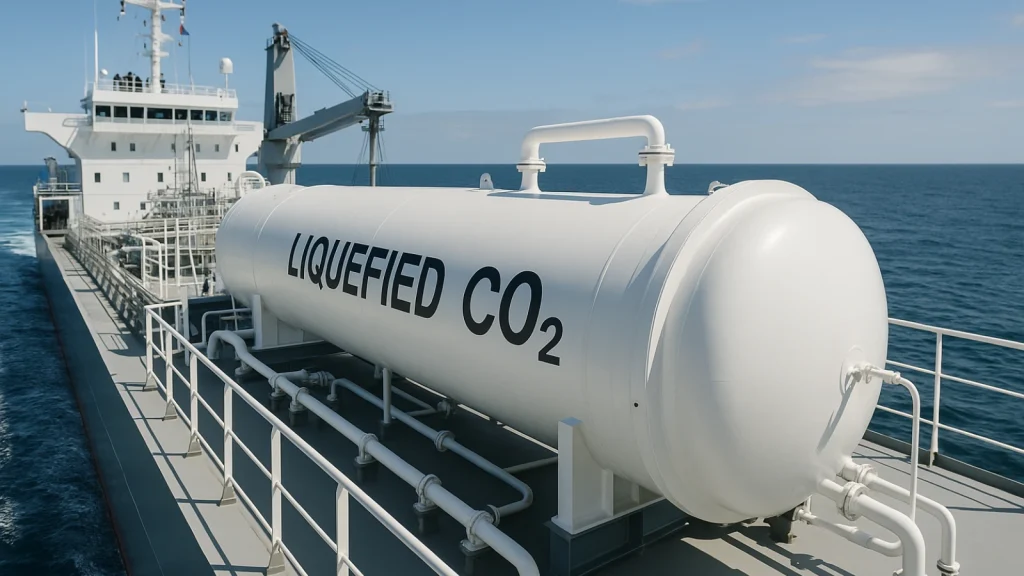
As the world seeks to reduce carbon emissions, efficient transport of captured CO2 is essential. While pipelines may be a viable method for connecting capture sources to storage sites, shipping becomes a critical option when such connectivity is impractical. The report advocates for low-pressure ship solutions, maintaining operational conditions of approximately 7 bar at -49ºC, as a promising alternative for large-scale CO2 transportation.
The Technology Qualification process evaluated various facets of the CO2 ship transport value chain, including liquid CO2 production, the effects of impurities, cargo handling, and the design of a dedicated 30,000 cubic meter (cbm) liquid CO2 carrier. The findings confirm that shipping CO2 at low pressure is technically possible, paving the way for the first commercial applications. The vessel design adheres to international standards, including the IMO IGC code and DNV regulations for strength and stability.
Testing on a medium-scale pilot plant showed that cargo handling could effectively occur within a pressure range of 6 to 9 barg without causing dry ice formation. Additionally, simulations of the design process demonstrated accuracy and suitability, reinforcing the potential benefits of dynamic simulations in full-scale designs.
Despite these advancements, certain factors in the transport chain warrant careful consideration, particularly material choices for cargo tanks and the impacts of fatigue and sloshing loads.
Industry leaders heralded the results as a significant milestone. Erik Mathias Sørhaug from DNV emphasized that the project showcases low-pressure solutions as technically feasible, encouraging low-cost CCS initiative transportation. Lee Teng-Huar from Shell remarked that optimizing low-pressure CO2 transport could enhance the economic viability of CCS projects. Similarly, Equinor’s Ola Miljeteig expressed excitement over reduced technology risks, aligning with the company’s goal of achieving 30-50 million tons of CO2 transport capacity annually by 2035.
Gassco’s Svein-Erik Losnegård noted that the project’s success in mitigating technology risks would contribute significantly to establishing a flexible transport system within the CCS value chain. TotalEnergies’ Marie-Noelle Semeria highlighted the milestone as crucial for bridging CO2 capture with storage and usage, reinforcing the firm’s commitment to carbon neutrality.
In summary, the CETO project marks a vital step forward in the CCS domain, confirming the technological readiness for low-pressure CO2 transport by ship, which is essential for achieving global emissions reduction targets and fostering a sustainable future.