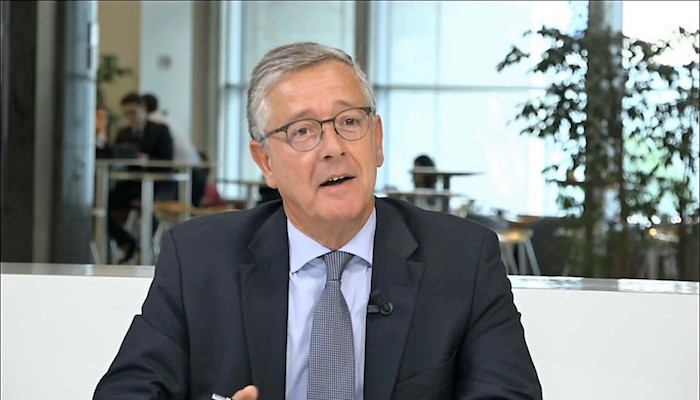
João Aguiar Machado has served as the Director General for Maritime Affairs and Fisheries at the European Commission since September 2015. His role involves implementing the EU Common Fisheries Policy (CFP) and fostering an integrated approach to the EU Maritime Policy. Prior to this, Machado held key positions focusing on trade relations with Asia, Latin America, and Africa, making significant contributions to free trade negotiations and helping coordinate EU external relations with these regions.
A primary focus of his work is the sustainability of marine resources, aiming to protect the oceans for future generations. The EU’s CFP plays a critical role in achieving sustainable fishing levels by targeting the management of fish stocks. By 2020, the EU aims to ensure that all fish stocks are fished sustainably, but Machado emphasizes that sustainable oceans require multifaceted efforts beyond just fishing. He highlights the growing maritime economy, encompassing sectors like coastal tourism and aquaculture, and the need to eliminate barriers to investment and talent in these areas.
Challenges facing the CFP encompass overfishing, pollution, and the need for decisive action to restore ocean health. Machado points out that the current generation experiences first-hand the repercussions of decades of neglect, stressing the urgency of implementing collaborative solutions for the long-term sustainability of marine environments. He notes progress, particularly in the Northeast Atlantic, where sustainable management of fish stocks is improving, yet acknowledges that other regions, particularly the Mediterranean and Black Seas, continue to struggle.
The Black Sea Region (BSR) is particularly important for the EU due to its ecological and economic significance. The fishing sector supports nearly 23,500 jobs directly, with additional employment linked to aquaculture. Despite its potential, the region faces dire challenges, including many fish stocks being overfished and issues with illegal fishing practices. Since 2016, the European Commission has advocated for a more robust strategy to promote sustainable fishing and aquaculture practices through international cooperation and initiatives.
Stakeholder collaboration is essential for promoting sustainable fishing in the BSR. The majority of the fishing fleets in Bulgaria and Romania are small-scale, making direct engagement with local authorities and communities crucial for addressing the challenges faced by coastal economies. The success of programs such as Fisheries Local Action Groups (FLAGs) demonstrates the benefits of a bottom-up approach.
Despite Bulgaria and Romania’s struggles with governance and sustainability, the EU is committed to assisting them in achieving CFP objectives through improved control and data collection measures. A collaborative approach is required across the region, engaging all Black Sea states to ensure shared management of fish stocks.
In terms of fostering a cooperative environment, Machado draws parallels with the successful Baltic Marine Environment Protection Commission (HELCOM). Similar frameworks are being explored for the Black Sea, particularly through the General Fisheries Commission for the Mediterranean (GFCM), which also focuses on environmental sustainability.
The European Commission continues to support initiatives aimed at enhancing cross-border maritime cooperation in the Black Sea, with hopes for a comprehensive maritime agenda that unites coastal nations in mutual efforts to manage and protect marine resources effectively.
Source link