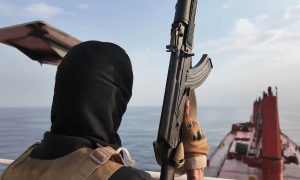

In a critical analysis titled “Navigating the Stormy Seas: Why the Nigerian Navy Faces Challenges in Maritime Security,” Captain Alfred Oniye, a certified maritime security specialist, urges the Federal Government to intensify efforts against various challenges that hinder the Nigerian Navy’s capacity to combat piracy, oil theft, and other maritime crimes in the Gulf of Guinea. He identifies corruption, high debt burdens, outdated infrastructure, and ineffective policy implementation as key issues that undermine the Navy’s operations and overall effectiveness.
Oniye asserts that corruption acts as a significant barrier, likening it to “an anchor-dragging down” the Navy’s efforts. He notes that funds allocated for maintaining naval equipment and operations are often mismanaged or diverted, leading to deteriorating infrastructure and insufficient operational capabilities. This corruption not only compromises the Navy’s readiness but also perpetuates a cycle of ineffective maritime security, as resources that should bolster defense are lost to inefficiency.
Additionally, Nigeria’s economic troubles, characterized by a high debt burden, limit the resources available for maritime security initiatives. Oniye emphasizes that budget shortfalls have led to outdated equipment and reduced naval patrol frequency, making the Navy’s task akin to “trying to sail a ship with holes in the hull.” The lack of adequate funding hampers the Navy’s ability to maintain a presence in critical maritime zones, thus worsening the security situation.
Oniye outlines a multifaceted maritime threat environment, where piracy isn’t the sole concern. The Navy is also challenged by issues such as militancy, oil theft, and illegal fishing, each of which requires tailored strategies for effective response. He criticizes the outdated infrastructure, comparing the Navy’s capability to “trying to catch a speedboat with a rowboat,” highlighting the urgent need for modernization in ships, technology, and facilities.
The Deep Blue Project, a government initiative aimed at boosting maritime security, is viewed as potentially transformative, yet Oniye notes significant delays and operational challenges that obstruct its efficacy. He points out that socio-economic issues, including high unemployment and environmental degradation, contribute to the rise of maritime crimes as individuals resort to illegal activities due to eroding traditional livelihoods.
Moreover, instability in neighboring countries exacerbates the challenges faced by the Nigerian Navy, as cross-border criminal activities spill over into Nigerian waters. Oniye advocates for enhanced regional cooperation and international partnerships to tackle maritime security concerns.
To navigate these turbulent waters successfully, Oniye calls for a comprehensive approach that not only addresses corruption and economic instability but also modernizes naval infrastructure. He emphasizes the necessity of confronting the root causes of maritime crime, focusing on socio-economic reform and environmental sustainability. With a sustained commitment to these reforms, Oniye believes the Nigerian Navy can effectively secure the nation’s extensive maritime domain.
Source link