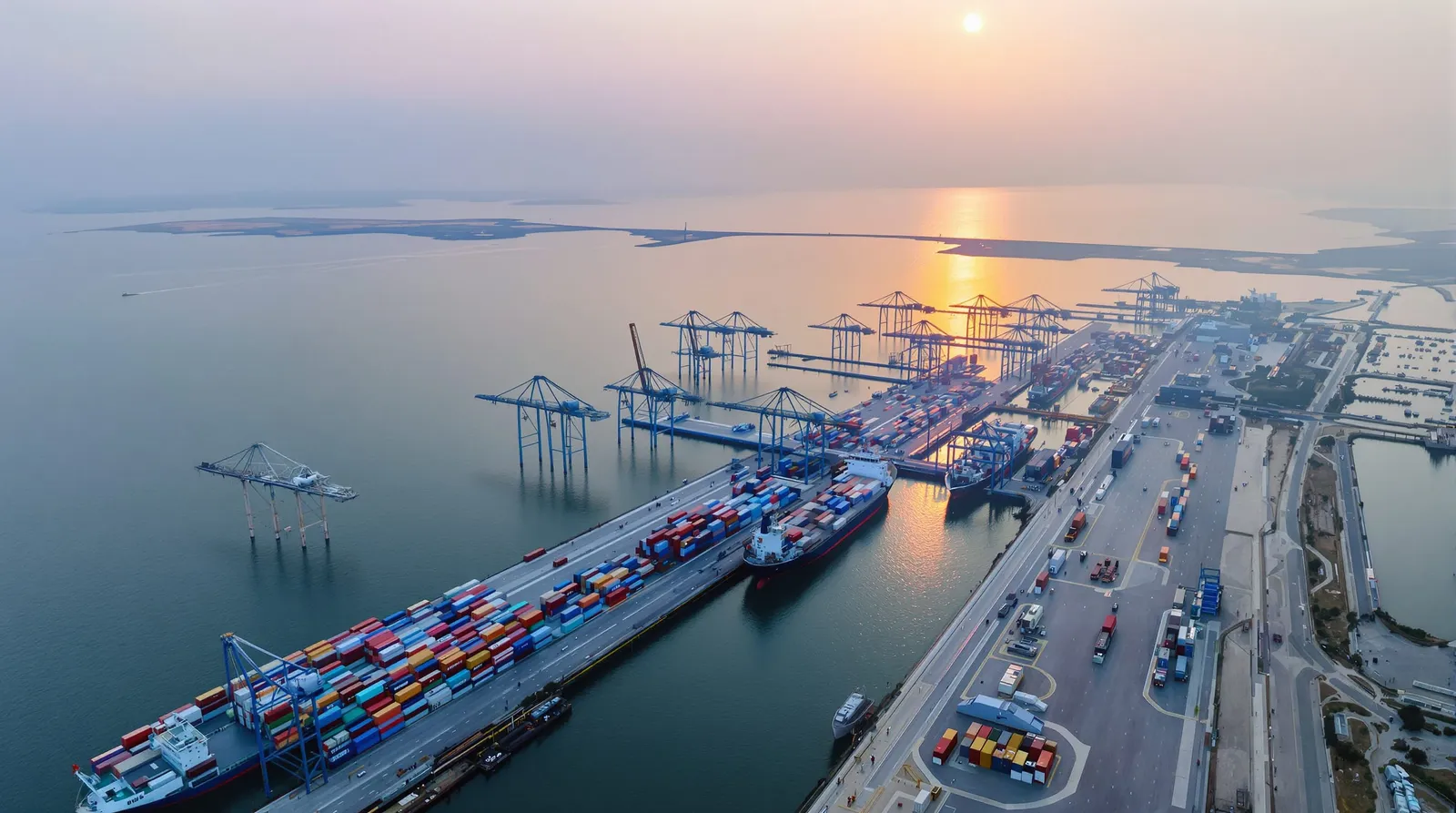
The Sagarmala programme, initiated by the Government of India on July 31, 2015, aims to foster port-led development and enhance the country’s logistics infrastructure. With India’s extensive coastline of 7,500 km and 20,000 km of navigable waterways, the programme seeks to reduce logistics costs for both domestic and export-import (Exim) trade while making minimal infrastructure investments. Abhishek Chandra, deputy secretary of the Ministry of Shipping (MoS), outlines significant progress and challenges in the programme’s implementation.
The Sagarmala programme focuses on four core components: port modernization, connectivity enhancement, port-linked industrialisation, and coastal community development. Under this expansive initiative, 542 projects have been earmarked for implementation, with an estimated investment exceeding ₹8 trillion over the next two decades. By 2019-20, 452 projects, costing approximately ₹3.02 trillion, are targeted for initiation, and 289 projects worth ₹2.17 trillion are already in varying stages of development.
Progress Overview
-
Port Modernization and Development:
- A total of 241 projects, estimated at ₹1.39 trillion, have been identified. The objective is to increase port capacity to over 3,500 million tonnes per annum (mtpa) by 2025.
- Master plans for 12 major ports have been completed, leading to the identification of 142 capacity expansion projects.
- A benchmarking study has led to the implementation of 116 initiatives aimed at improving operational efficiency, with 86 already executed, contributing an additional capacity of approximately 80 mtpa.
- The Coastal Berth Scheme has realized 48 projects with financial assistance.
-
Port Connectivity Enhancement:
- Identifying 208 connectivity projects valued at ₹2.5 trillion, with 41 rail and 97 road projects targeting improved access to ports.
- The roll-on/roll-off passenger service between Ghogha and Dahej aims to save time and reduce road congestion.
-
Port-Linked Industrialisation:
- 49 projects worth ₹4.49 trillion focus on building industrial capacities near ports, with 14 coastal economic zones (CEZs) established to facilitate this initiative.
- Developing marine industries, special economic zones, and logistical clusters further ties coastal development to industrial growth.
-
Coastal Community Development:
- 44 projects worth ₹56.81 billion prioritize skill-building and technology upgrades for the local workforce, including a Centre of Excellence in Maritime and Shipbuilding.
Future Directions
The programme includes developing six greenfield ports and fostering CEZs to enhance employment and export potential. Approvals for several projects are underway, with substantial reports prepared to guide further developments.
Despite progress, the MoS faces challenges like land acquisition delays and environmental clearance hurdles, which could impede timely execution. To combat these, various committees have been instituted for streamlined coordination between central and state governments, aiding in project management.
Conclusion
The Sagarmala programme signifies a crucial step toward revitalizing India’s maritime infrastructure and enhancing logistics efficiency. With comprehensive planning, targeted investments, and strategic coordination, it seeks to transform the country’s coastline into a hub of economic activity that stimulates growth across various sectors, including trade, industry, and community development.