
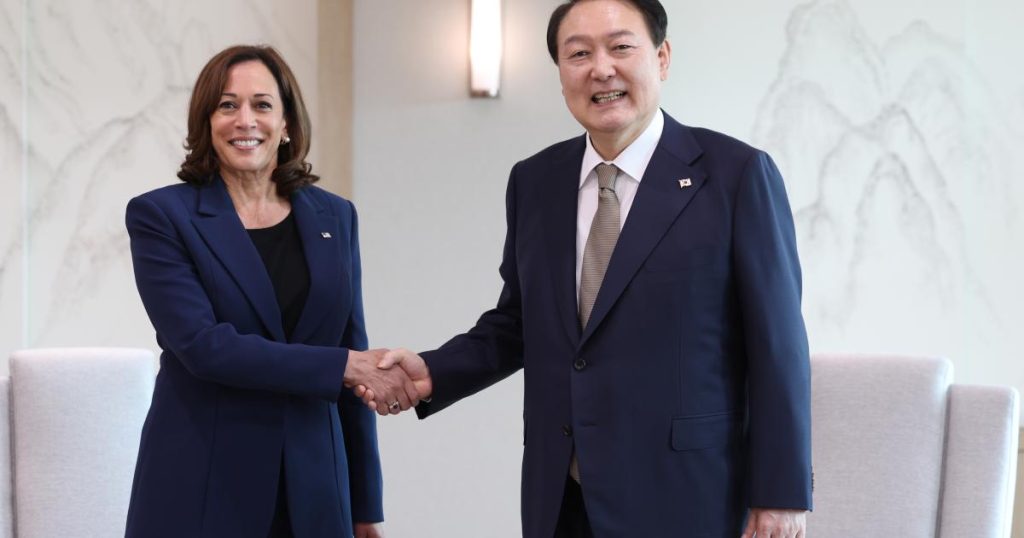
In its inaugural Indo-Pacific strategy, South Korea, under President Yoon Suk Yeol, aims to enhance a rules-based order in the region to ensure freedom, democracy, and human rights. This strategy builds on Yoon’s commitments to assume a more proactive defense of democratic values, aligning closely with U.S. and Japanese national security policies. While acknowledging North Korea’s expanding nuclear capabilities as a significant threat, the strategy stops short of explicitly defining China as a peril, unlike the approaches taken by the U.S. and Japan.
Yoon’s administration positions South Korea as a “Global Pivotal State,” emphasizing a multifaceted response to regional challenges that include economic, social, and security dimensions. This expansive outlook strives to foster partnerships focused on maritime security, cyber threats, counter-terrorism, and public health. Furthermore, the strategy reinforces the importance of achieving complete denuclearization of North Korea, rejecting calls for partial arms control and advocating for strict adherence to UN sanctions to combat North Korean evasion.
The document underscores Yoon’s “audacious initiative” toward North Korea, which offers the regime economic incentives in exchange for concrete steps towards denuclearization, diverging from past strategies that prematurely offered concessions without achieving results. The strategy also addresses mounting public support in South Korea for developing its own nuclear capabilities, as concerns over North Korea’s threats grow, despite the Yoon administration’s commitment to non-proliferation.
A key aspect of the strategy is the rejuvenation of South Korea’s relationship with Japan, harboring hopes for enhanced cooperation against shared security challenges. Under Yoon, the two nations have reignited diplomatic dialogues and collaborative military exercises after years of deterioration stemming from historical disputes. The focus on shared democratic values underscores a willingness to mend ties and strengthen trilateral cooperation with the U.S.
While acknowledging challenges posed by China, including its intimidating tactics towards other Asian nations, the strategy’s tone regarding China is notably subdued, opting for a nuanced stance that seeks to build mutually respectful relations without overtly condemning Chinese actions. This cautious approach aligns with previous South Korean policy, reflecting an intricate balance between the U.S. security partnership and economic ties with China.
Critics have pointed out that the strategic document refrains from a thorough critique of China, contrasting sharply with Japan’s more forthright stance. Moving forward, subsequent documents are expected to detail specific implementation strategies for confronting aggressive Chinese actions more openly.
Overall, Yoon’s Indo-Pacific strategy presents a robust framework for South Korea to play a larger role regionally while navigating the complexities posed by neighboring powers. If effectively enacted, it may signify a transformative period in South Korea’s foreign policy, positioning the nation more firmly as a security player in the Indo-Pacific, without overtly antagonizing China. The ultimate effectiveness of these strategies will depend on South Korea’s resilience against potential Chinese pressures as it seeks to establish a firmer stance in regional diplomacy and security dynamics.