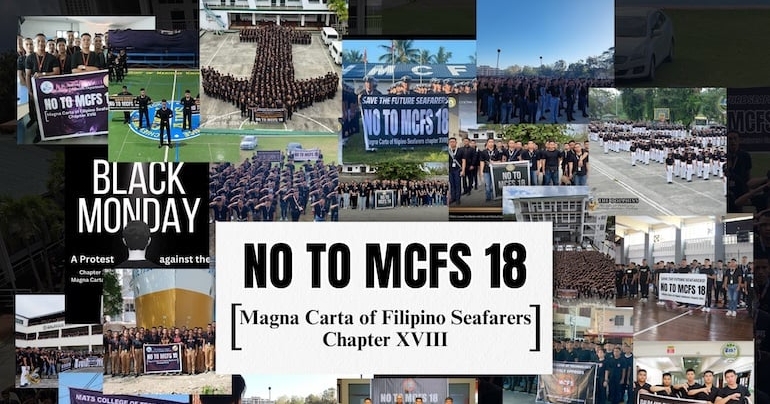
The Magna Carta of Filipino Seafarers was set for President Ferdinand Marcos Jr. to sign on February 26, but the bill was withdrawn due to jurisdictional conflicts between the Philippines Department of Labor and Employment (DOLE) and the International Labour Organization (ILO). This legislation aims to align Philippine national laws with the Maritime Labour Convention (2006), reinforcing the country’s commitment to international maritime regulations. According to Sabino Czar C. Manglicmot II, President of the Philippine Association of Maritime Institutions (PAMI), the law intends to position the Philippines as a collaborative partner in the global maritime industry.
However, the bill has sparked significant controversy, particularly concerning its provisions on maritime education. PAMI strongly opposes the inclusion of such education within the Magna Carta, arguing that it could jeopardize the maritime education sector. Manglicmot stressed that while students are being trained as future seafarers, they should not be classified as such within the bill, highlighting the distinction between education and actual seafaring experience.
The proposed Magna Carta mandates that maritime academies invest heavily in expensive simulators, training ships, and advanced technologies. Additionally, it would impose enrollment caps on institutions. PAMI contends that these requirements would force maritime academies to increase tuition fees, potentially making education inaccessible for the majority of Filipino students, who comprise the bulk of enrollees. Each year, around 30,000 students graduate from Philippine maritime academies, yet only about 20% successfully find positions on ships, raising concerns regarding the quality of training and the limited availability of sea time.
Manglicmot argues that embedding multiple subjects within a single law risks diluting its primary objectives. He advocates for either enhancing existing legislation or developing a separate, focused law solely regarding education and training in the maritime sector. This approach, he believes, would better serve the interests of both students and the maritime industry at large.
In summary, while the Magna Carta of Filipino Seafarers is touted as a necessary step in aligning with international maritime standards, its implications for maritime education have prompted significant pushback from industry stakeholders. The ongoing discussions reflect deep concerns about the balance between regulatory compliance and the viability of the education system that supports the future workforce of Filipino seafarers.
Source link