In late February, a North Korean cargo ship reportedly sank in the Yellow Sea after colliding with a Chinese vessel. South Korea’s Yonhap News Agency cited anonymous sources indicating that the North Korean ship was suspected of smuggling coal at the time of the incident. The Chinese foreign ministry spokesperson, Mao Ning, neither confirmed nor denied these reports. Instead, she emphasized China’s adherence to laws and regulations while managing foreign relations and maritime incidents. She stated, “We handle maritime accidents and search and rescue efforts in accordance with humanitarian principles, professional ethics, and international practices.”
The South Korean government, through its Ministry of Foreign Affairs and the National Intelligence Service, is monitoring the situation without providing further details. Reports suggest that approximately 20 North Korean crew members might have perished in the incident, even as Chinese authorities conducted rescue operations. In contrast, the Chinese vessel reportedly sustained only minor damages.
The North Korean ship was allegedly loaded with coal and had turned off its automatic identification system in an effort to avoid detection, a strategy commonly used to evade U.N. Security Council sanctions. These sanctions, established by U.N. Resolution 2371 in 2017, prohibit the export of North Korean coal, iron ore, and other minerals. Notably, there have been previous incidents, such as a collision in 2017 between a North Korean cargo ship and a Chinese vessel near Lianyungang, which resulted in the rescue of all aboard.
Complications extend beyond these incidents, as there are also concerns regarding China’s compliance with international sanctions. While the U.N. reported that China exported approximately 280,928 barrels of refined oil to North Korea from January to November last year, this figure falls short of the annual cap of 500,000 barrels set by the U.N. Nevertheless, many believe that the actual oil flow into North Korea could be significantly higher than what is officially reported.
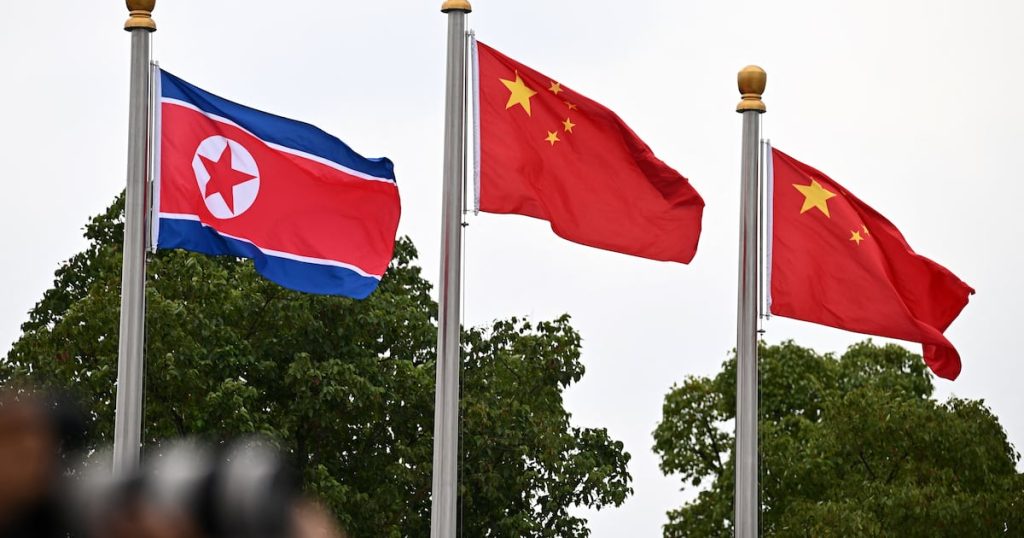
Despite speculations that North Korea and China might be drifting apart, particularly due to North Korea’s increasing affinity for Russia, recent indicators suggest a warming of relations. This is evidenced by the return of Chinese tourists and journalists to North Korea following the easing of strict COVID-19 border controls. The Chinese foreign ministry has dismissed claims of deteriorating relations between the two countries, affirming continued cooperation.
In summary, the recent collision between a North Korean cargo ship and a Chinese vessel highlights ongoing tensions surrounding North Korea’s attempts to circumvent international sanctions, as well as the complexities of China’s foreign relations amidst fluctuating dynamics with its Asian neighbor.