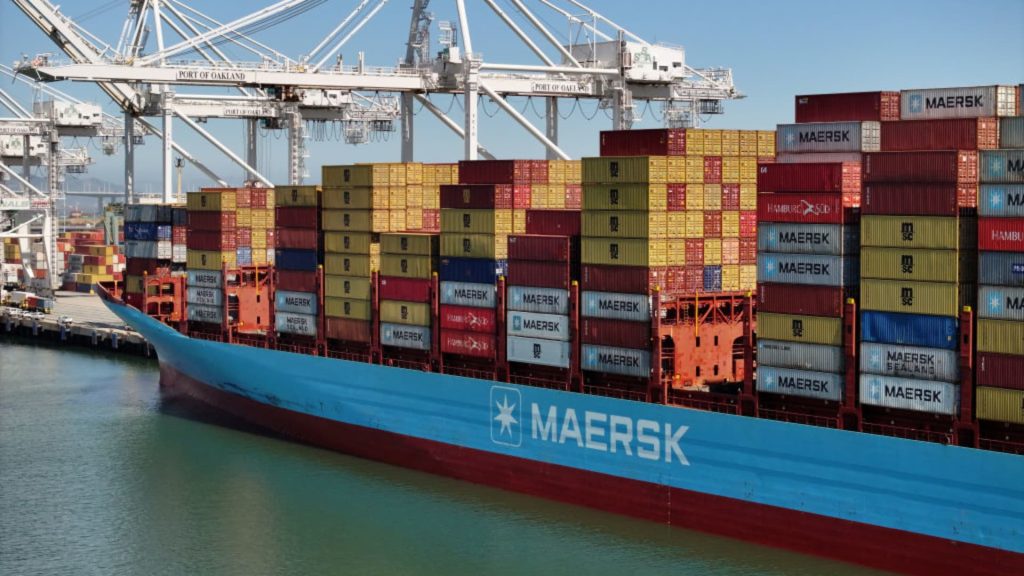
On June 24, 2024, the container ship Gunde Maersk was docked at the Port of Oakland, California, at a time when shares of the Danish shipping conglomerate Maersk experienced significant gains on the stock market. This uptick followed U.S. President Donald Trump’s announcement of a 90-day pause on higher tariffs for certain countries, which temporarily alleviated some concerns in the global trade sector. However, it’s important to note that this reprieve does not extend to China, as Trump increased tariffs on Chinese goods to 125%. He justified this escalation by citing a “lack of respect” from Beijing, which in turn had retaliated with its own trade measures.
On that same Thursday morning, Maersk’s stock climbed by 6% around 10:45 a.m. London time, with earlier gains reaching as high as 11%. Similarly, another key player in global shipping, Germany-based Hapag-Lloyd, saw its shares rise by 7%. The ongoing trade war between the U.S. and China—both economic powerhouses—has raised significant apprehension within the shipping and maritime industries. Maersk, in a recent statement, characterized the U.S. tariff plans as “significant” and detrimental to global economic stability and trade, highlighting the uncertainty surrounding how countries might respond. This unpredictability makes it difficult to forecast the overall impact on global trade going forward.
In previous comments, Maersk had warned that Trump’s tariffs on Mexico, Canada, and China were likely to create short-term inflationary pressures, which could further complicate the economic landscape. Analysts, including Michael Field, chief equity strategist at Morningstar, commented that the news of Trump’s tariff pause was a favorable development for the markets, suggesting that the worst-case scenarios were now less likely. However, Field also cautioned that the ongoing trade war atmosphere would likely continue to loom, stressing that investors must remain alert given the steep tariffs still imposed on China.
Overall, while the temporary tariff pause presents a momentary relief for companies like Maersk and the broader markets, the longer-term implications of the U.S.-China trade relationship remain uncertain, warranting continued vigilance from investors and industry stakeholders alike.
Source link