
Interferry has warned this week that ferry operators are facing rising costs under the EU Emissions Trading System faster than practical decarbonisation solutions are being deployed.
The warning has renewed and intensified scrutiny of how maritime decarbonisation commitments are being translated into action. This means emissions are being priced before the infrastructure needed to reduce them is in place, raising costs for operators without yet delivering equivalent emissions reductions.
Green Shipping Corridors, formally launched at COP26 through the Clydebank Declaration, were designed to provide that delivery pathway. More than four years on, the focus is increasingly shifting from policy frameworks to implementation, with short-sea Green Shipping Corridors widely recognised as the fastest and most viable way to move from commitment to delivery.
Against this backdrop, attention is turning to solutions that translate regulation and ambition into real emissions reductions, enabling ferry, short-sea cruise and RoRo operators to act in practice rather than absorb rising costs.
NatPower Marine says the concerns raised by the ferry industry further highlight a widening gap between regulation and the rollout of enabling infrastructure. Pricing emissions without rapidly giving operators the means to reduce them risks increasing costs, undermining route viability and pushing up ticket prices, without accelerating real-world decarbonisation. In some cases, this may even weaken the role of ferries in shifting passengers and freight away from higher-emissions road transport.
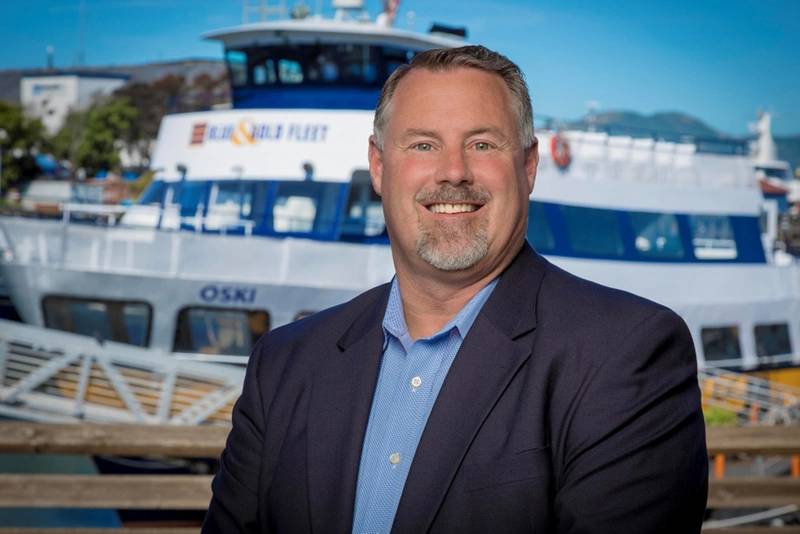
Stefano D.M. Sommadossi, CEO of NatPower Marine UK, said the Interferry warning reflects a structural challenge facing maritime transport. “The ferry industry is signalling that obligations are rising faster than the infrastructure needed to meet them,” he said. “Climate policy only delivers results when operators can act on it in practice.”
While much of the regulatory debate continues to focus on long-term fuel pathways, NatPower Marine recognises that short-sea ferry and RoPax routes present the most immediate opportunity to turn Green Shipping Corridors from commitments into operational reality. These services operate on fixed schedules, with frequent port calls and sufficient dwell time to fully benefit from port-side electrification.
Shore power and high-capacity e-ship charging enable vessels to eliminate emissions while at berth, delivering immediate reductions in carbon dioxide alongside significant cuts in nitrogen oxides, sulphur oxides and particulate matter. In addition to improving compliance metrics such as the IMO’s Carbon Intensity Indicator, port-side power delivers tangible air-quality benefits for port cities and island communities that depend on ferry services.
Sommadossi said electrifying ports strengthens ferries as part of the climate solution rather than penalising them. “If emissions pricing pushes freight and passengers away from ferries and back onto already congested road networks, overall emissions increase,” he said. “Port-side power does the opposite. It reinforces sea transport as the lowest-emissions corridor and supports long-standing objectives to shift traffic from road to sea.”
The company points to routes such as the 142 mile (123 nautical miles) Heysham–Belfast route as examples of how short-sea Green Shipping Corridors can move rapidly from policy ambition to delivery on the quayside. By installing shore power and e-ship charging infrastructure at the port, emissions can be cut immediately, giving operators the confidence to invest in electric and hybrid vessels.
The Heysham initiative represents a landmark step forward, with the potential to eliminate more than 10,000 tonnes of CO2 annually and sending a clear signal of commitment from all involved.
NatPower Marine’s route-based, fully funded infrastructure model removes the need for upfront capital investment by ferry operators, enabling decarbonisation to scale without compromising connectivity, affordability, or competitiveness.
“The challenge facing maritime decarbonisation is not a lack of ambition,” Sommadossi concluded. “Since the Clydebank Declaration, regulation has accelerated, from FuelEU Maritime to the EU ETS, while a global IMO framework remains uncertain. What has not kept pace is the rollout of enabling infrastructure. Short-sea corridors show that when port-side power is in place, emissions fall immediately and commercially. That is how Green Shipping Corridors move from policy commitment to operational delivery.”

About NatPower Marine
NatPower Marine, part of the NatPower Group, is developing the largest independent network of ship charging facilities to provide clean electricity for propulsion and a cold ironing solution to the global maritime sector. The company develops the essential end-to-end infrastructure required for the decarbonisation of global supply chain routes, providing shore power to support the electrification of ships for propulsion and cold ironing at berth, at anchor, and offshore.
The NatPower Group is a global energy transition developer with approximately 30 GW of natural power projects, operating in the UK, USA, Italy, Kazakhstan, and other countries. The company has an ambitious expansion plan to become the largest and fastest-growing enabler of the global energy transition. NatPower H, a subsidiary of NatPower Group, is currently building the world’s first green hydrogen refuelling station infrastructure for pleasure yachting.
NatPower UK is a sister company of NatPower Marine. NatPower UK has one of the largest clean energy development portfolios in the UK. It will bring over 80 GWh of battery storage online by 2040, integrating large-scale smart clean energy generation and distribution with large-scale intermittent clean energy demand.