Singapore, 5 February, 2026 – Singapore is strengthening regional collaboration to tackle marine plastic pollution, a transboundary issue that affects local shorelines. A study published by National Environment Agency found that 97% of plastic waste on Singapore’s recreational beaches came from offshore sources.
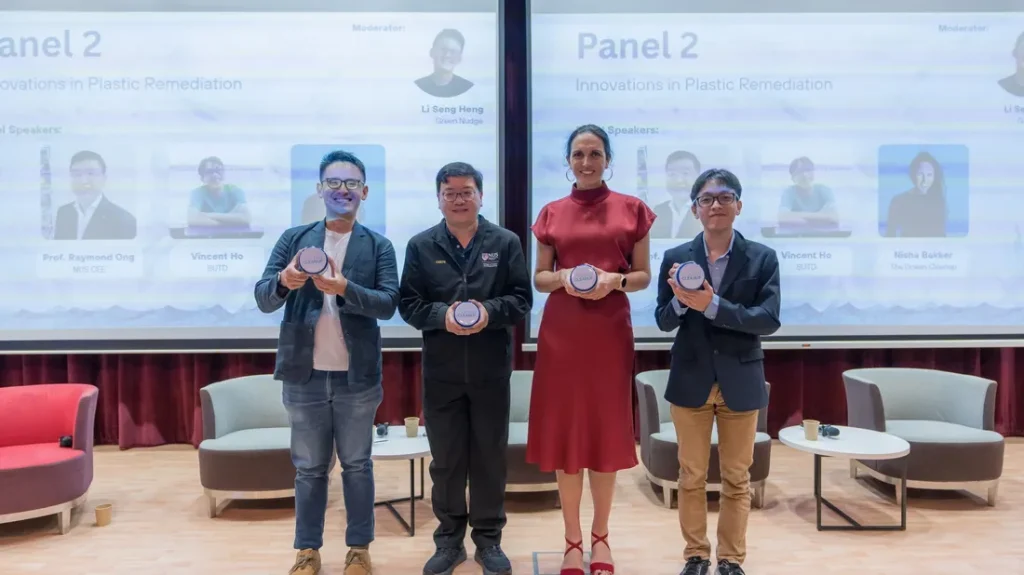
Against this backdrop, international non-profit The Ocean Cleanup has partnered the National University of Singapore’s Tropical Marine Science Institute (NUS TMSI) to co-host the first Towards Healthy Oceans regional forum at NUS University Town, bringing together researchers, policymakers, investors, philanthropies, and private sector partners from across Southeast Asia to advance science-based solutions, implementation partnerships and blue finance to reduce marine plastic pollution. The forum aligns with the National Action Strategy on Marine Litter, which aims to galvanise the whole nation to combat the growing global challenge of marine litter; and draws on Singapore’s strengths as a regional centre for science, policy, and investment to advance practical, scalable solutions that can be replicated across Southeast Asia.
Why this matters for Singapore and the region
Southeast Asia sits at the heart of the global ocean plastics challenge. Modelling by The Ocean Cleanup shows that around 1,000 rivers are responsible for nearly 80% of river-borne plastic entering the ocean, with many of the most polluting rivers located in this region. This aligns with the OECD report stating that Asia accounts for over one-third of global plastic leakage, making this region a “hotspot for plastic pollution due to its high economic growth, rapid urbanisation, and industrialisation.”
Singapore views marine plastic pollution very seriously, supporting studies and initiatives to address marine litter locally and regionally. A study, led by Dr Neo Mei Lin, Senior Research Fellow from NUS TMSI, has documented the presence of microplastics in marine life living in mangroves, seagrasses and coral reefs. These findings reinforce the need for coordinated regional responses grounded in robust science.
Dr Neo Mei Lin, Senior Research Fellow, NUS TMSI, said:
“Plastic pollution has been a persistent environmental concern for oceans in Singapore and around the world. Marine plastics are often seen on our local beaches, as well as impacting ecologically important habitats such as mangroves, seagrasses, and coral reefs. Marine pollution is also a transboundary issue as the prevailing winds and currents can move litter across regional water bodies. To address marine plastic pollution effectively, our responses must therefore be supported by robust science-based approaches to guide actions and solutions that protect our local resources and shared oceans.”
Expanding the 30 Cities Program to scale river interception and long-term impact
The forum outlined the next phase of The Ocean Cleanup’s 30 Cities Program. With the mission to rid the world’s oceans of plastic, the organisation is scaling its “close the tap” strategy by intercepting plastic in rivers before it reaches the ocean through data-driven Interceptor™ river systems.
The Ocean Cleanup has scaled deployments since 2021, including early multi-city deployments in Jakarta, Kuala Lumpur, Can Tho, and Bangkok, and has now intercepted more than 48 million kilos of trash that would otherwise have entered the ocean. The 30 Cities Program aims to expand to new locations in Southeast Asia where shared river basins send plastic across borders into the ocean, including locations in Indonesia, Philippines and Thailand. New modelling and case studies presented at the forum also highlighted how cleaning rivers can cut transboundary ocean plastic while supporting broader outcomes such as flood resilience and improved remediation approach.
Boyan Slat, Founder and CEO, The Ocean Cleanup, said:
“Plastic pollution does not respect borders because it travels with seas and crosses jurisdictions – and no place illustrates this more clearly than Singapore, where nearly 97% of the plastic found on beaches
originates beyond its own shores. Southeast Asia is a critical region in the global plastics challenge, given both the scale of the challenge here and the scale of the opportunity. But ambition and technology alone is not enough; progress at scale only happens when science, policy, business and communities move forward together. Singapore, with its strengths in science, policy, and finance, is well placed to bring together the partners and capital needed to address a transboundary problem through transboundary collaboration.”
Linking science, partnership, and finance: cross-sector collaboration is key
Discussions at Towards Healthy Oceans were organised around three core themes:
- Science and technical solutions – demonstrating how new data, modelling and AI-enabled monitoring can identify priority river catchments and guide future Interceptor™ deployments in Southeast Asia.
- Partnerships and implementation – convening academic institutions, governments, investors, and corporate partners to outline a collaboration roadmap for co-developing river and coastal projects, aligning rigorous evidence with real world implementation. This included new partnerships announced at the forum, with The Ocean Cleanup signing MoUs with ICLEI – Local Governments for Sustainability, Asia Pacific and The Coral Triangle Initiative on Coral Reefs, Fisheries, and Food Security (CTI-CFF) to strengthen multi-level governance and regional cooperation across shared marine and river basins.
- Finance and investment – sessions with investors, philanthropies, and banks, explored ways on how blended finance, catalytic capital, and corporate sustainability investment, can turn growing interest in “blue” themes into deployable structures at scale, and unlock the next wave of river and ocean protection investments.
Participants also discussed partnership models and financing structures that can support city-level deployments, including how to galvanise stakeholders across shared river basins.
Speaking at the forum, Nisha Bakker, Director of Partnerships, The Ocean Cleanup, said:
“We can’t clean up the oceans on our own – a healthy ocean is a common interest, and solving plastic pollution is a complex, ecosystem challenge that requires systems change. Data helps us show what works in a river, but scaling that takes partnerships that bring governments, companies and communities into the same plan. That’s why we’re working with partners like ICLEI – Local Governments for Sustainability and The Coral Triangle Initiative on Coral Reefs, Fisheries and Food Security, to strengthen collaboration across cities and the region and support implementation at scale.”
From the forum to the shoreline
The forum also showcased how institutes like NUS TMSI and Singapore Oceanarium can anchor cross-sector collaboration. Singapore Oceanarium, an aquarium-based conservation hub focused on threatened marine species, habitat restoration and public engagement, partnered with The Ocean Cleanup to connect high-level discussions with community action.
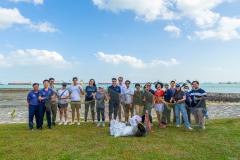
A coastal clean-up at Marina East Breakwater, organised alongside the forum, gave participants and volunteers a first-hand view of the marine debris that river and ocean interventions aim to prevent. The activity builds on Singapore Oceanarium’s ongoing coastal and dive clean-ups, and its education programmes with schools and local NGOs in Singapore.
Grant Abel, Assistant Vice President – Life Sciences, Singapore Oceanarium said:
“At Singapore Oceanarium, our commitment to addressing plastic pollution is anchored in education, research, and meaningful community action. Our initiatives, from A Plastic Tale, our storytelling‑based programme for young learners, to regular coastal clean‑ups with volunteers, aim to inspire awareness and collective responsibility. Within the Oceanarium, dedicated zones such as Open Ocean Currents help guests understand how ocean highways transport plastic debris across borders.
We are proud to partner with the National University of Singapore’s Tropical Marine Science Institute and The Ocean Cleanup to bring together like‑minded organisations in pursuit of sustainable, science‑driven solutions for a healthier ocean.”

About The Ocean Cleanup
The Ocean Cleanup is a nonprofit organization that develops and scales technologies to rid the oceans of plastic. By conducting extensive research, engineering scalable solutions, and partnering with governments, industry, and like-minded organizations, The Ocean Cleanup is working to stop plastic inflow via rivers and remove legacy plastic already polluting the oceans. As of December 2025, the non-profit has collected over 46 million kilograms (101.4 million pounds) of trash from aquatic ecosystems around the world. Founded in 2013 by Boyan Slat, The Ocean Cleanup now employs a multi-disciplined team of approximately 200 people. The organization is headquartered in Rotterdam, the Netherlands, with international operations in 10 countries.
About Tropical Marine Science Institute at the University of Singapore
The Tropical Marine Science Institute (TMSI) at the National University of Singapore is a multi-disciplinary research centre dedicated to integrated marine, terrestrial and environmental sciences, with active regional and international programmes in research, education and training. Its mission is to empower leaders across the public, private and people sectors in Singapore and beyond to respond effectively to emerging challenges and opportunities in the urban, coastal and marine environments. To achieve this, TMSI generates new knowledge and solutions that benefit society by integrating multiple disciplines and societal perspectives to inform policies, strategies and actions.
About Singapore Oceanarium
Located at Resorts World Sentosa, Singapore Oceanarium is a leading ocean institute with the purpose to inspire greater knowledge, love and action for the ocean and aquatic life. We are dedicated to advancing marine education, research, and supporting the conservation and preservation of threatened species. With a unique blend of live habitats, oceanic stories, state-of-the-art digital innovation, and interactive technology, Singapore Oceanarium connects knowledge from meaningful marine education and encounters to real-world applications. Our long-term partnerships with institutes, accreditation by the Association of Zoos & Aquariums (AZA), and membership in the World Association of Zoos and Aquariums (WAZA) and Southeast Asian Zoo and Aquarium Association (SEAZA) are a testament to our commitment to inspire generations of ocean stewards for greater action. Singapore Oceanarium also encompasses a Research and Learning Centre – a dedicated space that offers advanced purpose-built spaces for research, conservation and community outreach. Certified by Singapore’s Building and Construction Authority as a Green Mark Platinum Zero Energy building, the centre is designed with environmental sustainability at its core and its energy needs are powered entirely by solar energy. For more information, please visit www.singaporeoceanarium.com.