The criminals relied on drug mules to evade law enforcement detection, underlining the evolution of cocaine trafficking techniques into Europe.
A criminal network involved in cocaine trafficking from South America to Europe has been dismantled following a coordinated investigation by authorities in Iceland, Lithuania and Spain, with the support of Europol and Eurojust. The group is believed to have generated EUR 4 million in criminal profits through the large-scale trafficking of illicit substances.
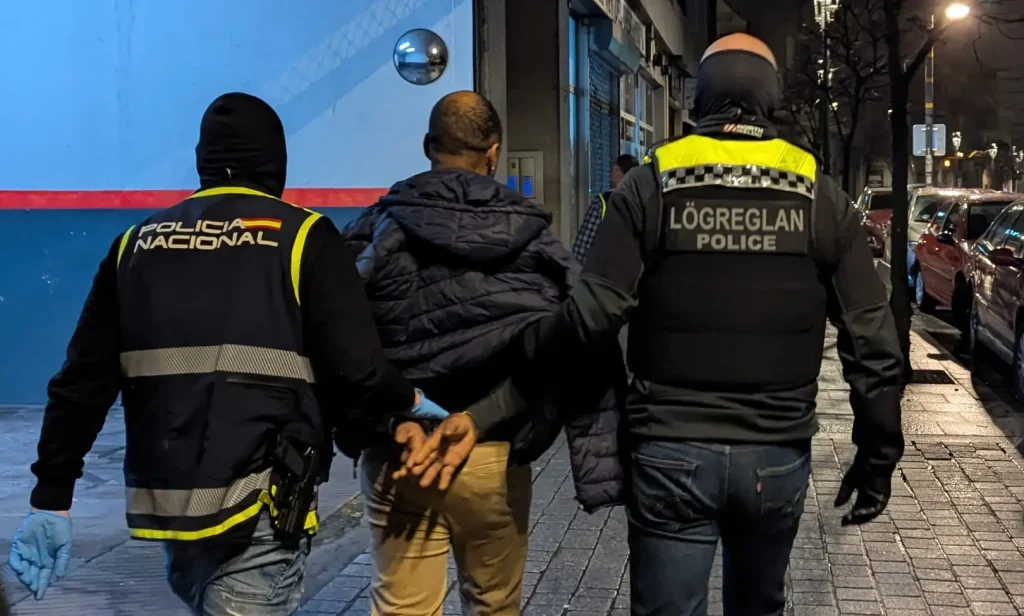
The investigation culminated in a coordinated action day on 4 February 2026, which resulted in 24 arrests: 11 in Iceland, 6 in Lithuania, 4 in Spain, 2 in Belgium and 1 in Denmark.
Investigators identified an organised crime group which coordinated the movement of cocaine from South America to Iceland via Spain and other destinations.
While cocaine is typically trafficked in one-kilogram bricks hidden among legitimate goods in shipping containers, organised crime networks continue to adapt their methods to evade law enforcement detection. Alternative concealment techniques, including methods designed to defeat scanners and sniffer dogs, are increasingly being used, as highlighted in a recent Europol report.
In this investigation, the network relied primarily on drug mules, usually people in vulnerable situations who were easily convinced to transport drugs. Couriers allegedly concealed cocaine in their luggage, or smuggled it internally by swallowing drug packages. In some cases, the drugs were transported in liquid form.
Once in Iceland, the drugs were distributed locally by the criminal network. The illicit revenues coming from the drug trafficking were allegedly laundered through real estate and other properties in Lithuania.
In order to tackle the criminal group’s international activities, Lithuanian and Icelandic authorities worked together at Europol and were supported by its experts. Later, a joint investigation team was set up at Eurojust. During several coordination meetings at Eurojust and Europol in The Hague, authorities confirmed the criminal network’s presence in several countries, with suspects identified in Belgium, Denmark, Iceland, Lithuania, and Spain.
Europol supported the investigation by facilitating information exchange and providing analytical support, helping national authorities to identify links between suspects and map the network’s structure.
The actions were carried out by the following authorities:
- Belgium: Antwerp Police
- Denmark: National Police
- Iceland: Icelandic Police and Customs
- Lithuania: Klaipeda Regional PPO; Klaipeda County Police HQ
- Spain: Central Investigative Court nº 3; Antidrug PPO; National Police

The European Multidisciplinary Platform Against Criminal Threats (EMPACT) tackles the most important threats posed by organised and serious international crime affecting the EU. EMPACT strengthens intelligence, strategic and operational cooperation between national authorities, EU institutions and bodies, and international partners. EMPACT runs in four-year cycles focusing on common EU crime priorities.