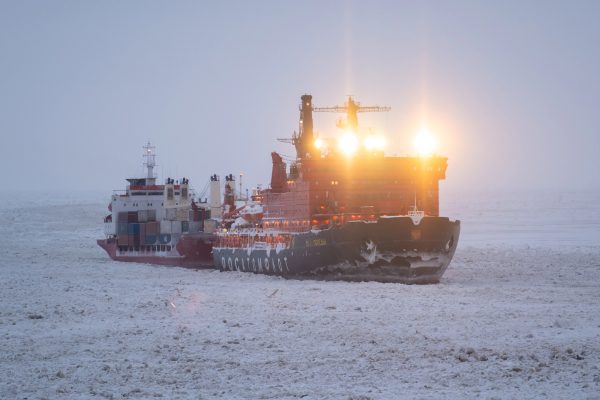
Russia is actively promoting the Northern Sea Route (NSR) as a key maritime corridor, aiming for a substantial increase in foreign vessel traffic. Despite ongoing Western sanctions and the conflict in Ukraine, Rosatom anticipates a 50% rise in traffic through the NSR, framing it as a new frontier dominated by Russian influence. This strategy is underscored by significant investments in Arctic port modernization, nuclear icebreaker fleets, and digital traffic control systems to extend navigation seasons and attract international partners.
The NSR is crucial for Russia’s energy exports, particularly liquefied natural gas (LNG) from projects like Yamal LNG and Arctic LNG 2. Projections suggest that Arctic transit volumes could escalate from 35 million tons in 2023 to 200 million tons by 2030. However, these outlooks contrast with the hesitance of Western shipping firms, which have reduced their involvement due to sanctions and geopolitical concerns, resulting in lower-than-expected NSR traffic.
China plays a pivotal role in Russia’s Arctic strategy, with its “Polar Silk Road” initiative fostering investment and cooperation in Arctic shipping. While formal agreements exist between China and Russia, actual Chinese engagement has been measured, focusing primarily on trade with Russia. In 2024, Chinese shipping companies increased their NSR voyages, predominantly transporting goods for Russia, hinting at a growing operational presence despite financial caution.
However, Western maritime actors remain skeptical due to Russia’s military escalation in the Arctic and legal ambiguities surrounding NSR navigation rights. Moscow’s interpretation of the United Nations Convention on the Law of the Sea (UNCLOS) allows for heavy regulation of foreign vessels, a stance contested by the U.S. and others who view much of the NSR as international waters. Additionally, heightened military infrastructure along the route raises concerns among NATO members, complicating the geopolitical landscape.
Logistical and environmental challenges threaten the NSR’s viability. Harsh Arctic conditions and limited emergency response mechanisms pose risks to shipping safety. Environmental concerns about heavy fuel oil further complicate operational growth, and existing maritime firms, like Maersk and CMA CGM, have remained cautious, citing unpredictability and high insurance costs.
Russia’s strategy has sparked interest from Asian nations as alternatives to European partnerships. While countries like India and South Korea possess potential for collaboration, their actual involvement is minimal, constrained by geopolitical considerations. Japan, previously a significant energy partner, has reduced its participation post-Ukraine conflict, and Southeast Asian nations, while recognizing the NSR’s significance, have not yet established commercial interest.
Looking ahead, Russia’s aspirations for the NSR may be overly ambitious amidst ongoing geopolitical friction. The route appears to serve more as a zone of Russian influence rather than a truly international corridor. Changes in U.S. political dynamics could shift perceptions and openness towards the NSR, potentially easing sanctions and encouraging international shipping, though persistent adversarial relations could solidify its regional, politically polarized nature.
Ultimately, the future of the NSR hinges on Russia’s willingness to embrace cooperative governance models over unilateral control, as well as diplomatic efforts that might provide a framework for broader international participation. The evolving situation underscores how geopolitical, environmental, and market forces will shape the NSR’s role in global shipping in the coming years.
Source link