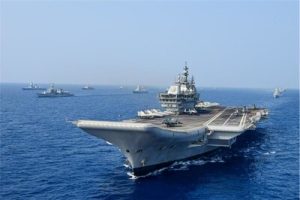
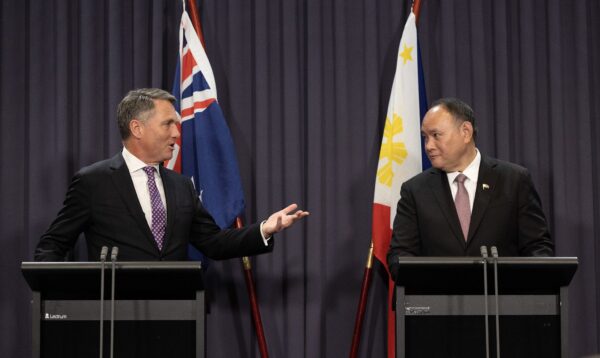
Manila and Canberra are poised to sign a significant defense agreement aimed at enhancing military collaboration, primarily in response to concerns over China’s assertive behavior, especially in the South China Sea. This upcoming pact builds on a statement of intent signed in August and will provide expanded military access for both nations. It includes the development of defense infrastructure in the Philippines, featuring eight planned projects across undisclosed locations.
During a recent maritime security reporting tour, Australian officials emphasized that this agreement will grant both countries more rights regarding troop movements. While the infrastructure projects will remain largely undisclosed, they’re designed to enhance awareness within the Philippines and bolster its sovereignty. These developments come as a direct response to China’s growing military presence not only in the South China Sea but also across the broader Indo-Pacific, including incursions into the Southwest Pacific and the Indian Ocean.
The proposed agreement enriches an already extensive framework of defense cooperation between Australia and the Philippines, which includes the Status of Visiting Forces Agreement. In recent years, the Philippines has broadened its defense partnerships to include Japan, New Zealand, Canada, and is exploring agreements with other nations like France and the UK. This shift reflects a recalibration of its defense posture amid escalating regional tensions, positioning the Philippines as a critical player in Indo-Pacific security.
For Australia, maintaining a free and open Indo-Pacific is paramount due to its dependence on international trade, much of which passes through contested waters like the South China Sea. In this context, Australia has increased its military presence in the region and has engaged in diplomatic efforts to address a deteriorating strategic environment. This has included joint patrols within the Philippines’ exclusive economic zone alongside the U.S. and New Zealand.
Recent encounters with Chinese military assets, including an incident involving an unsafe encounter between an Australian maritime patrol aircraft and a Chinese fighter jet, underscore the need for a coordinated response to China’s maritime assertiveness. A report from the Australian Strategic Policy Institute (ASPI) advocates for deeper defense collaboration, noting that the Philippines has become Australia’s most vital defense partner in Southeast Asia. It recommends that Australia consider pre-positioning defense assets in the Philippines to enhance readiness for potential crises.
However, increased military collaboration carries risks, potentially entangling Australia in U.S.-China conflicts if tensions escalate. Yet, ASPI points out that passive approaches may have long-term costs. Strengthening defense ties is seen as essential not only for bilateral relations but also for regional stability amidst China’s growing military capabilities.
In conclusion, the forthcoming defense agreement between Manila and Canberra marks a pivotal step in addressing the challenges posed by China’s assertiveness. This partnership aims to reinforce both nations’ security and uphold a rules-based international order in an increasingly volatile Indo-Pacific landscape.