
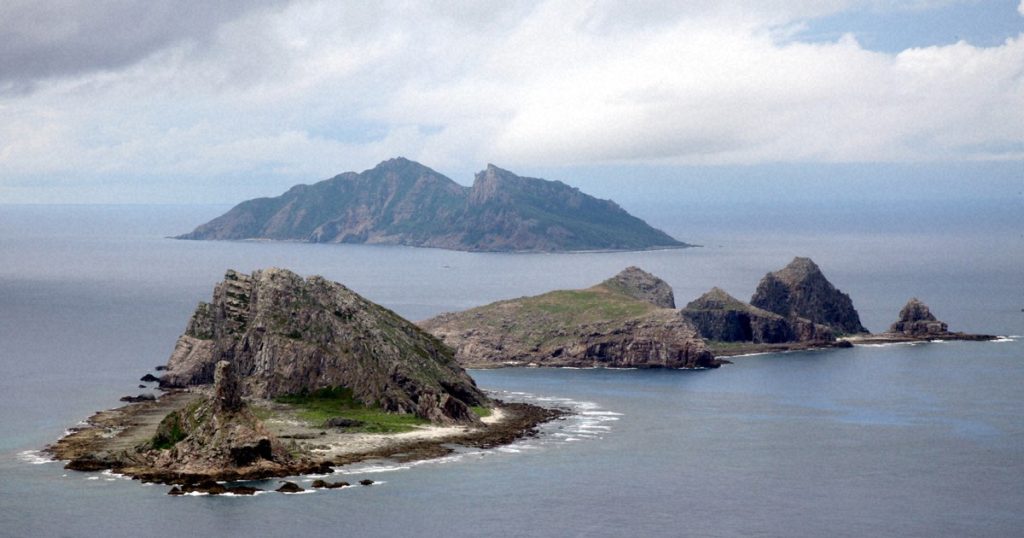
The dispute between China and Japan over the Senkaku Islands, a small chain in the East China Sea, has intensified recently, with both nations accusing each other of territorial violations. The Senkaku Islands, referred to as Diaoyu by China and Diaoyutai by Taiwan, are currently controlled by Japan but claimed by both China and Taiwan. Though Taiwan does assert ownership, it has opted for cooperation with Japan on fishing rights, avoiding direct confrontation over the islands.
Chinese coast guard vessels and military aircraft frequently encroach upon the waters and airspace surrounding the islands, leading Japan to mobilize its own jets in response. This ongoing tension was highlighted when a Chinese coast guard spokesperson announced that their vessels had “expelled” Japanese boats, labeling such actions as routine sovereignty measures. Conversely, Japan’s coast guard reported that Chinese vessels have regularly violated Japanese territorial waters and warned them to steer clear of Japanese fishing operations.
While the Senkaku/Diaoyu chain has limited strategic significance compared to other contested regions like the South China Sea, China has elevated its claim to a nationalistic cause, recalling the historical grievances stemming from Japan’s occupation of China prior to World War II. This narrative feeds into broader sentiments of nationalism within China as it seeks to assert its territorial claims.
Meanwhile, geopolitical discussions are unfolding in the region. South Korean President Yoon Suk Yeol and Japanese Prime Minister Fumio Kishida met in Tokyo to strengthen their alliance against common threats posed by North Korea and China, with support from the United States. The U.S. is actively working to bolster its presence in the Indo-Pacific through various measures, including securing alliances with Australia and the Philippines and enhancing defense cooperation with Taiwan, which remains underscored by the ongoing Chinese assertiveness in the region.
Japan, in light of these tensions and strategic threats, is significantly increasing its defense budget. This reflects a broader trend among regional powers to solidify alliances in the face of aggressive military actions from China and North Korea. Recent discussions in Washington between U.S. President Joe Biden and Japanese Prime Minister Kishida also focused on the frequent incursions of Chinese military vessels in the vicinity of the Senkaku Islands, signaling a unified approach from allies to address these rising challenges in the Indo-Pacific landscape.
In summary, the dispute over the Senkaku Islands is more than a territorial argument; it involves complex historical, nationalistic, and geopolitical layers, as regional powers grapple with the implications of both historical grievances and modern-day ambitions in a rapidly evolving security environment.
Source link