In an interview, Moroccan Foreign Minister Nasser Bourita discusses the pivotal role of maritime sovereignty and cooperation in Morocco’s foreign policy. He emphasizes the sea as a vital connection between Morocco and the global community, reflecting broader trends in international relations that see diminishing land border conflicts but a rise in maritime disputes. Bourita attributes many land conflicts to colonial legacies, highlighting that as nations reclaimed land sovereignty, they turned their focus to maritime claims, inevitably leading to overlapping territorial disputes.
Morocco’s approach to these complexities is framed by the 1982 United Nations Convention on the Law of the Sea, which not only clarifies maritime rights but encourages dialogue and cooperation over conflicts. The Convention’s establishment of Joint Development Areas allows for the transformation of maritime disputes into collaborative opportunities. Bourita expresses Morocco’s commitment to responsibly exercising its maritime jurisdiction while enhancing cooperation with neighbors and other stakeholders.
In enhancing its maritime sovereignty, Morocco, under the leadership of King Mohammed VI, has taken significant legal and strategic steps, such as the ratification of the 1982 Convention and the formal delineation of its maritime boundaries. The kingdom’s recent laws regarding territorial waters and exclusive economic zones exemplify this proactive approach, designed to optimize and assert Morocco’s maritime interests.
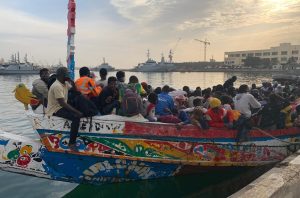
Addressing the issue of migration, Bourita mentions Morocco’s humanitarian stance spearheaded by the King, who has been recognized for his leadership on African migration policies. This approach balances security with human rights, presenting Morocco as a reliable partner to the European Union in addressing migration challenges.
Bourita praises the long-standing partnership between Morocco and the European Union as both positive and demanding. The collaboration spans multiple sectors, including fisheries, civil protection, and border management, emphasizing a win-win relationship characterized by mutual respect.
On fisheries, Morocco grants access to its resources based on sustainability principles, ensuring socio-economic development without compromising environmental integrity. Agreements with the EU, Japan, and Russia are structured to regulate access and support local economies, while further partnerships with diverse countries bolster cooperation without resource exploitation.
Morocco is also committed to renewable energy, targeting significant contributions from this sector by 2030, with particular emphasis on the maritime aspect for future energy needs. The integration of sustainable practices aligns with Morocco’s leadership in climate action on the African continent.
Bourita reinforces the strategic importance of the Sahara, which represents national unity and is envisioned as a key area for economic development and maritime influence. Investment in regional infrastructure aims to make the Sahara a hub for trade, enhancing Morocco’s connectivity and economic standing.
Finally, Morocco’s multipolar foreign policy, particularly in relation to its burgeoning cooperation with China, positions the country as a future centerpiece in global maritime trade initiatives. The development of modern ports underpins this strategy, aimed at transforming Morocco into an essential player in international maritime exchanges, fostering co-development and mutual benefits. This comprehensive approach showcases Morocco’s commitment to leveraging its geographical advantages while fostering regional and international partnerships.
Source link