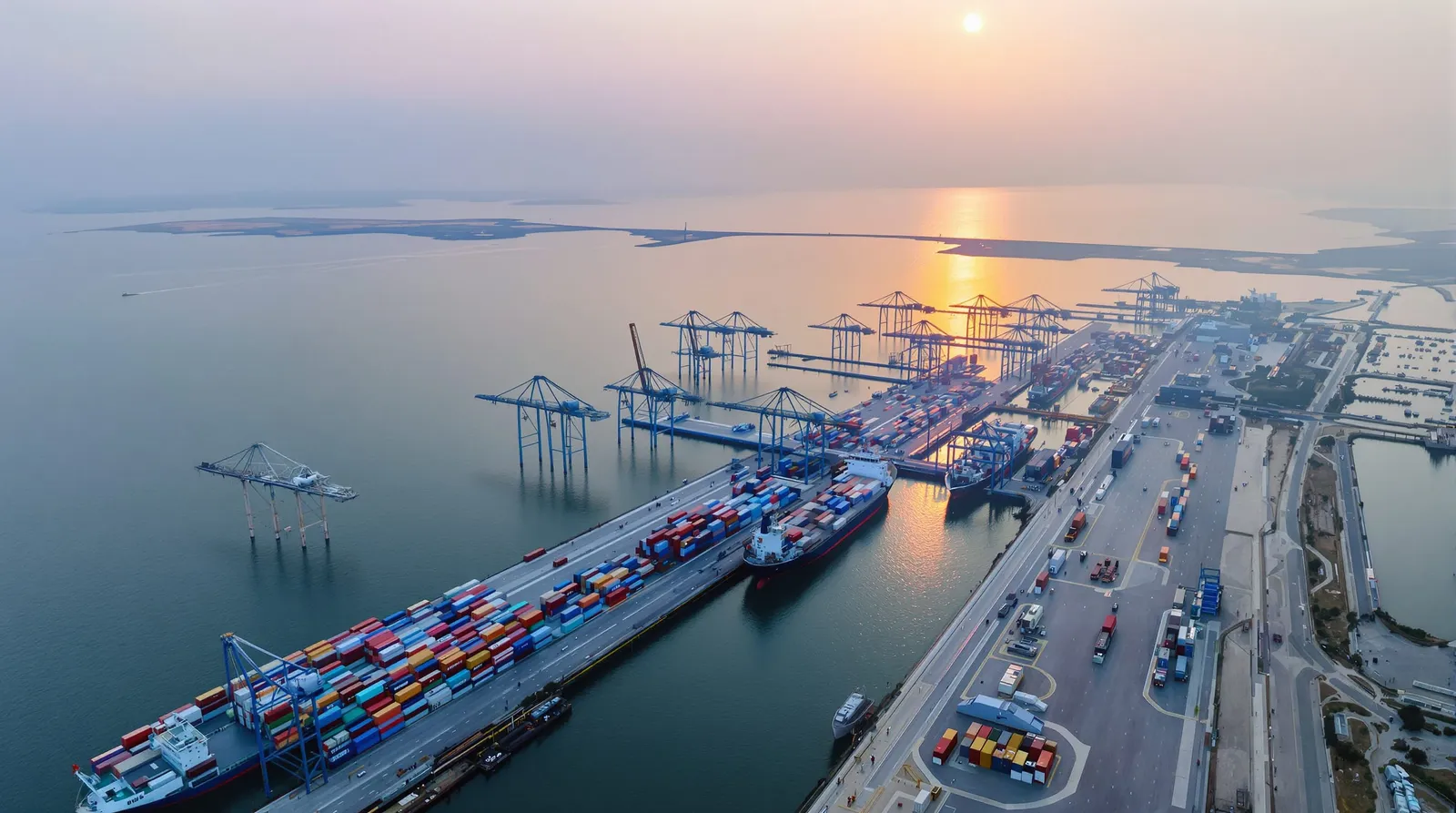

The Australian government, led by Prime Minister Anthony Albanese, is moving to reclaim the Port of Darwin from Chinese control, a decision driven by national security concerns. Since 2015, the Chinese company Landbridge has operated the port under a 99-year lease, a scenario that raises significant strategic threats for Australia and its allies. Recently, American firm Cerberus expressed interest in leasing the port, reflecting the high stakes involved.
Darwin’s strategic value is highlighted by its geographic positioning. It is Australia’s northernmost major harbor and lies close to key maritime routes in the South China Sea, a region of intense geopolitical tension. The port’s location allows military assets to monitor and control movements along crucial waterways, particularly those that serve as alternatives to the heavily trafficked Strait of Malacca. Notably, the port facilitates the rotation of approximately 2,500 US Marines annually, enhancing military cooperation between Australia and the United States.
If the port remains under Chinese control, it would provide Beijing with the ability to gather intelligence on allied military activities and potentially disrupt operations during conflicts. The article emphasizes that any Chinese business ventures, including those in the maritime sector, are inherently political, as all firms must adhere to the Chinese Communist Party’s mandates regarding national security. This implies that the control of vital infrastructures like ports can be leveraged as tools of geopolitical influence.
Moreover, the discussion extends to other strategic maritime locations, notably the Panama Canal, which is crucial for US naval operations. Historic shifts in control over maritime routes illustrate the broader implications of infrastructure ownership. The US has successfully regained control over parts of the canal from Chinese firms, underscoring the need for vigilance over key maritime chokepoints worldwide.
The text concludes by underscoring the relationship between economic prosperity, military strength, and maritime power, suggesting that ceding control of ports to China could fundamentally undermine a nation’s defense capabilities. The call to action is clear: nations must rethink their geopolitical decisions concerning port ownership to prevent empowering adversaries.
Overall, Albanese’s initiative to reclaim the Port of Darwin serves as a critical step in bolstering Australia’s national security and reaffirming its sovereignty in a region increasingly challenged by Chinese ambitions.
Source link