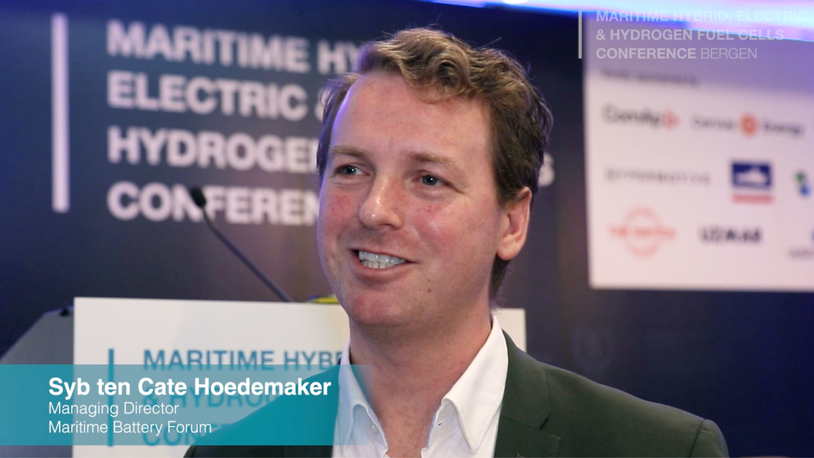
The maritime industry is witnessing a notable increase in the adoption of battery-powered vessels, reflecting the industry’s push towards sustainable and zero-emission operations. During an interview at Riviera’s Maritime Hybrid, Electric & Hydrogen Fuel Cell Conference held in Bergen, Norway, Syb ten Cate Hoedemaker, managing director of the Maritime Battery Forum, highlighted the growing trend of integrating energy storage systems across various vessel types, including ferries, tugboats, workboats, and cargo ships.
This rise in battery-powered vessels is largely driven by regulatory pressures and environmental concerns, prompting operators to consider zero-emission voyages and hybrid propulsion systems. As the need for cleaner energy solutions intensifies, batteries have emerged as a viable propulsion option, facilitating not only the reduction of greenhouse gas emissions but also enhancing energy efficiency in maritime operations.
Hoedemaker pointed out that the diversity in battery technologies is expanding as new chemistries and configurations receive development and type approval from classification societies. This diversification allows for tailored solutions depending on specific vessel requirements, making batteries increasingly adaptable for marine environments.
Despite these advancements, the development of maritime batteries is not without challenges. Key issues identified include the necessity for robust battery systems capable of withstanding the marine environment. Additionally, there is a pressing need for crew training to ensure proper maintenance and management of onboard energy storage systems. This operational expertise is essential to maximize the efficiency and longevity of battery systems on vessels.
Another significant challenge is the investment in shore power technologies to support electric ships when docked, which can enhance their operational viability and overall energy management. Hoedemaker emphasized that integrating such infrastructure is crucial for the wider adoption of battery technologies in maritime operations.
Overall, the maritime sector is steadily moving towards incorporating battery-powered systems, driven by the dual incentives of regulatory compliance and environmental responsibility. As maritime battery technology continues to evolve, it is essential to address the associated challenges to facilitate a smoother transition towards a more sustainable future for maritime operations.
Source link