
Insights into Editorial: Substance across the Arabian Sea
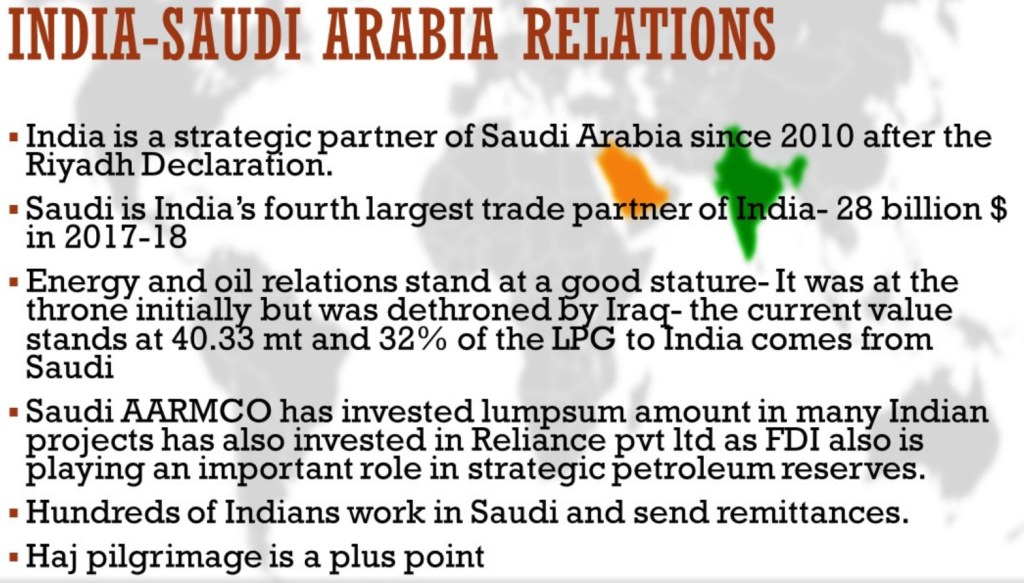
Prime Minister Narendra Modi’s recent two-day visit to Saudi Arabia marked a significant enhancement of ties between India and the Gulf nation, focusing on critical sectors like oil and gas, renewable energy, and civil aviation. As the third-largest oil consumer globally, India imports approximately 83% of its oil needs, with Saudi Arabia being its second-largest supplier, providing over 40 million tonnes of crude oil in the fiscal year 2018-19 alone. India also purchases around 200,000 tonnes of LPG monthly from Saudi Arabia, underscoring the importance of this partnership in energy security.
Saudi Arabia’s relationship with India has evolved; India is now home to the largest expatriate community in the kingdom, with 2.6 million Indians contributing significantly to bilateral relations. The Modi government has actively leveraged this diaspora, recognizing their role in strengthening ties. Annually, nearly 200,000 Haj pilgrims and over 300,000 Umrah pilgrims from India visit Saudi Arabia, with the recent acceptance of the Rupay card facilitating more affordable transactions during their stay.
Both India and Saudi Arabia are also gaining recognition for their improved business environments, being listed among the ten most improved economies in the World Bank’s “Ease of Doing Business” rankings. This transformation is seen as a collaborative effort that could reshape the Southwest Asia sub-region. Politically, India’s sustained outreach has led to positive signals from Riyadh regarding sensitive issues like Kashmir, indicating a nuanced understanding of Indian concerns and sensitivities amidst its traditional ties with Pakistan.
A notable outcome of Modi’s visit was the establishment of the India-Saudi Arabia Strategic Partnership Council, designed to facilitate collaboration on strategically important issues. This council, co-headed by Modi and the Saudi Crown Prince, aims to enhance coordination on various fronts, including terrorism, security cooperation, and bilateral relations across agriculture, trade, and innovative technology.
Several memorandums of understanding (MoUs) were signed during the trip, including one to implement the RuPay card system in Saudi Arabia, making it the third Persian Gulf nation to adopt India’s digital payment platform. Furthermore, there is a commitment to deepen defense collaboration, with plans for a naval exercise by early next year. The ambitious west coast refinery project in Maharashtra also features investments from Saudi Aramco and other stakeholders, illustrating India’s growing significance as an energy partner.
The strengthening of ties is not only beneficial for India but is also crucial for Saudi Arabia, which faces economic challenges due to volatile oil prices and decreased reliance on energy from the U.S. Additionally, demands from China are diminishing, while competition intensifies with Iran’s potential re-entry into the global market. Enhanced relations with India offer Saudi Arabia a vital market and strategic partnership, especially as it navigates new geopolitical dynamics and internal economic reforms under its Vision 2030 initiative.
In conclusion, India and Saudi Arabia are redefining their foreign policy priorities amid global uncertainties. The historical warmth of their relationship is being transformed into a forward-looking strategic partnership. For India, Saudi Arabia and the Gulf states represent essential allies in the Middle East, while Saudi Arabia identifies India as a key power in bolstering its international partnerships. This evolution reflects a new era of cooperation and mutual interest, poised to shape future dynamics in the region.